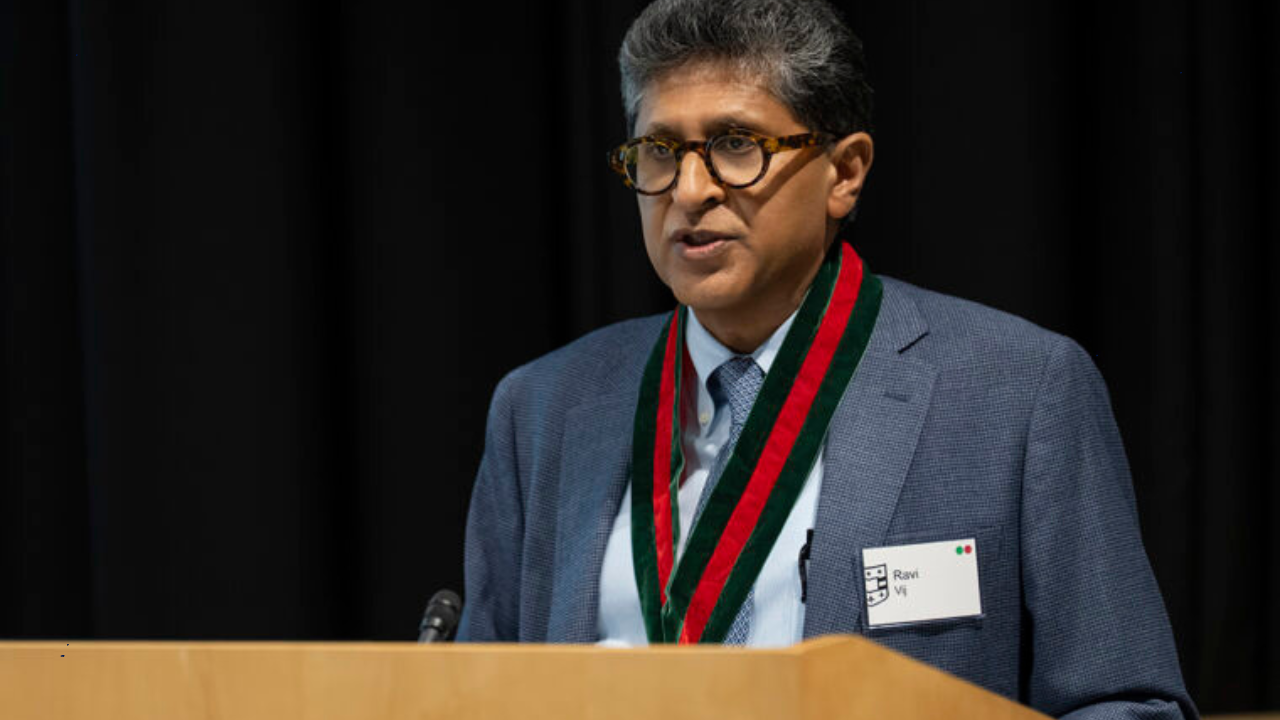
Dr. Ravi Vij, an Indian-origin cancer specialist and an alumnus of Maulana Azad Medical College in New Delhi, has been given the prestigious honor of a professorship for his contributions to advancing treatments for blood cancers.He has been appointed as the inaugural Jeffrey S. and Prue H. Gershman Distinguished Professor in the John T. Milliken Department of Medicine at Washington University School of Medicine.Vij is currently a professor of medicine in the department’s Division of Oncology. The professorship has been funded by St. Louis philanthropists Jeffrey and Prue Gershman, who support local education, health, and arts organizations.In a statement, Chancellor Andrew D. Martin stated that this professorship, "will accelerate progress against blood cancers by supporting Dr. Vij’s work to bring new, more effective treatments to patients".Martin also lauded Dr. Vij’s leadership, noting that it has "helped grow WashU Medicine’s reputation as a national force in stem cell transplantation and immunotherapy".Leading Blood Cancer ResearchDr Vij's work includes studying the genetic underpinnings and cellular microenvironment of multiple myeloma — a cancer of the plasma cells in bone marrow.He also treats patients at Siteman Cancer Center, based at Barnes-Jewish Hospital and WashU Medicine, and is the principal investigator of the Multiple Myeloma Tissue Banking initiative at Siteman.He has led several clinical trials of investigational therapies for blood cancers, including immunotherapy agents and novel stem cell transplant strategies, that later became standard treatments. He has authored more than 300 scientific publications in the field of blood cancers.Also read:I’m Cancer-Free After 14 Years, Says Robin QuiversContributions Beyond ResearchBeyond his research into blood cancer, Dr. Vij has served on the American Society of Clinical Oncology education and scientific committees and on the myeloma committees of the Clinical Trials Network and Alliance for Clinical Trials in Oncology.He currently serves as senior editor of the journal Clinical Lymphoma, Myeloma and Leukemia and is a past chair of the American Society of Hematology scientific committee on plasma cell dyscrasias, a group of disorders linked to blood cancers.His accolades include the Multiple Myeloma Research Foundation Innovator Award, the Center of Excellence Award, and the Leukemia & Lymphoma Society Visionary of the Year Award.A respected educator, Vij has mentored 25 early-career researchers and received the Teacher of the Year Award from the Hematology and Oncology Fellowship Program at WashU Medicine in 2007. Read More: Benjamin Netanyahu Undergoes Treatment For Early-stage Prostate Cancer: Symptoms You Should Not IgnoreEducation and CareerDr. Vij completed his medical education at Maulana Azad Medical College in New Delhi, India, followed by postgraduate training at Halifax General Hospital and Royal Infirmary in the United Kingdom.He completed an internal medicine residency at Rush University in Chicago and fellowships in medical oncology, hematology, and bone marrow transplantation at WashU Medicine. He joined the WashU Medicine faculty in 2000.What Is Blood Cancer?Blood cancer is broadly classified into three main types: leukemia, lymphoma, and myeloma. Leukemia is a cancer of the blood and bone marrow, while lymphoma affects the lymphatic system, particularly the lymph nodes and immune cells. Myeloma is a cancer of plasma cells found in the bone marrow.These cancers disrupt normal blood cell function and can cause symptoms such as fatigue, infections, and unexplained bleeding.Symptoms And TreatmentCommon symptoms of blood cancer include:Persistent fatigueFrequent infectionsUnexplained bruising or bleedingWeight lossSwollen lymph nodesThe causes and risk factors for blood cancer vary. Genetic mutations, exposure to radiation or harmful chemicals, certain infections, and a family history of blood cancer are known risk factors. The risk of developing blood cancer generally increases with age.Advanced treatment options for blood cancers include immunotherapies such as CAR-T cell therapy and stem cell transplantation.