
- Health Conditions A-Z
- Health & Wellness
- Nutrition
- Fitness
- Health News
- Ayurveda
- Videos
- Medicine A-Z
- Parenting
This Squat Variation Could Help Reverse The Effects Of Sitting All Day
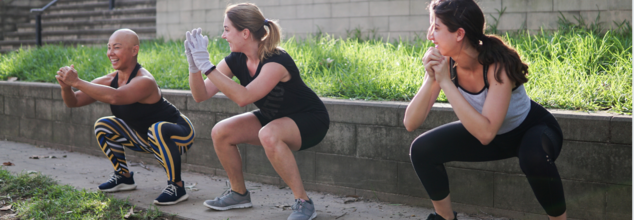
Image Credit: Canva
If you’ve spent hours hunched over a desk or sprawled on a couch, you’re not alone. Modern sedentary lifestyles often leave us with tight hips, weak lower body muscles, and poor posture. But what if one simple exercise could counteract these effects? Enter the humble squat — a powerhouse movement capable of reversing the toll that prolonged sitting takes on your body. Among the many variations, a deep squat, commonly known as the "Asian squat," has become popular for its holistic benefits.
A squat is much more than just a lower-body exercise; it's a movement pattern deeply rooted in human biomechanics. From standing up from a chair to bending down to pick something off the floor, squatting mimics functional actions that are part of daily life. But unlike the limited range of motion associated with sitting, squatting engages multiple muscle groups and joints, including your hips, knees, ankles, quads, glutes, and calves.
Physiotherapists say squatting is the foundation of mobility and strength, especially as we age. Squats challenge balance, coordination, and mobility. They are necessary for everything from standing up to maintaining lower-body strength.
Why Sitting All Day Wreaks Havoc on Your Body?
Prolonged periods of sitting will increase muscle imbalance, stiff joints, and reduced flexibility. Your hip flexors become tight, your glutes become inactive, and slouching at the shoulders will affect your posture. Eventually, this will lead to chronic back pain and other musculoskeletal problems. Deep squats can serve as a counter-effect by loosening tight hip flexors, strengthening the core, and improving lower body stability.
How Deep Squat Is Beneficial?
Compared to the average gym squats, the deep squat focuses on range of motion and joint health. To perform a deep squat:
1. Stand with your feet a little wider than hip-width apart, toes angled out.
2. Chest upright and core engaged.
3. Lower your hips as far as your mobility allows to get the thighs below parallel to the floor.
4. Squat with the position held for a long time, balanced and heels on the ground.
This squat variation builds strength in addition to developing flexibility in your hips and ankles. A deep squat is one of the most natural resting positions that a human body assumes. Many cultures have the habit of adopting it as a way of daily life to eat, rest, or socialize.
Customizing Squat As Per Your Body
Everybody's squat is going to look different. It's about hip anatomy, femur length, and just how comfortable your body feels when you put it in certain foot positions, width, and angles.
If balance or ankle mobility is a concern, try the following:
Heel Raise: Place wedges, plates, or books under your heels to elevate them and make it easier to squat deeper.
Add a Counterbalance: Stand holding a light dumbbell or kettlebell in front of you for more balance.
Provide Support: Lower yourself into a squat while having support from an immovable object such as a chair or a wall.
If you’re new to squats, start with bodyweight squats to build strength and confidence. Gradually incorporate variations like goblet squats, split squats, and single-leg squats to challenge your muscles further. For those aiming to add intensity, weighted squats with barbells or kettlebells can enhance muscle growth and endurance.
Long-Term Benefits of Squatting
It provides many benefits, other than aesthetically appealing, such as better strength of the lower limbs, better posture, increased flexibility, and low chances of injury. The most significant advantage is probably maintaining functional independence into old age. Experts point out that a good lower body strength and mobility are crucial to a long life. Squats make you active, thereby reducing your chances of falls and injuries.
Common Challenges
Has difficulty with depth or coordination? Don't be discouraged. Everyone faces their limitations. Constricting hips, weak ankles, or simply poor balance might limit movement for some. Mobility exercises can address these challenges through ankle stretches or hip openers; practice regularly, and remember, change is slow. Keep an eye on form and control and hold the weight lightly.
You don't need fancy gear or a membership to a gym to incorporate squats into your daily routine. Start with three sets of 10-15 bodyweight squats a day, increase in frequency and intensity as you move forward, and do these squats as part of your warm-up, cool-down, or take them between work to counteract sitting.
So the next time you’re tempted to sink into your chair for hours on end, think about how a few deep squats can reset your body and revitalize your health.
Hepatologist Recommends 9 Most Effective Exercises For Better Liver Health
Credit: Canva
While exercise is good for the body and mind, it can have special benefits for the liver — a key organ that filters blood, breaks down food, stores energy, and keeps the human body in balance.
In recent years, there has been a significant increase in young patients presenting with poor liver health and related conditions, such as fatty liver and liver fibrosis, among others.
A recent study published in The Lancet Gastroenterology & Hepatology journal showed that the Metabolically Dysfunctional-Associated Steatotic Liver Disease (MASLD), formerly known as non-alcoholic fatty liver disease (NAFLD), affected 1.3 billion people around the globe in 2023.
India has also shown a sharp rise in MASLD prevalence, up 23.19 per cent from 1990 to 2023. India’s age-standardized MASLD prevalence rate rose from 10,191 per 100,000 in 1990 to 12,555 per 100,000 in 2023.
The findings show that the spike is increasingly driven by rising metabolic risk factors, including high blood sugar and obesity.
Amid the growing burden, hepatologist Dr Cyriac Abby Philips noted that “the best friend of the liver is muscle”. In a post on social media platform X, Dr Philips, popularly known as Liverdoc, added that “liver listens to your muscles” and shared nine exercises, all backed by clinical trials, that can be included in a daily routine to help boost liver health.
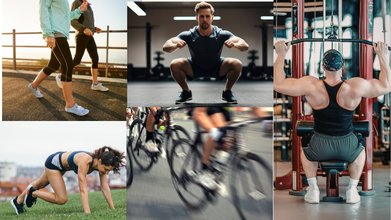
Brisk walking:
According to Dr Philips, brisk walking is the most accessible liver medicine. He noted that "150 min per week cuts liver fat by more than 30 per cent on MRI”. Citing a UK Biobank study of 91,000 people, he added that every extra 1,000 daily steps can lower the risk of developing fatty liver by about 12 per cent.
Moderate-intensity cardio (MICT):
This includes steady jogging, cycling, or swimming at a "can talk, can't sing" pace. Dr Philips stated that 30–45 minutes of MICT exercises for 3–5 days every week for 12 weeks can help reduce liver fat by 2–4 per cent (absolute). It can also significantly lower liver inflammation (enzyme levels), even without weight loss.
High-intensity interval training (HIIT)
This includes short hard bursts, like burpees, jumping jacks, etc. He recommended four minutes of these exercises “at 85–95 per cent max heart rate”.
Repeating the exercise 4 times a day can “cut liver fat by 16–37 per cent, improve heart function,” in 12 weeks, the Liverdoc said. He added that the exercise regimen “matches steady cardio in half the time”.
Sprint interval training (SIT)
SITs are shorter and harder under 15-minute sessions of squat punches, knee hovers, and chair squats. “Six weeks of these can reduce intrahepatic triglycerides by 12 per cent and visceral fat by 17 per cent in men with fatty liver (MASLD),” said Dr Philips, adding that it gives the “biggest liver benefits for the smallest time spent”.
Resistance/strength training
This includes weights or bodyweight, such as squats, presses, rows, and pulldowns. Dr Philips recommended 3 sets of these exercises three times a week for about 40–45 min.
It can “reduce liver fat independent of weight loss, uniquely lowers liver enzyme, and is the single most important exercise for cirrhosis patients to prevent muscle loss (sarcopenia),” he said.
Combined aerobic + resistance
The Liverdoc stated that this combination is the gold standard for exercises. He noted that “network meta-analyses rank this combination as the number one for improving triglycerides, LDL, and total cholesterol in patients with fatty liver (MASLD) - better than either alone”.
Yoga (Hatha/ Surya Namaskar)
Dr Philips noted that classical yoga is not useful for liver health as it is not aerobic and vouched for the modernized versions.
“Eight to 12 weeks or 3 sessions/week of asanas like Surya Namaskar, Ardha Matsyendrasana, Paschimottanasana, Naukasana can help improve liver tests, insulin resistance, and fatty liver grade - especially in patients with type 2 diabetes plus fatty liver disease,” he said.
Pilates and core work
“Eight weeks of pilates can help reduce body weight, body fat, liver enzymes, and liver fat on ultrasound,” said Liverdoc. He called it a joint-friendly option for people who can't run or lift heavy.
Tai Chi / Qigong
The Chinese exercise is a low-impact mind-body movement. About 30–60 min of these three times a week can help “improve glucose control, insulin sensitivity, and balance/ stability, muscle tone," Dr. Philips said.
He noted that this form of exercise is “gentle enough for older patients, those with early decompensated cirrhosis, or people with poor cardiorespiratory fitness”.
Exercise In Cirrhosis
Dr Philips said that even advanced liver disease can respond well to exercise treatment.
Citing randomized trials, he stated that “combined aerobic plus resistance training cuts serious events (death, major complications) from 12.3 per cent to 5.6 per cent”. It also “prevents the muscle wasting that drives death events in cirrhosis patients”.
“Make physical activity your number one preference to maintain liver health and reduce liver disease,” Dr Philips said.
Why Just Walking, Skipping Sugar May Not Help Lower Diabetes and BP: Doctors Explain
Credit: Canva
For many working professionals, going to the gym often feels like a luxury. Their days begin early and end late—rushing for buses and metros, juggling deadlines, presentations, meetings, and endless reports.
So when they are diagnosed with conditions like diabetes or high blood pressure, the most practical and affordable option left is walking. Another common step is cutting down on sugar in tea and coffee. While these are good starting points, these may not be enough.
Calling them "most frustrating", Dr. Sudhir Kumar, Neurologist at Apollo Hospital, Hyderabad noted that such "patients are losing a battle they think they are winning".
"Every day, I see patients with obesity, Type 2 Diabetes, or hypertension who tell me: 'I walk every morning, Doctor'. 'I do all the household work.' 'I have stopped adding sugar to my tea'," said Dr Kumar, in a post on social media platform X.
He also cited these as "dangerous health misconceptions", wherein the patients feel they have done their part, but "their blood work and body composition tell a different story".
Popularly known as the Hyderabad doctor on X, the noted neurologist shared some evidence-based reality of why "walking and quitting sugar" may not be enough.
Several studies have pointed out that walking or undertaking household chores is better than a sedentary behavior. However, neither can be a "substitute for strength training", Dr. Kumar said.
Although walking can burn a few calories, "strength training builds the 'engine' that burns glucose even while you sleep".
"If you are not lifting weights or doing resistance training at least twice a week, your insulin resistance will likely persist, regardless of your step count", he said.
Speaking to HealthandMe, Dr. Manisha Arora, Director - Internal Medicine at the CK Birla Hospital, Delhi, explained that cutting sugar and walking are good first steps, but they do not solve the problem of diabetes and high blood pressure.
"Insulin resistance, inflammation, and loss of muscle all contribute to these diseases. Light walking may help, but the intensity and duration of exercise are also important," he added.
What Is Strength Training?
Strength training exercises force muscles to contract against an external force, such as body weight, dumbbells, or bands. Common examples include
- squats,
- lunges,
- step-ups,
- push-ups,
- planks.
Strength training helps
- Decrease insulin resistance
- Lower blood pressure
- Improve cognitive function
- Reduce systemic inflammation
- Protect against neurodegenerative diseases like Alzheimer’s.
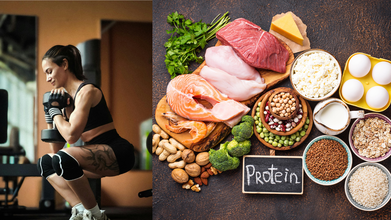
Focus On Protein Leverage
Dr. Kumar further mentioned the diet trap that most people fall into, that is., cutting out sweets and sugar, while loading up the plate with carbohydrate-rich foods such as rice, roti, and poha — 80 percent — and zero protein content.
"Refined carbohydrates (even without added sugar) spike insulin similarly to sugar," he said, calling "no sugar as the bare minimum".
The doctor noted that "a protein-deficient diet can lead to muscle loss and increase hunger".
To lower blood sugar levels, the experts urged to cut down on other foods, such as
- refined carbohydrates,
- processed foods,
- low-fiber foods.
"Focus on protein leverage. Prioritize 1.2g to 1.5g of protein per kg of body weight. When you hit your protein goals, your craving for carbs naturally drops," Dr. Kumar said.
To see the real change in blood sugar and BP levels, he advised people to "add two days of resistance training (bodyweight, bands, or weights)", instead of "just walking",.
The neurologist also recommended "starting the meal with protein paneer, eggs, sprouts, lean meat, and to eat carbs last, and in smaller portions".
In addition, a diet high in protein and fiber from whole grains, fruits, and nuts can also help control blood sugar levels.
"The most successful approach to controlling blood sugar results from combining aerobic exercise with strength training, along with balanced nutrition," said Dr Arora.
Why 'Normal Weight' Doesn’t Always Mean Healthy
Credit: iStock
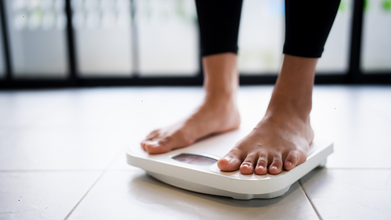
We often assume that having a “normal weight” automatically means being healthy. While body weight is an important parameter, it represents only a small part of overall health. True health is far more complex than what a number on the weighing scale can convey.
Understanding The Limitations Of BMI
Body Mass Index (BMI) is widely used to classify individuals based on their weight relative to height. However, it does not differentiate between fat and muscle. As a result, someone may fall within the normal BMI range yet still have high body fat and low muscle mass, a condition known as “normal weight obesity.” Such individuals may appear healthy but remain at risk for metabolic disorders.
Why Is Body Composition Important?
Body composition analysis offers deeper insight by evaluating fat, muscle mass, and their distribution in the body. A combination of low muscle mass and excess body fat, especially around internal organs, can increase disease risk, even when overall weight appears normal.
The role of fat distribution:
All body fat is not the same. Where fat is stored matters significantly. The waist-to-height ratio is now considered a more reliable indicator than BMI, as it reflects fat distribution. A ratio above 0.5 is associated with a higher risk of conditions such as type 2 diabetes, cardiovascular diseases, and even increased mortality.
Looking beyond numbers:
Health cannot be defined by numbers alone. Factors like physical activity, nutrition, stress levels, and sleep quality play an equally critical role. Even individuals with a normal weight can experience poor metabolic health due to inadequate sleep or chronic stress.
The bigger perspective:
Good health is not just about appearance or weight, it is the result of multiple factors working together. It reflects a balance between internal processes and external lifestyle choices.
In essence, being of normal weight does not necessarily mean being healthy. To truly stay well, it is important to look beyond weight and consider the broader picture of health.
- Follow Us :


© 2024 Bennett, Coleman & Company Limited