
- Health Conditions A-Z
- Health & Wellness
- Nutrition
- Fitness
- Health News
- Ayurveda
- Videos
- Medicine A-Z
- Parenting
Lindsey Vonn Airlifted With Broken Leg After ACL Injury Mid-Winter Olympics 2026

Credit: Handout
American Skier Lindsey Vonn was in pursuit of becoming the oldest Alpine skier, man or woman, to win an Olympic medal at the Winter Olympics 2026 in Milan, Italy, However, her dream came to an end after she crashed only 13.4 seconds into the downhill final and ended up with a broken leg.
The 2010 Winter Olympic gold medalist wanted to create a new record despite skiing in a brace merely nine days after rupturing the ACL in her left knee.
The 41-year-old American lost control over the opening traverse after cutting the line too tight and was spun around in the air, according to AP.
Vonn was heard screaming on camera after the crash while being surrounded by medical personnel. After being examined on site, she was strapped to a gurney and flown away by a helicopter, possibly ending the skier’s championship-packed career.
Vonn’s sister Karin Kildow said Vonn “put her whole heart” into making the Olympics. “That’s definitely the last thing we wanted to see,” Kildow told NBC. “When that happens, you’re just immediately hoping she’s OK, and it was scary. When you start to see the stretchers being put out, it’s not a good sign. She dared greatly, and she put it all out there.”
According to supplier Dainese, a mandatory safety air bag had inflated under Vonn’s racing suit during the crash. The air bag, which is triggered by a complicated algorithm when racers lose control, is expected to have softened her fall.
The US Ski Team later assured that Vonn is in stable condition and the Ca' Foncello hospital confirmed she is undergoing surgery to stabilize a fracture in her left leg.
Vonn's teammate and this year's gold medalist, Breezy Johnson later said of the crash: "To have this course burn you and to watch those dreams die, it was one of the most heartbreaking moments of my life.
"It’s not the physical pain, we can deal with physical pain, but the emotional pain is something else. I wish her the best and I hope that this isn’t the end."
Anouk Patty, chief of sport for US Ski and Snowboard also added: "She'll be OK, but it's going to be a bit of a process. This sport's brutal and people need to remember when they're watching (that) these athletes are throwing themselves down a mountain and going really, really fast."
What Is An ACL Injury?
The Anterior Cruciate Ligament (ACL), a vital ligament in your knee that connects the femur, or thighbone, to the tibia, or shinbone, is crucial for maintaining your stability and agility when playing sports. However, it is also among the most susceptible to harm.
An ACL rupture is basically described as a tear in the ligament that typically occurs in sports that involve quick changes in direction, such as basketball, soccer and skiing. Athletes typically hear a loud “pop” in the knee, which immediately gives out, followed by significant swelling.
An ACL tear may be a game-changer for players, keeping them out of the game for months and interfering with their training.
How To Prevent An ACL Injury?
1. Strengthening
Consider your body as a well-tuned device. One has to have a solid foundation in order to prevent ACL damage. This entails concentrating on building the quadriceps, hamstrings, and calf muscles—the muscles that surround your knee. Leg presses, lunges, and squats are excellent exercises for this. However, before that, it is essential to strengthen the gluteus maximus and medius muscles, minimizing rotational force and avoiding knee injuries. Including stability and balance training can help increase the durability of your proximal joints. Recall that a stronger body makes a greater barrier against possible harm.
2. Develop Your Method
In athletics, it's just as important how you move as how much you move. The significance of using correct technique, particularly when jumping and landing. With your knees slightly bent and your weight evenly distributed, practice a smooth landing. Refrain from landing with your knees bending inward as this may cause excessive strain on your ACL. You can improve your overall performance and lower your chance of injury by perfecting your movement patterns.
3. Use Caution When Warming Up
Make sure you're adequately warmed up before engaging in strenuous activity. A thorough warm-up helps your body get ready for the physical demands of your sport by boosting blood flow to your muscles. Include stretches and workouts that are energetic and imitate the actions you will be doing. This lessens the possibility of strain-related ailments and aids in your body's adaptation to the strain.
4. Include Training in Flexibility
An important factor in preventing injuries is flexibility. Stretching on a regular basis can help your muscles absorb shock more efficiently and increase your range of motion. Paying special attention to hamstring, quad, and calves stretches. Flexibility training of hamstrings and power training of all three quads, mainly rectus femoris helps a great deal. Pilates and yoga can also be helpful since they strengthen the core and increase overall flexibility, both of which assist knee stability.
5. Pay Attention to Your Body
Listening to your body is perhaps the most important piece of advice. Do not force yourself to continue if you are experiencing discomfort or exhaustion. Weariness and overuse can affect your form and raise your chance of injury. Get enough rest and recuperation, and if you're unsure about any pain or discomfort, consult your physiotherapist as soon as possible.
Why 'Normal Weight' Doesn’t Always Mean Healthy
Credit: iStock
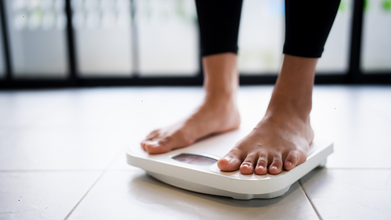
We often assume that having a “normal weight” automatically means being healthy. While body weight is an important parameter, it represents only a small part of overall health. True health is far more complex than what a number on the weighing scale can convey.
Understanding The Limitations Of BMI
Body Mass Index (BMI) is widely used to classify individuals based on their weight relative to height. However, it does not differentiate between fat and muscle. As a result, someone may fall within the normal BMI range yet still have high body fat and low muscle mass, a condition known as “normal weight obesity.” Such individuals may appear healthy but remain at risk for metabolic disorders.
Why Is Body Composition Important?
Body composition analysis offers deeper insight by evaluating fat, muscle mass, and their distribution in the body. A combination of low muscle mass and excess body fat, especially around internal organs, can increase disease risk, even when overall weight appears normal.
The role of fat distribution:
All body fat is not the same. Where fat is stored matters significantly. The waist-to-height ratio is now considered a more reliable indicator than BMI, as it reflects fat distribution. A ratio above 0.5 is associated with a higher risk of conditions such as type 2 diabetes, cardiovascular diseases, and even increased mortality.
Looking beyond numbers:
Health cannot be defined by numbers alone. Factors like physical activity, nutrition, stress levels, and sleep quality play an equally critical role. Even individuals with a normal weight can experience poor metabolic health due to inadequate sleep or chronic stress.
The bigger perspective:
Good health is not just about appearance or weight, it is the result of multiple factors working together. It reflects a balance between internal processes and external lifestyle choices.
In essence, being of normal weight does not necessarily mean being healthy. To truly stay well, it is important to look beyond weight and consider the broader picture of health.
US Basketball Star Luka Doncic Suffers Hamstring Injury, To Undergo Treatment In Europe
Credit: Canva/Instagram
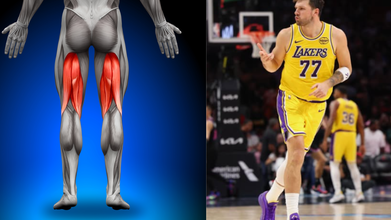
Los Angeles Lakers star Luka Doncic is set to fly to Europe to seek specialized treatment on his Grade 2 left hamstring strain, according to a media report.
Doncic suffered the injury during Thursday's 134-96 loss to the Oklahoma City Thunder.
Though Grade 2 hamstring strains typically involve a monthlong recovery process, Doncic is motivated to return to theLakers' lineup during the playoffs -- which is a shared goal for Austin Reaves, who is out because of a Grade 2 left oblique muscle injury, the basketball player’s agent Bill Duffy told ESPN.
What Is A Hamstring Strain
Hamstring muscles power a player’s acceleration. Sudden bursts of speed without adequate flexibility or strength can cause a strain. It can be a pull, a partial tear, or a complete tear.
Symptoms include:
- Sudden Sharp Pain
- Physical Sensations
- Physical Changes
- Reduced Mobility
Prevention includes stretching, foam rolling, and strengthening exercises like deadlifts, leg curls, and bridges.
Hamstring strains are graded according to their severity. A grade 1 strain is mild and usually heals readily; a grade 3 strain is a complete tear of the muscle that may take months to heal.
Also read: For How Long Should You Be Able To Hold A Plank In Your 20s?
What Are The Common Injuries In Basketball?
Basketball players are more likely to get hurt during matches than during training, with risks coming from tackling, sprinting, twisting, jumping, or even repeating the same movements until fatigue sets in. Collisions, poor conditioning, or re-injuring a previously weakened area can also contribute.
Sprained Ankle
Quick changes of direction and uneven surfaces make ankle sprains one of the most common basketball injuries. This happens when the ankle rolls inward or outward, overstretching the ligaments.
Protect, Optimal loading, Ice, Compression, Elevation, and avoid HARM factors: Heat, Alcohol, Running, Massage, in the first three days.
Groin Strain
Twisting, kicking, or rapid directional changes can strain the inner thigh muscles, also known as adductors.
Prevention is through regular stretching and strengthening exercises such as side lunges and adductor side bridges.
ACL Injury
The anterior cruciate ligament is critical for knee stability. Injuries often occur when the lower leg stays planted while the upper leg twists, during tackles, or awkward landings.
Mild sprains may heal with physiotherapy, but severe tears often require surgery. Persistent swelling or pain should be checked by a professional.
Preventing Basketball Injuries
- Strengthen lower limbs with exercises like squats, lunges, and calf raises.
- Warm up with dynamic stretches and sport-specific drills.
- Cool down after matches to aid recovery.
- Wear proper gear, including fitted boots and shin guards.
- Stay hydrated, eat well, and rest between games.
Can Weight Loss Jabs Surge Divorce Rates? What Experts Are Saying
Credit: Canva/iStock
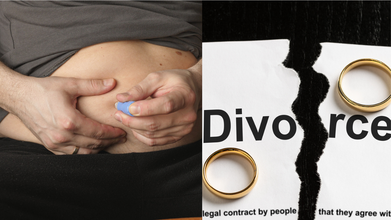
As weight-loss injections like Mounjaro and Wegovy are becoming increasingly accessible, a growing number of individuals are using them for both health benefits and body toning.
While there are various health-related side effects linked to these, one emerging effect is a surge in divorce rates.
According to experts, after slimming down, partners are on the lookout for new love. The weight loss jabs are doubling the risk of divorce, the Telegraph reported.
Also Read: Encephalitis Alert In Rajasthan As Mystery Disease Claims 2 More Young Lives
Divorce rates from fat jabs are set to soar in the future, Professor Per-Arne Svensson, from the University of Gothenburg, was quoted as saying.
“What we see, for instance, in divorces is that it occurs after a couple of years after you started your treatment,” he added.
What Studies Are Saying
A 2018 study led by Swedish researchers from the Karolinska Institutet and University of Gothenburg showed that men and women who lost a substantial amount of weight after weight-loss surgery, also known as bariatric surgery, are more likely to divorce or have their relationships end than those who don’t undergo surgery.
Also Read: Former US Senator Ben Sasse Opens Up About Battle With Terminal Stage 4 Pancreatic Cancer
Prof Svensson, who led the 2018 research, found that patients with a gastric band were almost 50pc more likely to get divorced within six years.
In the study of 12,531 married patients, 14.4pc divorced during this period compared with 8.2pc among the wider population. The research suggests the chance of divorce is significantly higher among patients who have experienced rapid weight loss.
Another study led by researchers from the University of Pittsburgh Medical Center, US, showed that adults who are not married and get weight-loss surgery are more than twice as likely to get married within five years. Likewise, adults who are married and get bariatric surgery are more than twice as likely to get divorced.
Although the studies are focused on people who had been fitted with gastric bands, known as bariatric surgery, the rise of weight-loss drugs will trigger an even larger divorce trend in the future, the report said.
Svensson said, “very similar mechanisms could occur with Ozempic [and other GLP-1 receptor agonists] as with surgery, concerning changes in relationships. Within the newest weight loss drugs, Mounjaro, for instance, we would have weight losses that are not as big as with bariatric surgery, but they are significant enough. So I still believe that these mechanisms could occur.”
Rising Divorce Rates: Weight Loss Jabs Empowering Individuals
The report stated that a reason for the rising divorce rates among people who use weight loss jabs is that these are boosting the confidence of individuals to come out of unhealthy relationships.
“It could also be that you have a person who is stuck in a bad relationship, but doesn’t have the self-confidence to break it off because they feel ‘who would like to date them, if not their current spouse’, " said Prof Svensson.
Read more: India To Strictly Inspect GLP-1 Drugs To Curb Misuse: Govt Flags Risks Amid Weight-loss Hype
“It’s not that losing a large amount of weight is ending healthy marriages. It’s probably more than for the person losing weight and feeling better about themselves; it may be empowering them to leave an unhealthy relationship,” added David Sarwer, the director of the Center for Obesity Research in Philadelphia, US.
Sarwer said if the high cost of slimming drugs falls even further, it will lead to a greater shedding of bad relationships.
There will probably be “a subset of people who, as they’re feeling better about themselves,” find it becomes “a motivational catalyst to move on from what would otherwise be an unhealthy relationship”, he said.
- Follow Us :


© 2024 Bennett, Coleman & Company Limited