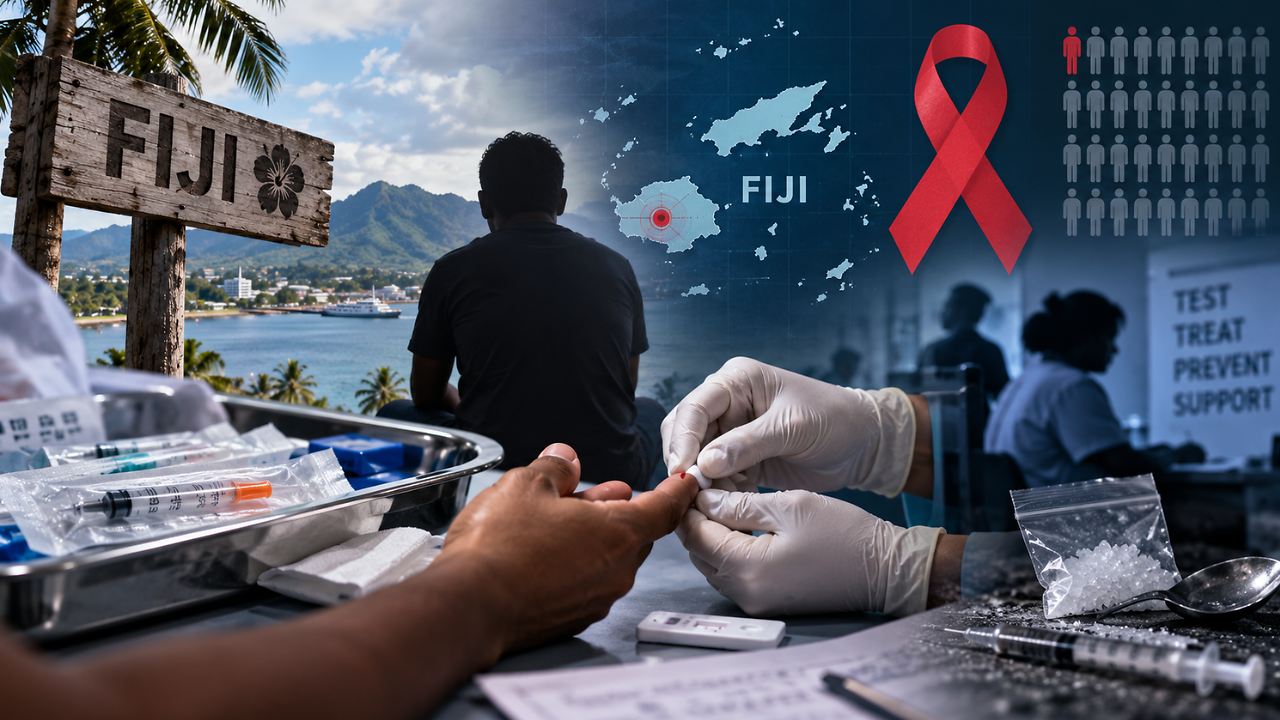
Fiji has declared a national HIV emergency after recent reports and estimates showed that around one in every 60 adults may now be living with HIV. The estimate has sparked concern as it marks a sharp rise from about one in 167 adults five years ago. Fiji recorded more than 2,000 new HIV diagnoses in 2025. Health officials have attributed the grim development to unsafe injecting practices, lack of sterile equipment and major gaps in HIV treatment and prevention. Health Minister Dr Atonio Lalabalavu said the scale and reach of the epidemic required a response that is more effective than existing outbreak measures. “The findings also show the seriousness of the epidemic and the gaps we must close in prevention, treatment and continuing care. We have acted on that evidence. An outbreak-level response is no longer sufficient. The Ministry of Health cannot meet this challenge alone. It requires coordinated action across Government, alongside communities and our partners.” Factors Driving Rising HIV Cases In Fiji Health officials and HIV experts have identified injectable drug use, especially meth, as a major driver of the current surge. The concern is not methamphetamine abuse itself transmitting HIV. The risk arises when people who inject drugs share needles and syringes to ingest the drugs. Dr Jason Mitchell, chair of Fiji’s National HIV Outbreak and Cluster Response Taskforce, said, “Fiji is currently navigating the fastest-growing HIV epidemic in the world, and what is driving this epidemic now is risky injecting drug use of people who currently inject methamphetamines.” He added, “The unavailability of sterile needles and syringes has resulted in people who use drugs sharing needles, syringes and drug-mixing equipment.” UNAIDS has previously highlighted the scale of the change. It reported that new HIV infections in Fiji had increased tenfold since 2014, while only 36% of people living with HIV were estimated to know their status in 2024 and just 24% were receiving treatment.Also read: Thailand’s HIV Cases Cross 550,000 In 2026; Over 25,000 Among 15–24s Growing Treatment Gap Finding people with HIV is only the first step. They need to remain connected to treatment to contain transmission. Recent reports found that the proportion of diagnosed people receiving antiretroviral therapy had fallen from more than 98% before 2021 to around 56%. “We are now finding people faster than we are able to keep them in care,” Mitchell said. Antiretroviral therapy suppresses HIV in the body and allows people living with HIV to lead long, healthy lives. When treatment reduces the virus to an undetectable level, people do not sexually transmit HIV, a principle known as U=U, or undetectable equals untransmittable.Also read: Exclusive With Leading HIV Expert: What's Driving Rising HIV Cases Among India's Youth And How To Prevent It Fiji Plans Needle Exchange And More PrEP The government says its response will include expanded HIV testing and treatment, greater access to pre-exposure prophylaxis (PrEP) and the introduction of a formal needle and syringe programme. It also plans to strengthen its follow-up care system so people diagnosed with HIV remain connected to treatment. The emergency declaration comes as HIV prevalence among women attending antenatal care has reached around 2%, or about one in 50 pregnant women. That figure raises the concern of mother-to-child transmission. HIV can be transmitted during pregnancy, childbirth or breastfeeding, but effective treatment and preventive care can dramatically reduce this risk.