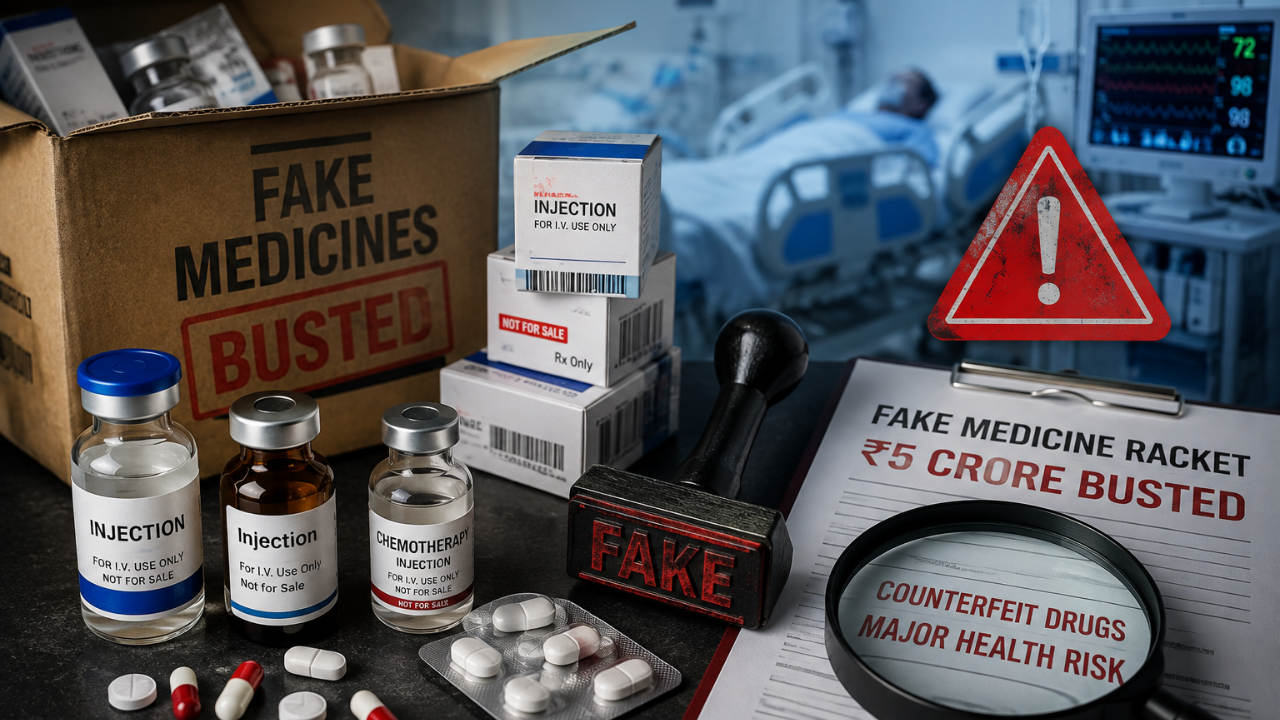
A major counterfeit medicine racket has been busted near Bengaluru, with authorities seizing spurious drugs worth around ₹5 crore from a facility near the Bidadi toll gate. But the investigation has raised an even bigger concern. Some of the fake drugs may also have entered hospitals, pharmacies and even intensive care units (ICUs). Karnataka Health Minister U T Khader said the drugs were allegedly relabelled using the names of multinational pharmaceutical companies. The Food Safety and Drug Administration's drug wing carried out the operation on August 18. Officials suspect the racket could be connected to a wider network spanning multiple states, with counterfeit pharmaceuticals sourced from different places including Himachal Pradesh and Telangana. Why Are Fake Drugs Dangerous In ICUs?According to officials, the medicines were allegedly relabelled with the branding of known pharma companies, making counterfeit products appear genuine. This is particularly concerning as fake medicines could become difficult to identify and eliminate simply by examining the packaging. Authorities are now looking into where these medicines came from, how they got into the supply chain, and which hospitals or pharmacies may have received them. It has not been reported that any hospital has actually administered the fake drugs to the patients.Counterfeit medicines are always a major public health concern, but the consequences can be particularly severe in an ICU. Critically ill patients often depend on medicines that have to work quickly at precise doses. Drugs used in intensive care can include antibiotics, medicines to control blood pressure, sedatives, pain medicines and drugs that support organ function.Also read: From Liquor to Dabur to VKC Nuts, FSSAI Crackdown Puts Food Safety in Focus: Why It Matters If a counterfeit product contains too little, too much, the wrong ingredient or no active ingredient at all, treatment can fail at the moment a patient needs it most. For instance, a fake antibiotic may contain insufficient active medicine. In a critically ill patient with a serious infection, that could mean the infection continues to worsen while doctors believe the patient is receiving appropriate treatment. This could delay the correct course of treatment, leading to potential complications. The opposite problem is also a possibility. An incorrectly formulated medicine could lead to toxicity, allergic reactions, organ damage, or other complications. The Bigger Problem Of Fake Drugs In The Country India's drug regulators regularly issue alerts about medicines that fail quality tests, while the Indian Pharmacopoeia Commission's Pharmacovigilance Programme of India publishes drug safety alerts and regulatory information. The Centre has also been strengthening pharmaceutical traceability and regulatory oversight. Earlier this month, the government notified amendments to the Drugs Rules that allow regulatory authorities to debar applicants who submit misleading, fake or fabricated documents or information to get their drugs approved. But the Bengaluru case highlights a different challenge. Even when legitimate medicines are properly regulated, counterfeit products can infiltrate the supply chain. Health Minister Khader said the suspected racket could be part of a larger national network, making the investigation particularly crucial.