
- Health Conditions A-Z
- Health & Wellness
- Nutrition
- Fitness
- Health News
- Ayurveda
- Videos
- Medicine A-Z
- Parenting
Apple Reveals Early Findings From Tinnitus Research And The Role Their Airbuds Play

Pay attention to the sounds around you. Do you ever hear a faint ringing in the back of your ears? You’re not the only one. According to preliminary studies conducted by Apple, as part of 3 ongoing research projects on long-term health, up to 15% of people experience tinnitus on a daily basis. Almost 78% of the participants experienced it at least once in their lives, with older adults reporting it more often.
What is Tinnitus and What Did Apple’s Hearing Study Reveal
Tinnitus is typically a severe hearing condition that manifests itself in the form of a persistent ringing sound in a person’s head. Chronic sufferers of tinnitus say that it affects their ability to hear clearly or at all. Some of the causes behind tinnitus could be through overwhelming levels of sound exposure which, in recent years, has been occurring through headphones, earbud use and other technology.
The study itself was actually conducted by a group of University of Michigan researchers, who are part of the ongoing research on hearing health that Apple first launched in 2019. It makes use of data collected by Apple’s health apps, which only collect information after Apple users enroll and willingly share their data through its Research App.
Although their findings in themselves weren’t exactly new, the study was able to analyze a sample size of more than 160,000 participants to help corroborate trends among a host of different demographics and age groups. It’s particularly important in a condition like tinnitus, wherein the degree of severity is entirely subjective and cannot be measured as though the sound is actually real. As such, finding solutions for each individual can be a challenging feat.
Why Is Apple Conducting This Study?
There is a rising demand for hearing-health solutions that can mitigate or entirely eliminate the detrimental effects of tinnitus with the use of technology. The demographic represented is especially young and needs more guided efforts towards reducing the impact of the condition over the long run.
Apple has incorporated some of the findings from the research into their products in the past, by enabling specific headphone features. This includes several inbuilt apps like the Noise app for the Apple Watch and settings for your headphones to help set a limit for listening volume over a long period of time.
They also have other long-term health studies that are still being fully realized, using information that Apple users share which are largely in the field of cardiovascular health and women’s reproductive health.
Woman Claims Kwality Wall’s Tub Filled With Oil, Company Launches Investigation

Credit: X/Arvind Sharma
In a surprising video, a woman who ordered a tub of Kwality Wall's Frozen Dessert - Fruit & Nut in Rajasthan found the bottom of the container filled mostly with oil, raising questions about the quality of the product.
In the clip, the distressed customer was heard saying: "It is not even melting and has a weird flavor. I am never eating this ice cream again. I have asked my husband not to purchase this again. It was my favourite ice cream, but now I feel very disappointed."
However, after the post went viral, many X users pointed out that the brand sells frozen dessert, instead of ice cream and that frozen dessert contains palm oil which could explain why she found oil floating inside the container.
What Did Kwality Wall's Say?
As the video continued to go viral across the country, an official spokesperson of Kwality Walls India Limited confirmed that an investigation had been launched into the product's quality.
Speaking about what could have gone wrong, they told NDTV: "Given that ice cream/frozen dessert requires a continuous cold chain from factory to outlet and then to the freezer at consumers' homes, and as it is a sensitive product, temperature variations-especially during peak summer-can impact it.
"We are closely examining all stages of the supply chain for any deviations in storage or handling at the front end. We continue to work with our partners to ensure strict adherence to temperature-controlled protocols until the product reaches consumers' homes."
READ MORE: Zepto Customer Claims To Find 'Plastic' Inside Eggs, FSSAI Says Impossible
Frozen Desserts vs Ice Cream
Ice cream is essentially defined a frozen food dessert made from dairy products, such as milk and cream. For a product to qualify as ice cream, it has to contain atleast 10 percent milk fat and have a rich, creamy texture.
Often, natural color is used in ice cream to enhance its visual appeal, maintaining a healthier alternative to artificial dyes. The process involves churning a sweetened mixture of cream, milk, and flavors while freezing, incorporating air to create a light and airy consistency.
On the other hand, frozen desserts are typically made of a mixture of fats (vegetable oil or milk fat), sweeteners (sugar, glucose), milk solids and stabilizers/emulsifiers to create a smooth, creamy texture. They include diverse range of options, from fruit-based sorbets to creamy non-dairy alternatives.
Unlike ice creams, frozen desserts often use vegetable fats like palm oil, along with additives to manage texture and hold their shape longer when melting, and often have higher stabilizer content.
Due to being made from hydrogenated vegetable oils as well as are high in added sugars, saturated fats and processed ingredients, most frozen desserts are not considered healthy.
While some options have lower calories or fat than traditional ice cream, they are considered ultra-processed treats.
Experts recommend looking for fewer ingredients, less sugar, and dairy-based rather than palm-oil-based options as well as opting for single-serve items like small bars or cups to avoid overeating to stay healthy.
Extended Hormuz Blockade To Disrupt Medical Devices Production, Spike Cost Of MRIs, Syringes In India

Credit: iStock
From higher costs on syringes, catheters, and MRIs, to medical supply shortages and longer wait times, the increasing geopolitical tensions around the Strait of Hormuz, which is likely to prolong, can spell trouble for the healthcare industry.
Amid a 48-hour "ultimatum" from US President Donald Trump to "fully open" the crucial waterway, Iran on Sunday said the Strait of Hormuz remains open to all shipping except that of its “enemies”.
The ongoing conflict has already spiked prices for medical devices—specifically plastics for syringes and catheters – due to the rising cost of raw materials. If disruptions persist, it can also warn of potential shortages, experts told HealthandMe.
In a statement, the Association of Indian Medical Device Industry (AiMeD) noted that the medical device input costs have already risen by nearly 50 percent for critical plastics, over 20 percent for packaging, and self-generated power running on diesel. It noted that PNG gas prices used for power generation and process heating have nearly doubled due to reduced availability.
This is eroding razor-thin margins on essentials like syringes, nitrile gloves, catheters, and plastic disposable medical devices in a highly competitive, volume-driven market.
“A shortage of liquid helium could impact the installation of new MRI scanners, each of which requires around 1,500 liters for the initial magnet fill. Supply disruptions linked to the war may delay new installations and push up costs, as helium prices are likely to rise amid tighter availability,” Dr. Harsh Mahajan, Mentor FICCI & Founder Mahajan Imaging & Labs, told HealthandMe.
Also read: Middle East Crisis Disrupting Health Services, Fueling Diseases & Environmental Hazards: WHO
Hormuz Blockade: No Shortage Now
The expert noted that there is no immediate concern for existing MRI machines.
It is because most currently installed scanners use K4 technology with zero boil-off systems, allowing them to operate efficiently without frequent helium refills.
“Typically, a top-up is needed only once every three years, when the magnet’s cold head is replaced. As a result, the existing installed base is expected to continue functioning without disruption in the near term,” Dr. Mahajan said.
According to experts, while one to three week shipment delays are manageable via buffers, prolonged disruptions risk production halts, hospital shortages, and costs due to inflated prices from market abuse by dominant large raw materials players.
Rajiv Nath, Forum Coordinator, AiMeD, has assured that “as of now, there are no shortages of syringes or other medical disposables, contrary to circulating rumors—there is no need to panic”.
While many manufacturers have adjusted product pricing by 10-20 percent to sustain operations, there is no acute shortage in key polymer grades like Polypropylene, HDPE, or LDPE, he added.
Also read: Black Rain Over Iran's Capital Tehran Sparks Health Fears
Long-term Hormuz Blockade Can Affect Critical Medical Supplies
However, the rapidly deteriorating situations and a longer blockade of Hormuz can lead to “substantial price increases, longer lead times, and highly elevated freight costs, which are pressuring cost structures and planning cycles”.
Nath said evolving global supply chain dynamics require close monitoring to prevent impacts on production timelines and industry stability.
The Medical Technology Association of India (MTaI) also warned that the ongoing US/Israel-Iran conflict and disruption in the Strait of Hormuz directly threaten India’s access to critical and life-saving medical technologies.
"Modern healthcare systems operate on just-in-time inventory models with minimal buffer stock. When large consignments - like those shipped by sea - are delayed or stranded, there is simply not enough inventory in the system to compensate, even through costlier alternatives like air freight," Pavan Choudary, Chairman, MTaI, told HealthandMe.
He also noted that shipment delays beyond March 31 can lead to "budget lapse, forcing a fresh approval cycle - thereby compounding delays that often stretch to months".
It is because many public institutions in India front-load procurement toward the financial year-end.
The industry experts urged the government to take urgent action to safeguard over 5 lakh jobs, ensure affordable healthcare access under Atmanirbhar Bharat, and protect exports to the US and EU.
The AiMeD also urged the Indian government not to reduce import duties on medical devices based on rumors of shortages.
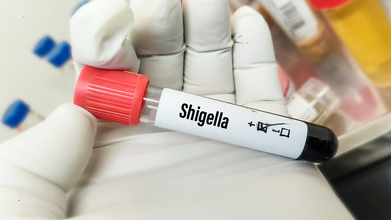
Shigella Cases Rise To 12 In Kerala: Doctor Explains Why The Bacterial Infection Is Fatal For Young Kids
Credit: iStock
Kerala is yet again in the grip of a deadly and highly contagious disease. This time, a fresh outbreak of Shigella (caused by the bacteria shigellosis) has been reported in the southern state’s Kozhikode district.
Shigella is a fast-spreading bacterium that causes diarrhea, which in some cases can lead to complications including arthritis, kidney damage , and death.
In the Kozhikode, Kerala outbreak, at this time, 51 people are under observation, 12 have developed the illness, and one child of three and a half years has died.
The child, who had been undergoing treatment at Kozhikode Medical College Hospital, passed away on Sunday after suffering from high fever and seizures.
Health officials in the state have identified at least 11 more children who had come into contact with the girl and were subsequently infected.
Around five more children are currently under close observation in various hospitals, with doctors monitoring symptoms and preventing further complications, Onmanorama reported. The health authorities are also investigating whether adults in the area may have contracted the infection, raising concerns about a broader community spread.
As a precautionary measure, the Anganwadi center has been temporarily shut down to prevent further spread of the fatal infection.
Shigella: Why Are Young Children At High Risk?
Speaking to HealthandMe, Dr. Rajeev Jayadevan, Ex-President of IMA Cochin and Convener of the Research Cell, Kerala, explained that even a small number of bacteria—as few as 10 —is enough to cause infection.
It is because the Shigellosis bacteria “is able to withstand the hostile acidic environment of the human stomach. Outside the human body, it can stay alive in water for weeks together,” he said.
Shigella is most severe in children below the age of five, as their immune systems are less efficient at clearing the infection early.
“Adults also become ill, but acquired immunity from childhood keeps the infection mild in many instances,” the expert said.
Shigella Outbreak: How Does It Spread? What Are The Symptoms?
Shigella spreads through:
- touching contaminated surfaces or objects
- physical contact with an infected individual
- drinking contaminated water or ice made from unclean water
The expert noted that houseflies can also spread the bacteria.
Flies transmit the bacteria from human feces to food, water, and surfaces, contributing to up to 37 percent of cases in some regions, according to a study published in the PLoS Neglected Tropical Diseases.
The disease onset occurs typically within 1 to 3 days of ingestion of the bacteria, with fever, diarrhea, body aches, and headache.
Once it involves the large intestine, bloody diarrhea occurs, with severe abdominal cramps.
Shigella: How To Prevent
Dr. Jayadevan said. stressed the need for early recognition and treatment with appropriate antibiotics.
ORS can help prevent dehydration, while Zinc tablets can enhance recovery.
Other measures to prevent the risk of spread include:
- Washing hands with soap and water, especially before touching food and also after toilet use
- Food handlers must maintain hygiene
- Control flies
“A multipronged approach is required, involving sustained sanitation measures and strict attention to clean drinking water supplies, to prevent such outbreaks,” the expert said.
- Follow Us :


© 2024 Bennett, Coleman & Company Limited