
- Health Conditions A-Z
- Health & Wellness
- Nutrition
- Fitness
- Health News
- Ayurveda
- Videos
- Medicine A-Z
- Parenting
Ayush Mark Explained: What Is This New Global Standard Label For Traditional Medicine?

Credits: Canva
Prime Minister Narendra Modi unveiled the Ayush Mark at the Second WHO Global Summit on Traditional Medicine on Friday. The Ayush Mark is envisioned as a global standard for quality Ayush products and services. The WHO Global Summit on Traditional Medicine was held at Bharat Mandapam from December 17 to December 19, 2025, with this year’s theme, “Restoring balance: The science and practice of health and well-being.” Speaking at the closing ceremony, PM Modi highlighted India’s rising leadership in promoting traditional medicine as an evidence-based, integrated, and people-focused part of global health systems.
Alongside the Ayush Mark, PM Modi also introduced the My Ayush Integrated Services Portal (MAISP), the central digital platform of the Ayush Grid, released a commemorative Ashwagandha postal stamp, the WHO technical report on Yoga training, and the book “From Roots to Global Reach: 11 Years of Transformation in Ayush.” He also presented the Prime Minister’s Awards for Outstanding Contribution to the Promotion and Development of Yoga, recognizing both national and international individuals and organizations for their exceptional service.
Speaking at the event, he said, “Over the past three days, experts from across the world in traditional medicine have held meaningful discussions here. I am glad India is providing a strong platform for this, and the WHO has actively participated. It is our good fortune and a matter of pride that the WHO Global Centre for Traditional Medicine has been established in Jamnagar, India. The world entrusted us with this responsibility with great confidence at the first Traditional Medicine Summit.”
What Is The Ayush Mark?
The Ayush Mark is a label issued by the Ministry of Ayush for Ayurveda, Yoga and Naturopathy, Siddha, Unani, and Homoeopathy products and services. The Ayush Mark Certification Scheme has been run by the Quality Council of India (QCI) since 2009.
Products and services carrying the Ayush Mark follow quality manufacturing practices, use standard raw materials, and undergo safety testing. The Ayush Mark and its two previous certification levels have existed for several years. The new label builds on them and aims to set a global benchmark for traditional medicine products and services. Earlier certifications included the Ayush Standard Mark and the Ayush Premium Mark.
The Ayush Standard Mark follows Good Manufacturing Practices (GMP) for Ayurvedic, Siddha, and Unani medicines under Schedule T of the Drugs and Cosmetic Rules, 1945. The Ayush Premium Mark is aligned with WHO GMP guidelines for herbal medicines.
Dr Tedros Adhanom Ghebreyesus, WHO Director-General, also attended the WHO Global Summit on Traditional Medicine. He praised PM Modi for elevating traditional medicine to a global platform. Dr Tedros commended India for turning vision into action, calling the country a global leader in transforming traditional medicine from heritage to evidence-informed practice. He highlighted landmark initiatives like the establishment of the Ministry of Ayush and the WHO Global Centre for Traditional Medicine in Jamnagar, noting these efforts have strengthened the integration of traditional medicine into health systems, research, and policy, supporting universal health coverage and sustainable development worldwide.
Global Recognition and Impact of Ayush Mark
The Ayush Mark is not just a certification but a step toward placing Indian traditional medicine on the world stage. By setting internationally recognized quality benchmarks, it aims to boost confidence among global consumers and practitioners, encouraging the adoption of Ayurveda, Yoga, Naturopathy, Siddha, Unani, and Homoeopathy products and services worldwide. This initiative reinforces India’s role in shaping evidence-based, safe, and sustainable traditional medicine practices across borders.
COVID Cicada Variant Unlikely To Pose Major Threat, Claims Study

Credit: Canva
The emerging COVID-19 BA.3.2 variant, dubbed Cicada and detected in 23 countries, may not pose a significant global threat, claimed a study.
The 2025 study, published in the mBio journal, showed that the immune response of the BA 3.2 COVID variant from vaccines or prior infection is less effective than against the original strain. The antibody effectiveness is three times lower against the BA.3.2 variant. However, it does not mean that there is no protection at all.
“BA.3.2 showed intermediate neutralization, representing a 3-fold reduction compared to the ancestral strain,” said the researchers from the Icahn School of Medicine at Mount Sinai, US.
“BA.3.2 occupied an intermediate but distinctly separate position,” they said, adding that the variant “shows substantial immune escape potential that threatens protection”.
In the study, the researchers used antigenic mapping to assess neutralizing antibody responses in 56 adults with varied exposure histories following KP.2 vaccination against emerging variants, including LP.8.1, LF.7.1, NB.1.8.1, XFG, and BA.3.2.
While KP.2 vaccination enhanced neutralization against homologous variants, substantial reductions in neutralizing activity were observed against emerging Omicron variants across all exposure groups.
Exposure history showed some influence on neutralization breadth, with self-reported vaccination-only participants exhibiting better cross-neutralization compared to individuals with hybrid immunity.
The findings highlight the ongoing challenge of maintaining vaccine effectiveness against evolving SARS-CoV-2 variants and argue for continuous updating of vaccines, the researchers said.
“Despite its extraordinary number of mutations, BA.3.2 is not able to overcome immunity from vaccination, finds study. Other variants were more capable of evading immunity. This indicates it is not a major real-world threat,” said Dr Rajeev Jayadevan, Ex-President of IMA Cochin and Convener of the Research Cell, Kerala, in a post on social media platform X. He was not part of the study.
What Is The BA.3.2 Variant?
Also read: COVID Variant BA.3.2 Spreads To 23 Countries: Is The Variant Under Monitoring A Cause Of Worry?BA.3.2 is a descendant of the Omicron BA.3 lineage. It is genetically distinct from the previously circulating JN.1 lineages (including LP.8.1 and XFG).
BA.3.2 comprises two major branches, BA.3.2.1 and BA.3.2.2. BA.3.2.2 also has substitutions like: K356T, A575S, R681H, and R1162P, the CDC report said.
What makes the BA.3.2 variant special is the “70 to 75 substitutions and deletions in the gene sequence of its spike protein”, according to the US CDC’s latest Morbidity and Mortality Weekly Report.
“BA.3.2 represents a new lineage of SARS-CoV-2, genetically distinct from the JN.1 lineages (including LP.8.1 and XFG) that have circulated in the US since January 2024,” said the CDC researchers.
“BA.3.2 mutations in the spike protein have the potential to reduce protection from a previous infection or vaccination,” they added.
Cicada Variant: Increased Risks To Children
However, the new Cicada variant with around 75 genetic changes in its spike protein is likely to disproportionately affect children, as per an expert, who noted its presence in the UK.
“Some people have done analysis on this, suggesting it may be more prevalent among young children. Children get infections all the time, but this might be something to do with the fact that they have never been exposed to Covid vaccines," Prof Ravindra Gupta, of Cambridge University, who advised the UK government during the pandemic, was quoted as saying to The Mirror.
“So this is something we’re looking at in the lab to try and work out why. The problem with this is that it is an infection that spreads fast. Eventually, it ends up in someone vulnerable," he added.
Symptoms seem to be similar to those of other recent variants and include
sore throat,
cough,
congestion,
fatigue,
headache
fever.
According to the CDC, the Cicada variant is also likely to raise gastrointestinal issues such as nausea or diarrhea.
India Passes Jan Vishwas Bill: Here’s How It Decriminalizes Health Sector, Boosts Compliance

Credit: iStock
The Jan Vishwas (Amendment of Provisions) Bill, 2026, passed by both Houses of Parliament, marks a significant step towards decriminalizing the health sector by amending certain provisions and boosting compliance.
The Union Health Ministry said that the Bill reflects the Government’s commitment to fostering a trust-based governance framework and ensuring proportionate regulation by reducing the compliance burden on individuals and businesses.
The reforms involving 23 Ministries rationalized over 1,000 offences across 79 Central Acts. These are aimed at helping advance Ease of Doing Business and Ease of Living across sectors.
It makes a key shift from criminal penalties to civil penalties as well as introduces adjudication mechanisms. The amendments ensure consistency, predictability, and proportionality in enforcement, the Ministry said.
Prime Minister Narendra Modi called the passing of the Jan Vishwas Bill by the Parliament "a matter of immense delight".
"This Bill strengthens a trust-based framework that empowers our citizens. It marks the end of rules and regulations that are outdated. At the same time, it ensures speedy disposal of cases, reduces litigation burden with decriminalization," PM Modi added.
Know ALL About the Jan Vishwas Bill
- Within the health sector, several provisions have been amended in key legislation, such as the
Drugs and Cosmetics Act, 1940 -- to substitute imprisonment with financial penalties and to introduce a structured adjudication mechanism.
Pharmacy Act, 1948 -- to modernize penalty provisions and enhance accountability through increased financial penalties for non-compliance.
Food Safety and Standards Act, 2006 -- to strengthen enforcement while ensuring that penalties are proportionate to the nature of the offence.
Clinical Establishments (Registration and Regulation) Act, 2010 - to emphasize monetary penalties for non-compliance, particularly in cases where deficiencies do not pose immediate risks to patient safety.
National Commission for Allied and Healthcare Professions Act, 2021 -- to ensure compliance with professional standards and regulatory requirements, with penalties designed to deter violations while maintaining proportionality.
- The new Bill replaces criminal penalties, particularly imprisonment for minor procedural violations, with graded monetary penalties.
The Bill introduces a civil penalty framework to reduce the burden on courts, minimize layers of litigation, and enable faster resolution of minor compliance issues.

In the case of cosmetics, minor violations (other than spurious or adulterated) will not require court intervention and can instead be addressed through a civil penalty framework.
Further, violations such as non-maintenance of documents or non-submission of information, which were earlier punishable through court-imposed fines or imprisonment, can now be adjudicated through this civil penalty mechanism.
For the first time, the Act provides for the appointment of adjudicating authorities by the Central Government and State Governments, along with a defined process involving issuance of show cause notices, provision for personal hearing, and an appellate mechanism.
Union Health Minister JP Nadda noted that the Jan Vishwas Bill, "aims to remove outdated laws, reduce unnecessary legal burdens, and create a system that responds faster to people’s needs".
"These reforms will streamline operations for Indian medical devices manufacturers, enhance global competitiveness, and align with international best practices, ultimately benefiting patients and healthcare delivery across the country," Rajiv Nath, Forum Coordinator of The Association of Indian Medical Devices Industry (AiMeD).
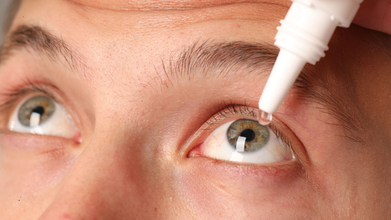
Eye Drops: US FDA Recalls Over 3 Million Products Over Safety Concerns
Credit: Canva
The US Food and Drug Administration has recalled over three million eye drops in the country over safety concerns.
The 3,111,072 products were manufactured by California-based K C Pharmaceuticals and were sold under names such as “Dry Eye Relief Eye Drops,” “Sterile Eye Drops,” and “Artificial Tears Sterile Lubricant Eye Drops,” according to the FDA notice.
K C Pharmaceuticals made the voluntary recall of the eye drops in early March.
The eight types of eye drop products were sold at major retailers, including CVS, Walgreens, and Rite Aid. They have expiration dates ranging from April to October.
Eye Drops: Why Are These Recalled? What Did The US FDA Say
The FDA, in its Enforcement Reports, stated that the products recalled “lack of assurance of sterility.”
While so far, there are no reports of injuries associated with the eye drops, the FDA notice classified the action as a “Class II recall.”
Class II recalls apply to products that can cause “temporary or medically reversible” health problems.
As per the FDA, "the probability of a serious health issue is remote," over these products, and that is why the recall is categorized as a Class II, USA TODAY reported
"Patients and consumers can continue using the medicine unless otherwise directed by the recalling company or FDA," the regulator said in a statement to the publication.
Also read: Can 'Eye Strain' Lead To Brain Cancer? Experts Explain
Which Eye Drops Have Been Recalled?
NBC News reported that the recalled products include:
- Sterile Eye Drops AC (tetrahydrozoline HCl 0.05%, zinc sulfate 0.25%), 0.5 fl oz (15 mL) bottles
- EYE DROPS Advanced Relief, (dextran 70 0.1%, polyethylene glycol 400 1%, and tetrahydrozoline HCl 0.05%), 0.5 fl oz (15 mL) bottles
- Dry Eye Relief Eye Drops (glycerin 0.2%, hypromellose 0.2%, and polyethylene glycol 400 1%) 0.5 fl oz (15 mL) bottles
- Ultra Lubricating Eye Drops (polyethylene 400 0.4%, propylene glycol 0.3%), Sterile, 0.5 fl oz (15mL) bottles
- Sterile Eye Drops Original Formula (tetrahydrozoline HCl 0.05%), 0.5 fl oz (15mL) bottles.
- Sterile Eye Drops Redness Lubricant (glycerin 0.25% and naphazoline HCl 0.012%), 0.5 fl oz (15 mL) bottles
- Sterile Eye Drops Soothing Tears (polyethylene glycol 400 0.4% and propylene glycol 0.3%), 0.5 OZ 0.5 fl oz (15 mL) bottles.
- Artificial Tears Sterile Lubricant Eye Drops (polyvinyl alcohol 0.5%, povidone 0.6%), 0.5 fl oz (15 mL) bottles.
Here’s What You Can Do Instead?
Also read: Struggling With Dry Eyes? Study Reveals Surprising Treatment- Tips To Prevent This Disease
The key to ensuring that your eyes are protected from environmental factors like the sun, dust, and dirt, especially for those who work outdoors or spend long hours on screen, is investing in good sunglasses with ultraviolet protection.
"For those who are using computers a lot, you need to blink your eyes constantly, take breaks in between, and drink a lot of water. Dehydration is also a contributing factor to dry eye," Dr Anita Sethi, who is Principal Director and HOD Ophthalmology, Max Multi Specialty Centre at Panchsheel Park.
She also recommends using zero-number protective glasses and computer glasses that can decrease strain and dry eye.
While advising people to stay away from natural remedies like turmeric or ginger put inside the eye, Dr Sethi urged people to consume more “foods rich in vitamin E, antioxidants” to maintain eye health.
“Colored vegetables and fruits, and even maintaining thyroid and vitamin D levels, because these also contribute to dry eye,” the ophthalmologist said.
- Follow Us :


© 2024 Bennett, Coleman & Company Limited