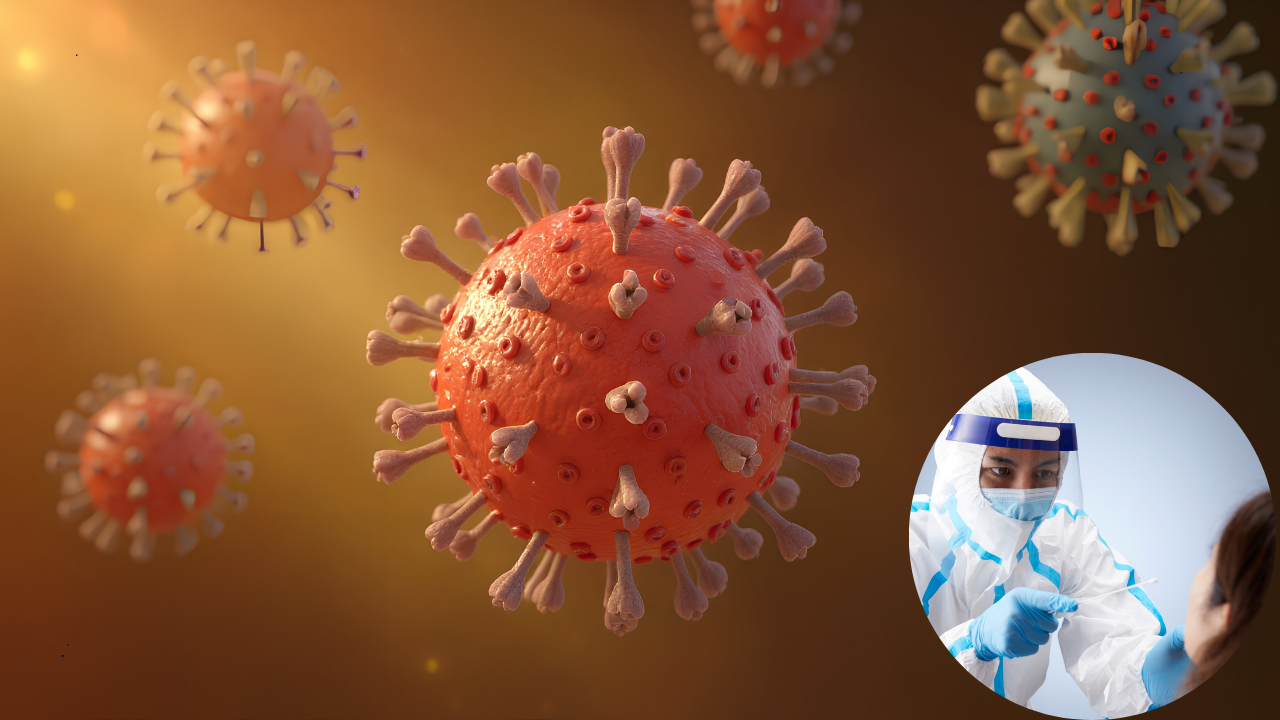
The emergence of the COVID variant BA.3.2, linked to the Omicron variant lineage, has once again stirred public anxiety, reviving memories of the devastating global impact of the COVID-19 pandemic. The variant is particularly concerning as it provides no immune protection to people with previous infection or even vaccination. The US Centers for Disease Control and Prevention (CDC) has raised concerns about BA.3.2 — touted as a highly mutated variant of COVID. BA.3.2 has already been reported in at least 23 countries, including 25 states in America.Also Read: US CDC Warns Of New Immune-Evasive COVID Variant In 23 Countries The BA.3.2 variant was first identified in a respiratory sample in South Africa in November 2024. The World Health Organization (WHO) has designated BA.3.2 as a Variant Under Monitoring (VUM). It means the variant may be not that dangerous yet, it may have concerning mutations. However, the "BA.3.2 has not shown a sustained growth advantage over any other cocirculating variant, and no data indicate increased severity, hospitalizations, or deaths associated with this variant", according to the WHO's Initial Risk Evaluation Report in December 2025. "Overall, available evidence suggests that BA.3.2 poses low additional public health risk compared with other circulating Omicron descendant lineages," it added. What Is The BA.3.2 Variant? BA.3.2 is a descendant of the Omicron BA.3 lineage. It is genetically distinct from the previously circulating JN.1 lineages (including LP.8.1 and XFG). BA.3.2 comprises two major branches, BA.3.2.1 and BA.3.2.2. BA.3.2.2 also has substitutions like: K356T, A575S, R681H, and R1162P, the CDC report said. What makes the BA.3.2 variant special is the “70 to 75 substitutions and deletions in the gene sequence of its spike protein”, revealed the CDC’s latest Morbidity and Mortality Weekly Report.Also Read: 'Husband Stitch': A Medical Necessity Or Just A Tool To Objectify Women's Bodies? “BA.3.2 represents a new lineage of SARS-CoV-2, genetically distinct from the JN.1 lineages (including LP.8.1 and XFG) that have circulated in the US since January 2024,” said the CDC researchers. “BA.3.2 mutations in the spike protein have the potential to reduce protection from a previous infection or vaccination,” they added. The first BA.3.2 lineage sequence was detected in a respiratory sample collected on November 22, 2024, in South Africa from a boy aged 5 years. It was then identified in 2025, in Mozambique (March), the Netherlands (April), and Germany (April). It began to increase in September 2025, with the highest number of detections reported during the week beginning December 7, 2025. As of February 11, 2026, BA.3.2 had been detected in at least 23 countries. Between November 2025 and January 2026, the weekly BA.3.2 detections increased and reached approximately 30 percent of sequences reported in three European countries (Denmark, Germany, and the Netherlands). The CDC reported that BA.3.2 has appeared in wastewater and clinical samples in 25 states. The states include California, Connecticut, Florida, Hawaii, Idaho, Illinois, Louisiana, Maine, Michigan, Maryland, Massachusetts, Missouri, New Hampshire, New Jersey, Nevada, New York, Ohio, Pennsylvania, Rhode Island, South Carolina, Texas, Utah, Vermont, Virginia, Wyoming. Surveillance shows that the variant is present in both urban and rural areas, but the full extent may be larger than reported because not all states have strong genomic testing programs. BA.3.2 A Variant Under MonitoringAccording to the WHO, BA.3.2 demonstrates antigenic drift and reduced neutralization in vitro from previously infected or vaccinated individuals. However, the global health body noted that currently approved COVID-19 vaccines are expected to continue providing protection against severe disease. Despite immune evasion, phenotypic data suggest BA.3.2 has reduced infectivity.