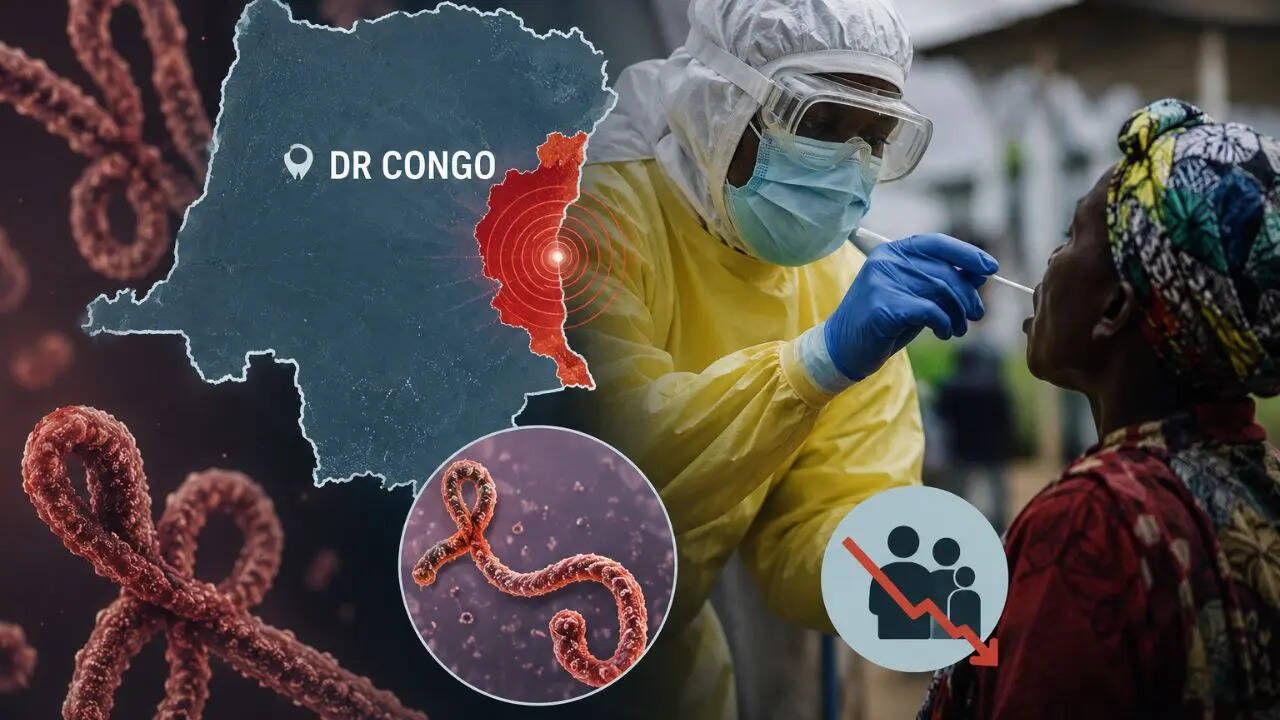
The Democratic Republic of the Congo’s (DRC) Ebola outbreak has become the second-largest Ebola epidemic ever recorded, overtaking the country’s devastating 2018-2020 outbreak.The current epidemic has also underscored the growing global concern over the rapid spread of the deadly disease.Second-Largest Ebola Outbreak In DR Congo According to the latest official figures released by the DRC health authorities and the European Centre for Disease Prevention and Control (ECDC), the country has reported 3,442 confirmed Ebola cases and 1,521 deaths as of July 29, 2026. However, more recent updates indicate the outbreak has continued to worsen rapidly, with 3,532 confirmed cases and 1,556 deaths reported by July 31, 2026.The only Ebola outbreak larger than the current epidemic remains the 2014-2016 West Africa outbreak, which infected more than 28,000 people and resulted in the deaths of over 11,300 lives.Also read: Milestone In Kala-Azar Treatment: WHO Updates Treatment Guidelines, Recommends Shorter & Safer Regimens Ebola Outbreak Caused By Rare Bundibugyo Virus Unlike many previous Ebola outbreaks caused by the Zaire ebolavirus, the ongoing epidemic is caused by the Bundibugyo virus, a rarer species of Ebola virus for which there is currently no approved vaccine or licensed treatment. The World Health Organization (WHO) said the outbreak remains active with heightened community transmission, particularly in eastern DRC, where insecurity, mistrust, population displacement and limited healthcare access continue to hamper outbreak containment efforts. WHO WarnsIn its latest Disease Outbreak News update, WHO said, “The outbreak remains active, with sustained transmission.” The UN health agency noted that inside conflict, population displacement, community mistrust and restricted access to affected areas continue to affect contact tracing, surveillance, and containment and treatment activities. WHO has also stressed that although the global risk remains low, the regional risk is high because of frequent cross-border movement between the DRC and neighbouring countries. A major challenge in controlling the epidemic is the absence of a licensed vaccine or targeted therapy against the Bundibugyo virus. According to WHO, while the Ebola vaccine used against the Zaire strain has shown limited experimental cross-protection in animal studies, there is currently inadequate evidence to recommend its use against Bundibugyo virus disease.Also read: Uganda Declared Ebola-Free As Congo Outbreak Grows To 3,262 Cases, 1,437 Deaths First Volunteer Receives Experimental Bundibugyo VaccineAmid the worsening outbreak, researchers have reached an important milestone in Ebola vaccine development.The first volunteer has received an experimental vaccine targeting the Bundibugyo strain of Ebola, marking the world's first Phase I clinical trial for this virus, according to the University of Oxford.The vaccine, ChAdOx1 BDBV, developed in collaboration with Serum Institute of India (SII), is designed specifically to protect against the Bundibugyo strain of Ebola. It uses the same viral vector platform that powered the Oxford-AstraZeneca COVID-19 vaccine.The vaccine uses a genetically modified chimpanzee adenovirus (ChAdOx1)—a harmless virus that normally causes the common cold in chimpanzees—as a delivery vehicle."We welcome the start of the phase 1 clinical trial of an investigational vaccine against Ebola Bundibugyo virus disease—an important step to assess the safety and immune responses generated by the vaccine," said WHO Director-General Tedros Adhanom Ghebreyesus on X. Health authorities, supported by WHO, Africa CDC and international partners, continue to strengthen surveillance, laboratory testing, infection prevention, community engagement and patient care.