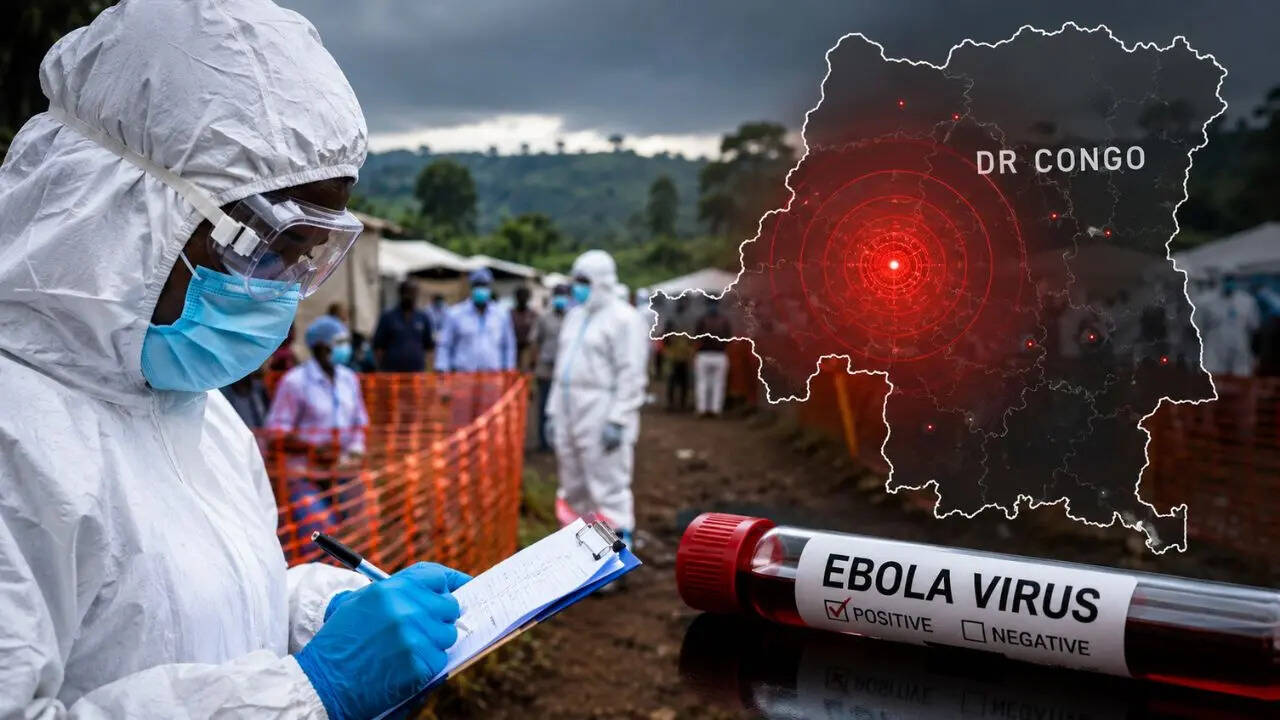
The Ebola outbreak in the Democratic Republic of Congo (DRC) is expanding at an alarming pace, with confirmed infections nearing 3,000 and deaths exceeding 1,300, prompting the United Nations to warn that the virus is "spreading like wildfire" across eastern parts of the country. The outbreak, caused by the rare Bundibugyo ebolavirus, has become the fastest-growing Ebola epidemic. Unlike Zaire strain, there are currently no approved vaccines or treatments specifically for Bundibugyo Ebola, making containment and management more challenging.UN Says DRC Outbreak Is Spreading "Like Wildfire"UN humanitarian officials have described the outbreak as one of the most severe public health emergencies. "The outbreak is spreading like wildfire," UN officials warned recently, highlighting that conflict, population displacement and attacks on healthcare facilities are preventing rapid containment efforts. The World Health Organization (WHO) has repeatedly warned that the outbreak is becoming increasingly difficult to control.According to WHO, a bunch of new infections cannot be linked to known transmission chains, indicating that the virus is spreading silently within communities. Contact tracing remains inadequate to interrupt transmission, while insecurity and misinformation continue to hamper response efforts. Also read: Ebola Scare In The UK After Humanitarian Worker Monitored In London Hospital; Here's what HappenedHealth workers have also demonstrated strikes in some areas over unpaid dues, further disrupting patient care and containment efforts.WHO has stressed that the global public health risk remains low, as Ebola spreads only through direct contact with the bodily fluids of infected individuals. However, the regional risk remains high because of active movement across borders. Armed conflict in eastern DRC has limited access to affected communities, while attacks on health facilities, shortages of medical supplies, delayed laboratory testing and public distrust have slowed efforts to isolate patients, trace contacts, and contain the outbreak.Hope Emerges As First Human Receives Experimental Bundibugyo Ebola VaccineAlso read: Ebola Outbreak In Congo: UN Warns Frontline Responders As Cases Surface In New AreasAmid the worsening outbreak, researchers have reached an important scientific milestone in vaccination. The first human volunteer has received an experimental vaccine targeting the Bundibugyo strain of Ebola, marking the world's first Phase I clinical trial. The study, led by the University of Oxford, will evaluate the vaccine's safety by studying its ability to trigger an immune response in 50 healthy adults. The vaccine, known as ChAdOx1 BDBV, uses the same viral vector platform that was employed for the Oxford-AstraZeneca COVID-19 vaccine. Professor Katrina Pollock, chief investigator at the Oxford Vaccine Group, described the launch as "an important milestone" in the effort to develop protection against a virus for which no licensed vaccine currently exists. Africa CDC Director-General Dr Jean Kaseya also welcomed the development, noting that although early-stage trials will not immediately help affected communities battle the current outbreak, they are critical for building better tools against future epidemics. WHO notes that currently approved Ebola vaccines, including Ervebo, are designed to protect against the Zaire ebolavirus, not the Bundibugyo strain responsible for the ongoing outbreak. Researchers are also in the process to determine whether existing vaccines may offer partial cross-protection while Bundibugyo-specific vaccines continue to be developed. Alongside vaccine research, WHO and international partners have launched clinical trials in the DRC to evaluate experimental therapies, including the monoclonal antibody MBP134 and antiviral drug remdesivir, in patients infected with the Bundibugyo virus. Researchers hope these studies will identify effective treatment options for future outbreaks.