
- Health Conditions A-Z
- Health & Wellness
- Nutrition
- Fitness
- Health News
- Ayurveda
- Videos
- Medicine A-Z
- Parenting
Google And Harvard Collaborate To Create The Most Detailed Human Brain Map Ever With The Help Of AI
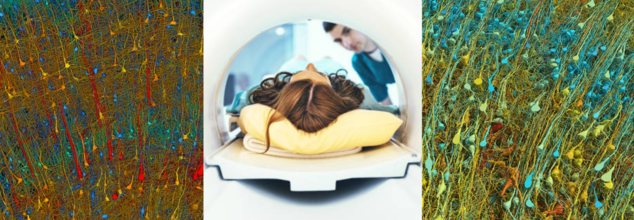
The human brain remains one of the most enigmatic and complex organs in the body. Despite decades of research, understanding the intricate wiring and functionality of the brain has been an elusive goal. However, recent advancements in brain mapping technology are shedding light on this hidden world. A decade-long project led by Dr. Jeff Lichtman and his team at Harvard University, in collaboration with Google, has produced the most detailed map of human brain tissue ever created.
This breakthrough promises to revolutionize our understanding of neural networks and has significant implications for neuroscience and medical research.
Ten years ago, Dr. Jeff Lichtman received a minute sample of brain tissue from a patient undergoing epilepsy surgery. This tiny fragment, measuring less than a grain of rice, contained 57,000 cells, 230 millimeters of blood vessels, and 150 million synapses. Despite its small size, the sheer volume of data generated from this sample was overwhelming. Lichtman and his team amassed 1,400 terabytes of data, equivalent to the content of over 1 billion books, illustrating the scale and complexity of their work.
To process and analyze this immense amount of data, Lichtman’s team collaborated with Google, leveraging the tech giant's advanced computing power. The initial step involved slicing the brain tissue into ultra-thin sections using a diamond blade. These sections were then embedded in resin and cut into slices just 30 nanometers thick—about 1,000th of a human hair’s width. Stained with heavy metals for visibility, these slices were imaged with electron microscopes, resulting in several thousand high-resolution images.
The challenge of managing and interpreting these images required innovative solutions. Google’s AI-based tools and machine learning algorithms were instrumental in processing the 300 million images. By identifying and mapping the types of cells and their connections, the team created an interactive 3D model of the brain tissue, available online as “Neuroglancer.”
Implications of this Brain Map
The detailed brain map reveals previously unknown aspects of neural connectivity. One surprising discovery was that pairs of neurons often had more than 50 connections, a finding likened to having multiple phone lines between two houses. This insight raises questions about the functional significance of these connections and prompts further investigation.Understanding the brain at this unprecedented level of detail could have profound implications for medical science. By comparing healthy brains with those affected by disorders, researchers hope to gain insights into conditions such as psychiatric diseases and developmental disorders. The brain map may also uncover previously unrecognized features, as the dataset's sheer scale means that new findings could emerge with ongoing analysis.
The success of this project paves the way for more ambitious brain mapping endeavors. The next goal is to map the brain of a mouse, requiring between 500 and 1,000 times the data used for the human brain sample. This would amount to 1 exabyte of data, a monumental challenge in terms of both storage and processing power. A complete map of the human brain, estimated to require 1 zettabyte of data, remains a distant but tantalizing prospect.
The collaborative effort between Harvard and Google has set a new benchmark in brain research, offering an invaluable resource for scientists worldwide. The detailed brain map not only enhances our understanding of neural architecture but also opens doors to exploring new frontiers in neuroscience.
As research continues, staying informed and cautious about the ethical implications of such groundbreaking work will be crucial. The future of brain mapping holds exciting potential, and ongoing vigilance and innovation will be key to unraveling the complexities of the human mind.
Meningitis claimed 259,000 lives globally in 2023: The Lancet
Credit: Canva
Meningitis – the inflammation of the brain and spinal cord lining – has claimed 259,000 lives worldwide in 2023, according to a new study, published in The Lancet Neurology.
A total of 2.5 million people globally were infected with meningitis, which is also the leading infectious cause of neurological disabilities.
Importantly, children accounted for a third of the deaths, many of which were in Africa, according to research that described itself as the most comprehensive global assessment of meningitis yet.
The study comes amidst a “unprecedented” meningitis outbreak in the UK’s Kent, where two people died, and many were infected.
Meningitis: Achieving WHO 2030 goals
According to the study, global vaccination campaigns since 2000, played a significant role in reducing the number of infections and deaths by bacterial meningitis, in both high-income and low-income countries.
The Global Burden of Disease study led by an international team of researchers led by those from the University of Washington, showed that although mortality and incidence have declined significantly since 1990, progress is insufficient to meet the WHO 2030 targets.
The WHO targets a 50 percent reduction in meningitis infections and 70 percent reduction in deaths by 2030. However, a substantial meningitis burden persists. It also lags behind other vaccine-preventable diseases.
The driving factor are:
- common pathogens such as S pneumoniae and N meningitidis
- emerging non-bacterial pathogens such as Candida spp
- drug-resistant fungi.
Also read: Bacterial Meningitis May Cause Long-term Fatigue, Vision Problems, Raise Suicide Risk: Study
What Is Meningitis?
Meningitis is a serious medical condition that affects the protective membranes covering the brain and spinal cord, the meninges. While fever is not always present, it is usually considered as one of the classic symptoms of meningitis.
It is important to know the varied symptoms, causes, and treatments of meningitis for early diagnosis and proper management of the disease.
Meningitis is an infectious illness that brings about inflammation in the meninges. The most common cause of such inflammation is bacterial or viral infections, though other causes are also possible including fungal, parasitic, or non-infectious causes (autoimmune disease, head injury, or brain surgery).
Meningitis may also be caused by bacterial meningitis, which the Centers for Disease Control and Prevention (CDC) indicates can be so severe and bring about conditions like hearing loss, vision problems, and death if not received on time.
Also read: From Vaping to Worm Attack: 5 Unimaginable Ways to Contract Meningitis
Meningitis: Risk factors
As per the Lancet study, the greatest risk factors for deaths was
- low birthweight
- premature birth
- air pollution (both household and atmospheric).
Streptococcus pneumoniae, Neisseria meningitidis, non-polio enteroviruses, and other viruses were the leading causes of death, while non-polio enteroviruses caused the most cases.
To achieve further reductions in the disease globally, the researchers called for greater efforts, including:
- expanding vaccination programs,
- greater antibiotic stewardship,
- improving access to care,
- strengthening diagnostics and monitoring for meningitis.
Also read: Unique Symptoms Of Meningitis That Caused An Outbreak In Kent University
Common Symptoms Of Meningitis
- Rash
- Headaches
- Neck stiffness
- Fever
- Drowsiness
- Nausea or vomiting
- Increased sensitivity to light.
World Doctors’ Day: Date, Origin And Significance

Credit: Canva
World Doctors’ Day is celebrated every year on March 30 to honor physicians for their dedication and compassion in saving lives and ensuring healthy communities.
Doctors are often regarded as God as they work tirelessly to save lives, even amidst conflicts or pandemics, without counting their own lives.
Often referred to as a noble profession, their mission transcends boundaries and also showcases profound human values rooted in compassion, dedication, and responsibility.
They play a significant role in building resilient, healthy societies and the world.
While there is no universally declared theme to mark the day, several campaigns are held focusing on the well-being and resilience of doctors, especially in the post-pandemic era.
World Doctors’ Day: History
World Doctors’ Day is the same as US National Doctors Day.
It was first observed in 1933 in Georgia and officially recognized in 1990 when George H. W. Bush signed it into law.
The first Doctors' Day was initiated by Eudora Brown Almond, wife of Dr. Charles B. Almond, and was adopted by the Barrow County Alliance.
The day was also observed to mark the anniversary of the first use of general anesthesia in surgery by Dr. Crawford W. Long in Jefferson, Georgia, in 1842.
The idea was then presented to the Georgia State Medical Alliance in 1933 by E. R. Harris of Winder, president of the Barrow County Alliance.
On May 10, 1934, the resolution was adopted at the annual state meeting in Augusta, Georgia.
Later, it was resolved by the Senate and House of Representatives of the US in Congress to designate March 30 as “National Doctors’ Day.”
The symbol for Doctors' Day is often the red carnation, chosen for its color that represents love, charity, and sacrifice — that highlights the profession.
The US reportedly has over 985,000 to 1 million practicing physicians.
World Doctors’ Day: Significance:
The day honors physicians' commitment, service, and contributions to healthcare, often highlighting their role in patient care. Their role is also in medical innovations that have given life to people across the globe.
It also highlights challenges faced by the physician community, like burnout, workforce shortages, and rising health demands.
Doctors are also overburdened with increasing patient load and staff shortages. Some also face workplace violence and safety concerns.
Notably, digital healthcare and evolving technologies have also added pressures and an additional burden to their practice.
Countries Celebrating World Doctors’ Day
World Doctors’ Day is celebrated on March 30 in the US, the UAE, and Australia.
India celebrates National Doctors’ Day on July 1, commemorating the birth and death anniversary of renowned physician Dr. Bidhan Chandra Roy.
Libevitug: China Rolls Out World's First Hepatitis D Monoclonal Antibody Drug

Credit: @ChinaScience/X
China has become the world’s first country to approve a monoclonal antibody drug called Libevitug to treat hepatitis D — a severe, chronic liver disease.
The drug, which was rolled out at a Beijing hospital recently, was granted conditional approval by China's National Medical Products Administration in January 2026 following priority review, Science and Technology Daily reported.
Libevitug is a monoclonal antibody developed by a team from Tsinghua University and the Beijing-based biopharmaceutical company Huahui Health.
It works by blocking hepatitis B and D viruses from entering liver cells.
Clinical trials on Libevitug demonstrated significant efficacy in virological response and normalization of liver function, with particularly notable benefits for patients with cirrhosis.
What Is Hepatitis D? What Are The Key Symptoms?
Hepatitis D, or HDV, is different from the others—it can't infect the liver by itself. It only exists in those already infected with hepatitis B, employing the outer shell of the HBV virus to replicate.
When HBV and HDV infect the liver concurrently (a co-infection) or if HDV is contracted later on superimposition of pre-existing HBV (a superinfection), the immune system is twice assaulted. The liver has to cope with more intense inflammation, resulting in more rapid fibrosis progression and a much increased risk of cirrhosis and hepatocellular carcinoma.
In individuals with co-infection, liver injury is more severe, and complications arise years sooner than in HBV mono-infection. There are no specific therapies for HDV currently, and its management relies mostly on the control of hepatitis B.
It is also possible to prevent HBV infection and thereby hepatitis D by vaccination. Antiviral therapy and close follow-up can likewise decrease the chances of serious HDV complications in those already infected with HBV.
Simultaneous infection with HBV and HDV can lead to mild-to-severe hepatitis, with signs and symptoms typically appearing 3–7 weeks after initial infection and include:
- fever,
- fatigue,
- loss of appetite,
- nausea,
- vomiting,
- dark urine,
- pale-colored stools,
- jaundice (yellow eyes)
- fulminant hepatitis.
Also read: Hepatitis On Rise In India: What Is Causing It?
How Does Libevitug Work?
Of the over 254 million chronic hepatitis B carriers worldwide, approximately 5 percent are co-infected with the hepatitis D virus, and patients with co-infection have long lacked effective targeted therapies.
Clinical trials for the drug began in 2018, with an international multi-center study launched in 2023 among patients with chronic co-infection.
The drug previously received "Breakthrough Therapy Designation" from both the Center for Drug Evaluation (CDE) of the China NMPA and the US Food and Drug Administration (FDA).
Also read: Hepatitis A To E: How Each Virus Affects Your Liver?
"Libevitug demonstrates outstanding clinical efficacy and significantly improves liver stiffness, with particularly remarkable efficacy in patients with HBV/HDV-related cirrhosis," stated Professor Niu Junqi, principal investigator of the Libevitug trial from the First Hospital of Jilin University.
"This drug aligns with the core objectives of China's Action Plan for the Prevention and Control of Viral Hepatitis (2025–2030), which aims to improve diagnosis and treatment rates for viral hepatitis and reduce the incidence of liver cancer and mortality," Junqi added.
Junqi noted that Libevitug is expected to effectively lower the risk of disease progression to advanced severe diseases such as liver cancer, drive the diagnosis and treatment of HDV in China, as well as advance the goal of eliminating viral hepatitis as a public health problem by 2030.
- Follow Us :


© 2024 Bennett, Coleman & Company Limited