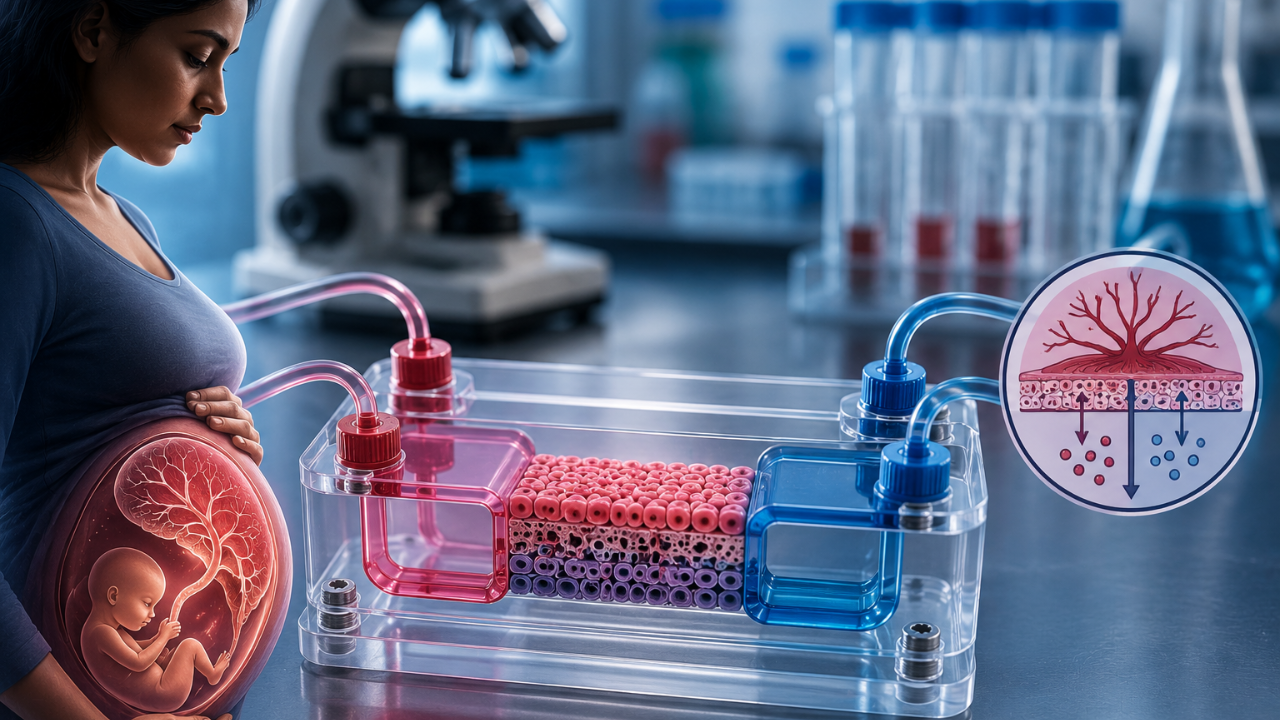
Indian scientists from ICMR-NIRWoH and IIT Bombay have developed "placenta-on-chip" platform that mimics key functions of the human placenta. The indigenous innovation could transform maternal and fetal health studies while reducing dependence on animal testing. Indian Scientists Develop Placenta-On-Chip In a major breakthrough for pregnancy and fetal health research, Indian scientists have developed an indigenous “placenta-on-chip" platform that successfully mirrors several important functions of the human placenta. According to the journal Biofabrication, the platform, developed by researchers from the ICMR-National Institute for Research on Women's Health (ICMR-NIRWoH) in collaboration with IIT Bombay, will equip scientists with a new tool to study pregnancy in depth, understand complications, and evaluate the safety of medicines during pregnancy. Also read: WHO Unveils Global Action Plan To Combat Rising Fungal Infections And Drug Resistance Significance Of Placenta The placenta is a temporary organ that develops during pregnancy and acts as the lifeline between the mother and the unborn baby. It provides unborn babies with oxygen and nutrients, eliminates waste products, produces hormones essential for pregnancy, and serves as a protective barrier for the baby. Despite its vital role in the development of a healthy baby, the placenta remains one of the least understood human organs because its research during pregnancy is both ethically and technically challenging. How Will Placenta-On-Chip Help Researchers? The placenta-on-chip operates like a laboratory platform, recreating the interface between the mother and the fetus using living human cells. It reproduces several essential functions of the placenta, including: Production of pregnancy hormones Transfer of nutrients Removal of waste products including urea A selective barrier function that regulates what reaches the fetus Researchers also demonstrated that the platform could simulate hyperglycaemic conditions similar to gestational diabetes, allowing scientists to study how pregnancy-related diseases affect placental function. The placenta-on-chip platform could significantly improve research into pregnancy complications like: Gestational diabetes Preeclampsia Fetal growth restriction Placental disorders Also read: Cancer Survivorship Beyond Treatment: Why Caregiver Support Must Become A Standard Of Oncology Care Scientists also believe it could become an important tool for evaluating whether medicines can cross the placental barrier, helping researchers identify drugs that are safer during pregnancy. Pregnant women are often excluded from clinical drug trials because of ethical concerns, leaving doctors with limited research. Placenta-on-chip may help bridge this gap. Another major advantage is its potential to reduce dependency on animals for testing. Animal studies do not always accurately reflect how the human placenta functions because placenta structures differ significantly across species. Human cell-based platforms can therefore provide more clinically relevant insights and findings. The researchers believe the placenta-on-chip could become an important platform for studying maternal-fetal health, testing new therapies, and understanding how various complications develop during pregnancy. The innovation is a step towards establishing clinically safe procedures to tackle pregnancy-related complications. The technology has the potential to contribute not only to safer pregnancies but also to more reliable, human-based research that could benefit global healthcare. India could progress significantly in biomedical research, influencing and advancing reproductive healthcare systems worldwide.