
- Health Conditions A-Z
- Health & Wellness
- Nutrition
- Fitness
- Health News
- Ayurveda
- Videos
- Medicine A-Z
- Parenting
India to Soon Launch Free HPV Vaccine For Young Girls To Prevent Cervical Cancer
Credit: Canva
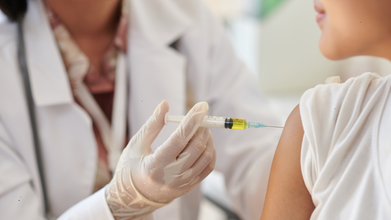
India is planning to launch a free nationwide Human Papillomavirus (HPV) vaccination program to strengthen women’s health and eliminate preventable cervical cancers in the country, official sources said today.
Human Papillomavirus is a group of common viruses, some types of which are transmitted through close skin-to-skin contact, and lead to cervical cancer.
The special vaccination program aims to protect adolescent girls against cervical cancer -- one of the most common yet preventable cancers affecting women in India.
The vaccine will be administered to adolescent girls aged 14, free of cost, at government health centers.
"The Government urges parents and guardians across the country to come forward and ensure that their 14-year-old daughters are vaccinated against HPV once the program is rolled out," the sources said.
Also Read: US FDA's New Framework Calls For Speeding Up Approvals For Rare Disease Therapies
"HPV vaccination is a powerful, preventive step that can save lives. By choosing vaccination, parents can secure a healthier, cancer-free future for their daughters," they added.
HPV Vaccine: Who Can Take It, Where To Get It From
The nationwide program, based on expert recommendations of the National Technical Advisory Group on Immunization (NTAGI), will target girls aged 14 years.
At 14, the HPV vaccine offers maximum preventive benefit, well before potential exposure to the virus.
"By prioritising prevention at the right age, the program is expected to provide lifelong protection and significantly reduce the future burden of cervical cancer in the country," the sources said.
Vaccination under the national program will be voluntary and free of cost.
The HPV vaccination will be conducted exclusively at designated government health facilities, including Ayushman Arogya Mandirs (Primary Health Centres), Community Health Centres, Sub-District and District Hospitals, and Government Medical Colleges.
The vaccine to be used is non-live and does not cause HPV infection. It is supported by more than 500 million doses administered globally since its introduction in 2006.
"India’s national program will use Gardasil, a quadrivalent HPV vaccine that protects against HPV types 16 and 18, which cause cervical cancer, as well as types 6 and 11. Strong global and Indian scientific evidence confirms that a single dose provides robust and durable protection when administered to girls in the recommended age group," the sources said.
Also Read: Fact Check: Should You Change Your Underwear In Every 6 Months?
The new program also aligns with the recommendations of the World Health Organization, which identifies HPV vaccination as a central pillar of the Global Strategy to Eliminate Cervical Cancer.
More than 90 countries worldwide are implementing single-dose HPV vaccination schedules. And about 160 countries worldwide have already introduced HPV vaccination into their national immunization schedules.
"Several countries have already demonstrated substantial reductions in HPV infection, precancerous lesions, and cervical cancer incidence following widespread vaccinations," the sources said.
Cervical Cancer: A Public Health Challenge in India
Cervical cancer remains the second most common cancer among women in India, with nearly 80,000 new cases and over 42,000 deaths reported annually.
According to scientific evidence, almost all cases of cervical cancer are caused by persistent infection with high-risk types of Human Papillomavirus (HPV), particularly HPV types 16 and 18.
In India, HPV types 16 and 18 together account for more than 80 percent of cervical cancer cases.
Although cervical cancer is preventable with vaccination and early screening, it continues to impose a heavy burden on women and families.
The impending vaccination program will help prevent the risk of HPV infection before it can progress to cancer.
MAHA Moms Turn on Trump Over Cancer-Linked Pesticide Approval
Credit: Canva
During the height of President Trump's third political campaign in 2024, Robert F Kennedy Jr. shocked the world by changing his affiliation with the Democratic Party and throwing his support behind the Republican candidate.
But Kennedy Jr. was not the only one to switch sides. He also brought along a string of health conscious female followers who called themselves the MAHA Moms after his Make America Healthy Again movement, all of whom enthusiastically voted for Trump.
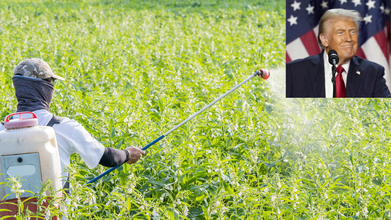
However, a new executive order by Trump to protect the production of glyphosate-based herbicides, such as Roundup, has caused unrest among the MAHA community and invited severe backlash.
In a February 18 order, the President wrote: 'Elemental phosphorus is also a critical precursor element for the production of glyphosate-based herbicides, which play a critical role in maintaining America’s agricultural advantage by enabling farmers to efficiently and cost-effectively produce food and livestock feed.
"As the most widely used crop protection tools in United States agriculture, glyphosate-based herbicides are a cornerstone of this Nation’s agricultural productivity and rural economy, allowing United States farmers and ranchers to maintain high yields and low production costs while ensuring that healthy, affordable food options remain within reach for all American families.
"There is no direct one-for-one chemical alternative to glyphosate-based herbicides. Lack of access to glyphosate-based herbicides would critically jeopardize agricultural productivity, adding pressure to the domestic food system, and may result in a transition of cropland to other uses due to low productivity.
"Given the profit margins growers currently face, any major restrictions in access to glyphosate-based herbicides would result in economic losses for growers and make it untenable for them to meet growing food and feed demands."
What Is Glyphosate?
Registered as a pesticide in the US since 1974, glyphosate is a widely used herbicide that controls the growth of broadleaf weeds and grasses. The chemical compound is considered important in the production of fruits, vegetables, nuts, and glyphosate-resistant field crops such as corn and soybean.In addition, glyphosate breaks down in the environment, can be used for no-till and low-till farming which can reduce soil erosion, and facilitates integrated pest management.
Apart from farming, the compound is also used in conservation land, pastures, rangeland, aquatic areas, forests, turf grass, residential areas, non-food tree crops (pine, poplar and Christmas trees), rights of way, commercial areas, paved areas, spot treatments, ornamentals, parks, and wildlife management areas.
Glyphosate can be applied in agricultural, residential and commercial settings using a wide range of application methods, including aerial sprays, ground broadcast sprayers of various types, shielded and hooded sprayers, wiper applicators, sponge bars, injection systems, and controlled droplet applicators.
Why Is It Dangerous?
People can be exposed to the herbicide through agricultural use, as residues are found in food, water, and sometimes, the urine of the general population.
In 2015, the World Health Organization’s International Agency for Research on Cancer (IARC) classified glyphosate as "probably" carcinogenic to humans (Group 2A). Previous studies have also shown that the herbicide can cause DNA damage in humans and rodent cells.
Acute exposure can also cause skin/eye irritation, nausea, and, in high-dose ingestion, severe toxicity or death. Chronic exposure studies have raised concerns about liver inflammation, metabolic syndrome, and endocrine disruption, especially in early life.
Talking about the President's new order, Alex Clark, a health and wellness podcaster for the conservative group Turning Point USA, which is closely allied with the president said: "Women feel like they were lied to, that MAHA movement is a sham. How am I supposed to rally these women to vote red in the midterms? How can we win their trust back? I am unsure if we can.”
Vani Hari, a food activist, author and one of the grass roots leaders of the MAHA coalition also added: "This executive order reads like it was drafted in a chemical company boardroom. Calling it ‘national defense’ while expanding protections for toxic products is a dangerous misdirection. Real national security is protecting American families, farmers and children.”
Kelly Ryerson, another key player in the MAHA movement who has been lobbying US regulators and lawmakers for restrictions on glyphosate and other pesticides, further noted that this recent move by Trump and Kennedy Jr. is an insult to those who have largely supported the administration because of promises that MAHA issues would be taken seriously.
But despite wide criticism, the US Environmental Protection Agency (EPA) classification for glyphosate is “not likely” to be carcinogenic (causing cancer) to humans, based on evidence from animals and humans.
The International Agency for Research on Cancer (IARC) has also classified glyphosate as “probably” carcinogenic to humans, which means there was sufficient evidence of cancer in animals, but limited evidence of cancer in humans.
What Does The Government Say?
Paying no heed to his followers' complaints, Kennedy Jr. is doubling down on his defense of Trump's order and claims that while pesticides can cause health problems, but said they are necessary to ensure an adequate food supply.
In a X post, he explained: "Pesticides and herbicides are toxic by design, engineered to kill living organisms. When we apply them across millions of acres and allow them into our food system, we put Americans at risk. Chemical manufacturers have paid tens of billions of dollars to settle cancer claims linked to their products, and many agricultural communities report elevated cancer rates and chronic disease.
"Unfortunately, our agricultural system depends heavily on these chemicals. The U.S. represents 4 percent of the world’s population, yet we use roughly 25 percent of its pesticides. If these inputs disappeared overnight, crop yields would fall, food prices would surge, and America would experience a massive loss of farms even beyond what we are witnessing today. The consequences would be disastrous.
"I support President Trump’s Executive Order to bring agricultural chemical production back to the United States and end our near-total reliance on adversarial nations. His EO protects two pillars of national strength: our defense readiness and our food supply. When hostile actors control critical inputs, they directly threaten the security of the American people. The Trump administration will secure these supply chains to eliminate that vulnerability."
But his allies continue to disagree.
Zen Honeycutt, founder of Moms Across America, said in a post replying to Kennedy Jr.: "It’s been a year. Not a single thing has been done by the EPA [Environmental Protection Agency] to reduce our children’s and families exposure to pesticides. In fact regulations have only gotten worse, loosened and more harmful pesticides have been approved.
"There is no excuse for this. We love you Bobby but this administration needs to keep their word. We were promised specifically clean air, clean water, and addressing of the pesticides [in] our foods. Whether glyphosate comes from China or the USA it’s still sterilizing and killing us and our soil."
Lori Ann Burd, environmental health program director at the Center for Biological Diversity, also called the executive order “a sickening love letter from Trump to the largest pesticide companies in the world.
“It’s more proof that Trump doesn’t care at all about Americans’ health,” she said. “While he’s pandering to chemical companies the rest of the country, especially those who’ve been poisoned by pesticides, is rightfully asking ‘what about us?’”
Indigenous Td Vaccine Rollout In India To Boost Immunity In Children, Adults, Say Experts
Credit: X
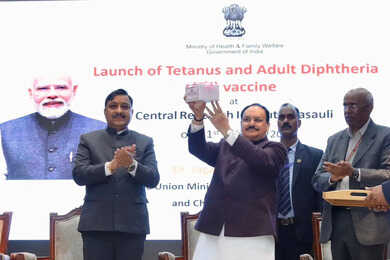
The recent launch of the indigenous Td vaccine in India by Union Health Minister JP Nadda will boost immunity and reduce the risk of tetanus and diphtheria in children and adults, said health experts.
Union Health Minister JP Nadda formally launched the indigenously manufactured Td vaccine in Himachal Pradesh last week.
With the launch, the Tetanus Toxoid (TT) vaccine has been replaced with the Tetanus and adult diphtheria (Td) vaccine in India’s immunization program for all age groups, including pregnant women.
The move comes amid increasing numbers of cases of diphtheria amongst older age groups. Tetanus and diphtheria can lead to hospitalizations or even cause death. The Td vaccine will help to decrease diphtheria outbreaks.
“In keeping with global practice, India has shifted from TT, which covers for tetanus, to Td, which covers for both tetanus and diphtheria. This vaccine is indigenously manufactured and is expected to significantly reduce the risk of both these diseases in older children as well as adults,” Dr. Rajeev Jayadevan, Ex-President of IMA Cochin and Convener of the Research Cell, Kerala, told HealthandMe.
What Is The Td Vaccine?
The Td vaccine, indigenously manufactured at the Central Research Institute (CRI), Kasauli in Himachal Pradesh, is a combination of tetanus and diphtheria with a lower concentration of diphtheria antigen (d), and is recommended for older children and adults.
The use of Td, instead of TT, is recommended during pregnancy to protect against maternal and neonatal tetanus and diphtheria during prenatal care.
Vaccination during pregnancy also serves to boost immunity and increase the duration of protection in pregnant women who have not received the full set of recommended booster doses.
The Td is a safe vaccine, and 133 countries are currently using it.
The Health Ministry, in a statement, said that the Central Research Institute will supply 55 lakh doses to the UIP by April 2026, with production expected to scale up progressively in subsequent years to further strengthen the Universal Immunization Program in India.
“India’s indigenous Td vaccine rollout marks a significant milestone in strengthening the nation’s immunization program by enhancing self-reliance, affordability, and supply stability,” Dr. Neha Rastogi, Senior Consultant - Infectious Diseases, Fortis Gurugram, told HealthandMe.
“Locally produced vaccines reduce dependency on imports, ensuring uninterrupted protection for adolescents and adults against tetanus and diphtheria. This initiative supports wider coverage, faster distribution to remote regions, and improved public health preparedness,” she added.
Tetanus And Diphtheria: Disease burden In India
As per the National Health Profile 2022, India has reported 1,586 cases and 22 deaths due to diphtheria in 2020, and 3,677 cases and 47 deaths in 2021.
Around 10 Indian states report the majority (84 per cent) of the cases.
As of 21 June 2024, Orissa has also reported six deaths and 21 suspected diphtheria cases. There has been more than 90 percent coverage of diphtheria vaccination in birth cohorts since 2014, but gaps in booster dose coverage are widely prevalent.
Plugging of gaps in the routine immunization, coupled with inclusion of booster doses in the national data on diphtheria vaccination, is the need of the hour.
“Diphtheria is one of the most dangerous infectious diseases known to man; it spreads easily through the respiratory route. It can cause death due to the bacterial toxin affecting the heart (Myocarditis). It is vaccine-preventable, but the immunity fades over time,” Dr. Jayadevan said.
Therefore, the Td booster shots at ages 10 and 16 are essential to maintain protection. Similarly, pregnant women should receive two doses to protect both mother and child.
Given the recent outbreaks of diphtheria in India and elsewhere, this transition is a public health priority, the expert said.
Malaysia Reports Record TB Outbreak With Over 3,000 Cases Amid Ramadan Celebrations
Credit: Canva
Malaysia is seeing a significant outbreak of tuberculosis (TB) -- the world’s most infectious disease -- with cases hitting more than 3,000.
As the outbreak is being reported amid ongoing Ramadan celebrations with people flocking to markets and gathering with family and friends to break their fasts, the country’s Health Ministry has urged citizens to observe precautions and maintain respiratory health, especially in crowded and enclosed spaces.
Between February 8 and 14, the ministry reported a total of 596 new tuberculosis cases nationwide, as per a statement issued on February 21. This drove the total number of TB cases to 3,161 across the country.
“It should be emphasized that Ramadan itself is not the cause of TB transmission. Nevertheless, increased social activities and gatherings during this month generally lead to greater interaction within the community,” the statement said.
Sabah reported the highest TB cases -- 755, which is nearly 24 percent of the total number of cases. It was followed by Selangor (596), Sarawak (332), and Johor (280).
A total of 2,571 cases were reported between Jan 1 and Feb 7, according to local media outlet Malay Mail.
The Health Ministry stated that “crowded, and poorly ventilated spaces” can increase the risk of transmission, “especially if there is an individual with active TB who has not yet received treatment", it said.
Thus, it advised the “public to continue practicing consistent self-care measures, including maintaining respiratory health”. These include:
- Practicing proper cough and sneeze etiquette
- Ensuring good ventilation in enclosed spaces
- Wearing a face mask if experiencing symptoms
- Seeking medical help if experiencing a prolonged cough
What Is Tuberculosis?
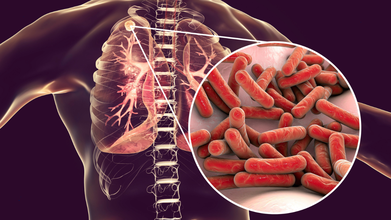
Tuberculosis is an airborne infectious disease that can spread when a person with active pulmonary TB coughs, speaks, or sneezes.
Common symptoms include a persistent cough lasting more than three weeks, often producing mucus or blood. These can also be accompanied by chest pain, fatigue, fever, night sweats, and unexplained weight loss.
Although highly infectious, TB does not usually spread as quickly as influenza or COVID-19 and typically requires longer and repeated exposure.
Prolonged exposure to individuals with active TB who have not yet received treatment can increase the risk of transmission.
The risk may also depend on factors like poor ventilation and immunity levels, and the presence of comorbidities like diabetes and HIV.
TB Outbreak In Malaysia: What The Experts Say?
About 85 per cent of the currently reported cases in Malaysia involve local citizens, while only 15 per cent involve foreigners, according to data from the Health Ministry.
"TB is not a new phenomenon in Malaysia’s public health landscape, as it has existed for a long time and remains an endemic disease that requires serious attention from all parties," the country’s Health Minister Dzulkefly Ahmad was quoted as saying to The Straits Times.
Health experts advised people to use a mask when in crowded places, and to seek medical help if they experience any symptoms.
"People should put on face masks while travelling and seek medical treatment early if they show symptoms," Rafdzah Ahmad Zaki, professor of epidemiology and public health at Universiti Malaya, was quoted as saying.
- Follow Us :


© 2024 Bennett, Coleman & Company Limited