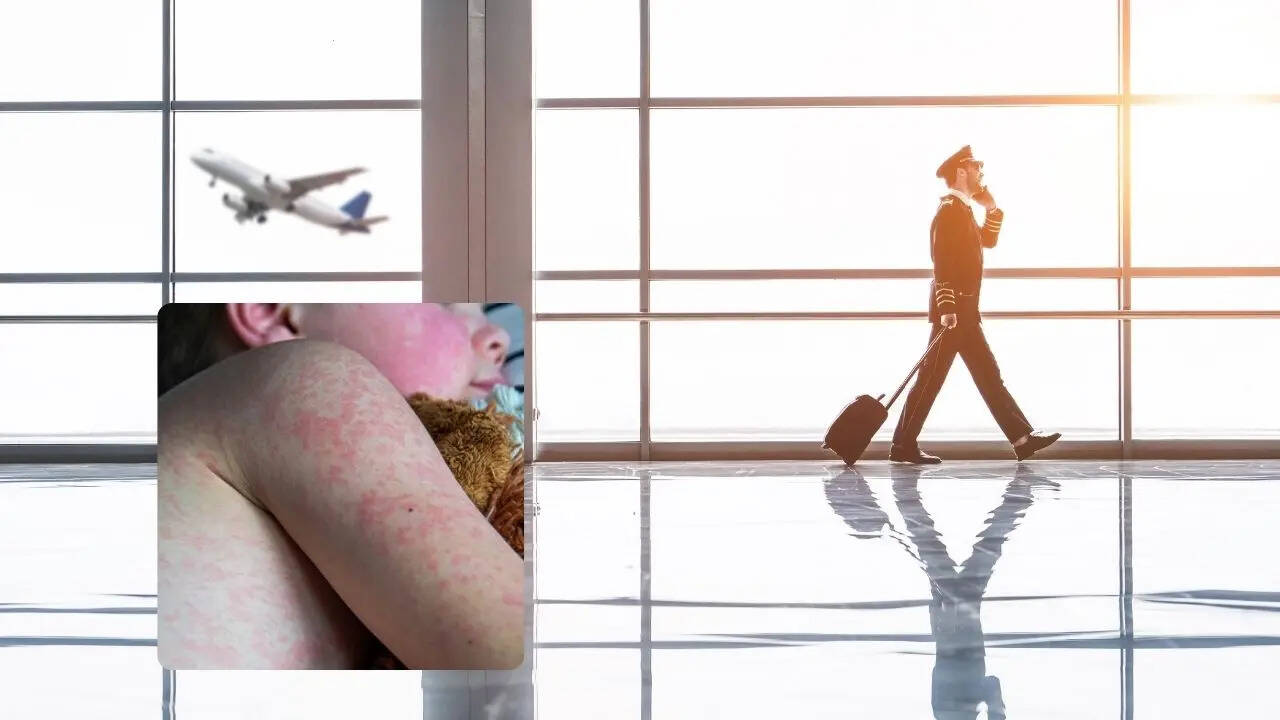
New Jersey health authorities have issued an alert for travelers who passed through Newark Liberty International Airport on December 19, warning of a possible measles exposure.According to the state Department of Health, an infected passenger who does not live in New Jersey traveled through at least two airport terminals that day. Officials said anyone who was in Terminal B around 7 a.m. or Terminal C around 7 p.m. may have been exposed to the highly contagious virus. Authorities do not know where the individual was during the hours between those times.As per NBC News, health officials have issued warnings about possible measles exposure for travelers passing through Boston and Denver.Measles Alert Issued After Exposure At Two Major US AirportsPeople who were exposed could begin showing symptoms as late as January 2, as per NBC News. Health officials are urging anyone who believes they may have been exposed or who develops symptoms to contact their local health department or healthcare provider before visiting a clinic or hospital.Officials noted that special arrangements can be made for medical evaluation to reduce the risk of spreading the virus to other patients and healthcare workers.Measles Symptoms and Health RisksMeasles typically begins with a high fever, cough, runny nose, and red, watery eyes. A rash usually appears three to five days after symptoms start. It often begins as flat red spots along the hairline and face, then spreads downward to the neck, torso, arms, legs, and feet.In some cases, measles can lead to serious complications, including pneumonia and encephalitis. Pregnant individuals face added risks, such as miscarriage, premature delivery, or having a baby with low birth weight.What Is Measles?Measles (rubeola) is a highly contagious viral infection causing fever, cough, runny nose, red eyes, and a characteristic full-body rash, spread through air and surfaces, which can lead to severe, even deadly, complications like pneumonia or brain swelling, though it's preventable with the measles vaccine, as per Mayo Clinic.The virus is extremely infectious, with one infected person potentially infecting up to 90% of unvaccinated close contacts, and remains contagious for hours in the air or on surfacesHow Measles SpreadsMeasles spreads easily through the air when an infected person coughs or sneezes. The virus can remain airborne for up to two hours after the person has left the area. Infection can also occur through direct contact with mucus or saliva from someone who is infected.Rising Measles Cases and ProtectionNew Jersey has reported 11 confirmed measles cases in 2025, compared with seven cases in 2024. Across the United States, cases have climbed sharply, reaching 2,012 across 44 jurisdictions as of December 23, the highest number reported since 1992.State health officials are working with local agencies on contact tracing and outreach to alert those who may have been exposed. Individuals most at risk include those who are not fully vaccinated or who have never had measles.The MMR vaccine, given in two doses, remains the most effective protection against measles, mumps, and rubella.