
- Health Conditions A-Z
- Health & Wellness
- Nutrition
- Fitness
- Health News
- Ayurveda
- Videos
- Medicine A-Z
- Parenting
Microsoft's new AI model GigaTime to expand access to cancer care, says CEO Satya Nadella
Credit: Microsoft
Tech giant Microsoft's new artificial intelligence model GigaTIME will help reduce time and cost as well as expand access to cancer care, said CEO Satya Nadella today.
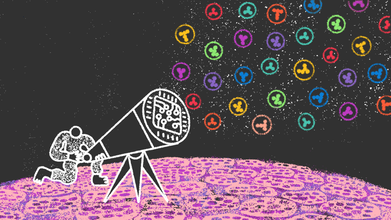
Nadella noted that its multimodal AI system has shown promise in transforming routine pathology slides into detailed spatial proteomics data -- a high-resolution map of proteins.
The advanced technology may help doctors analyze tumors faster, thus bringing hope to millions of cancer patients worldwide for a better and faster diagnosis.
Taking to social media platform X, Nadella said: “We’ve trained a multimodal AI model to turn routine pathology slides into spatial proteomics, with the potential to reduce time and cost while expanding access to cancer care”.
What is GigaTIME
GigaTIME is a multimodal AI model for translating routinely available hematoxylin and eosin (H&E) pathology slides to virtual multiplex immunofluorescence (mIF) images.
H&E is the "gold standard" technique in pathology for diagnosing cancer. The mIF images share details of proteins and their locations in cancer cells, thus advancing precision immuno-oncology research.
Developed in collaboration with Providence and the University of Washington, the team trained GigaTIME on a dataset of 40 million cells with paired H&E and mIF images across 21 protein channels.
The multimodal AI, which analyzed standard pathology slides, showed the potential to generate a “virtual population” of tumor cells. It also revealed the detailed protein activity within cancer cells.
The images also offer deeper insights into how tumors behave and disease progression, enabling doctors to cut down the time and cost of diagnosis.
“GigaTIME is about unlocking insights that were previously out of reach,” explained Carlo Bifulco, chief medical officer of Providence Genomics and medical director of cancer genomics and precision oncology at the Providence Cancer Institute, in a Microsoft Blogpost
“By analyzing the tumor microenvironment of thousands of patients, GigaTIME has the potential to accelerate discoveries that will shape the future of precision oncology and improve patient outcomes,” Bifulco added.
How GigaTIME Works
In the paper, detailed in the journal Cell, scientists from Microsoft reported that they applied GigaTIME to 14,256 cancer patients from 51 hospitals and over a thousand clinics.
The AI system generated a virtual population of around 300,000 mIF images spanning 24 cancer types and 306 cancer subtypes.
This virtual population uncovered 1,234 statistically significant associations linking mIF protein activations with key clinical attributes such as biomarkers, staging, and patient survival.
"By translating readily available H&E pathology slides into high-resolution virtual mIF data, GigaTIME provides a novel research framework for exploring precision immuno-oncology through population-scale TIME analysis and discovery," the researchers said.
"The GigaTIME model is publicly available to help accelerate clinical research in precision oncology," they added.
Just twice a week at-home resistance training enough to build muscle, reveal new guidelines

Credit: Canva
Unable to hit the gym due to a crunch of time? Take heart, indulging in resistance exercises such as lifting weights and bodyweight just twice a week at home can help you build muscle, as per new guidelines from the American College of Sports Medicine (ACSM).
The first major update to resistance training guidelines in the last 17 years moved away from the previous stance and stressed the fact that any type of resistance training is better than no exercise at all.
The updated guidelines stress the importance of resistance training, even in small amounts, for improving
- strength,
- muscle size,
- power
- physical function.
What Does The New Guidelines Say
The new recommendations, published in the Medicine & Science in Sports & Exercise journal, are based on 137 systematic reviews involving more than 30,000 participants. It is the most comprehensive resistance training guideline to date.
More than perfection, the guidelines emphasized the need for consistency. Beyond the gym, the guidelines for the first time also recognize elastic bands, bodyweight training, and home-based routines for offering clear and measurable improvements in strength, muscle size, and functional performance.
"The best resistance training program is the one you'll actually stick with," said Stuart Phillips, distinguished professor in the Department of Kinesiology and an author on the Position Stand.
"Training all major muscle groups at least twice a week matters far more than chasing the idea of a 'perfect' or complex training plan. Whether it's barbells, bands, or bodyweight, consistency and effort drive results," Phillips added.
The guidelines stated that while the load, volume, or frequency of the exercise regimen can be fine-tuned, the primary goal for most adults should be to build a consistent routine.
Instead of rigid rules, Phillips said that personal goals, enjoyment, and long-term adherence matter most, especially for adults looking to stay strong, healthy, and functional as they age.
Also read: India For The First Time Has Guidelines On Muscle Loss
What is Resistance training?
Resistance training, also known as strength or weight training, is a central component of exercise programs.
It exercises muscles by contracting against external resistance, such as free weights, machines, resistance bands, water, or body weight, through isometric, isotonic, or isokinetic actions.
It has proven to
- improve muscular strength,
- power,
- endurance,
- overall health and sports performance.
- bone density.
The Physical Activity Guidelines for Americans recommends adults do muscle-strengthening activities two or more days per week, working all major muscle groups at a moderate or greater intensity.
Studies have proven that resistance training
- Improves blood glucose control,
- Boost gut health
- Improves cognition and brain health
- Cuts down stress, depression, and anxiety
- Reduces cardiovascular disease risks.
Cancer: AIIMS-led Study Pushes For Inclusion of Early Detection, Diagnosis Under Ayushman Bharat
Credit: Canva
Even as India’s flagship health insurance program, Ayushman Bharat–Pradhan Mantri Jan Arogya Yojana (AB PM-JAY), has significantly benefited cancer patients in the country, oncologists and health economists led by the All India Institute of Medical Sciences in a new study have urged for including early cancer detection in its coverage.
AB PM-JAY has, since its launch in 2018, provided crucial financial protection and timely access, reducing financial burden as well as out-of-pocket expenditure for people from poor and vulnerable families suffering from the deadly condition.
However, the study, led by Dr. Abhishek Shankar, an assistant professor in the department of radiation oncology at AIIMS, Delhi, flagged a huge gap between current and required funding.
While AB PM-JAY currently allocates about Rs 7,700 crore per year for cancer, the full five-year Standard of Care (SoC) for cancer, including diagnostics, surgery, targeted drugs, radiotherapy, and follow-up, would require an estimated Rs 33,000 crore annually, revealed the study.
"Better cancer care is not only about spending more, but it is also about spending smarter, especially where early detection and diagnosis and well-designed coverage can prevent both late-stage suffering and catastrophic costs,” said Dr. Shankar.
"This will be a useful strategic shift away from purely increasing budgets toward optimizing care pathways and resource allocation, and also prioritizing early detection," he added.
How AB PM-JAY Has Benefitted Cancer Patients In India
AB PM-JAY, the world’s largest publicly funded health insurance scheme, was launched in 2018 to provide health cover to 55 crore people, corresponding to 12.34 crore poor and vulnerable families.
The government covers up to 5 lakh rupees for treatment such as chemotherapy for breast, ovarian, colorectal, cervical and bone cancers.
As per the latest data from the Health Ministry, India has seen a significant rise in the cancer burden, with the cases rising to 1,569,793 in 2025.
AB PM-JAY has reportedly provided cover for over 68 lakh cancer treatments, worth around Rs 13,000 crore.
What The Study Proposes
1. The study proposed to add the five-year Standard of Care (SoC) for cancer under the AB-PMJAY program. It said that, including diagnosis and treatment:
- will save about Rs 1,500 crore annually
- lead to 1,560 additional survivors per year
2. A five-year "revolving ceiling" of Rs 25 lakh per family, instead of the current Rs 5 lakh annual cap
3. A top-up facility of Rs 10 lakh for high-stage cancers
4. Adding diagnostic coverage and screening support
5. Integrating screening and diagnostics via Health and Wellness Centers under the National Health Mission
"India needs a more balanced framework for evaluating cancer innovations, one that considers not only cost but also the value delivered to patients, society and the health system," said Dr Monika Puri, Public Health Expert.
"Eligible funds for cancer patients should be advanced in the first year itself so that they can complete the intensive treatments and therapies required during the initial phase," said Dr. Sudha Chandrashekhar, Former Executive Director, National Health Authority. She suggested that such support could later be adjusted against entitlement in subsequent years.
Changing Climatic Conditions Driving Bee Sting Deaths In Assam: ICMR Scientist
Credit: iStock
Changes in environmental conditions are driving bee sting deaths in India’s northeastern state Assam, warned a scientist at the Indian Council of Medical Research (ICMR).
While rare and preventable, Assam sees about 15–20 deaths every year due to bee envenomation, Dr. Surajit Giri, a snakebite specialist and researcher with the ICMR Zero Snakebite Death Project, was quoted as saying to The Sentinel.
"A massive bee attack can cause instant death. Although Assam does not have accurate statistics, various sources suggest that approximately 15–20 people die every year in the state from such incidents. Importantly, many of these deaths are preventable — if both the public and healthcare providers remain alert and informed," Dr. Giri said.
He added that “changing environmental conditions are pushing bee attack cases” in the state.
Bee Sting Deaths In India: Why The Cases Are Rising?
In February, a 65-year-old umpire died while several players were injured after a swarm of bees attacked them during a cricket match in Uttar Pradesh’s Unnao district.
In 2025, a 62-year-old man in Kolkata’s Durgapur died after being stung by a swarm of bees 890 times. There are several such cases being reported from different parts of the country.
The mounting cases are an ecological warning and is directly linked to environmental stress, Dr. Ankit Upadhyaya, an entomologist at the Chandra Shekhar Azad University of Agriculture and Technology, Kanpur, was quoted as saying to the Hindustan Times.
“Bees are struggling to find food,” he explained, even as "soaring temperatures and erratic rainfall" due to climate change have severely disrupted the “flowering cycle".
Fewer blooms mean nectar shortages, which leave bee colonies "starved, hypersensitive and primed for defense".
In such a scenario, disturbance by pedestrians, by traffic, by construction, and by birds results in aggression.
What Happens In Case Of A Bee Sting? How To Treat
A 2021 study, published in the BMJ Case Reports, explained that a bee sting typically leads to anaphylaxis -- a severe, rapid, and potentially fatal systemic allergic reaction occurring within seconds or minutes of exposure to venom.
Other major complications include
- acute renal (Kidney) failure,
- intravascular coagulation (abnormal blood clotting),
- rhabdomyolysis (rapid skeletal muscle breakdown)
- acute pulmonary oedema (excess fluid buildup in lungs)
Dr. Giri said that a bee sting can turn fatal rapidly because stingers left in the skin continue to inject venom slowly even after the attack ends. He urged the need to sensitize healthcare workers, especially those working in rural areas, about medication for bee sting patients.
Dr. Giri advised that if anyone gets caught in a bee attack:
- Do not jump into a water body as bees will continue to wait above the surface.
- Seek shelter in dense vegetation
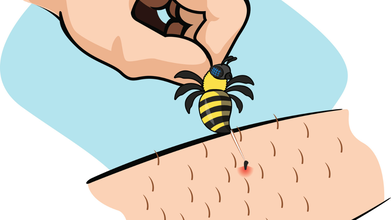
- Use fingernails to remove stingers, opposite to their angle of entry.
- Do not squeeze or forcefully pull stingers, as this can inject more venom.
- Wash affected areas gently with soap and water,
- Seek medical care immediately,
- Remain under observation for at least 24 hours.
- Follow Us :


© 2024 Bennett, Coleman & Company Limited