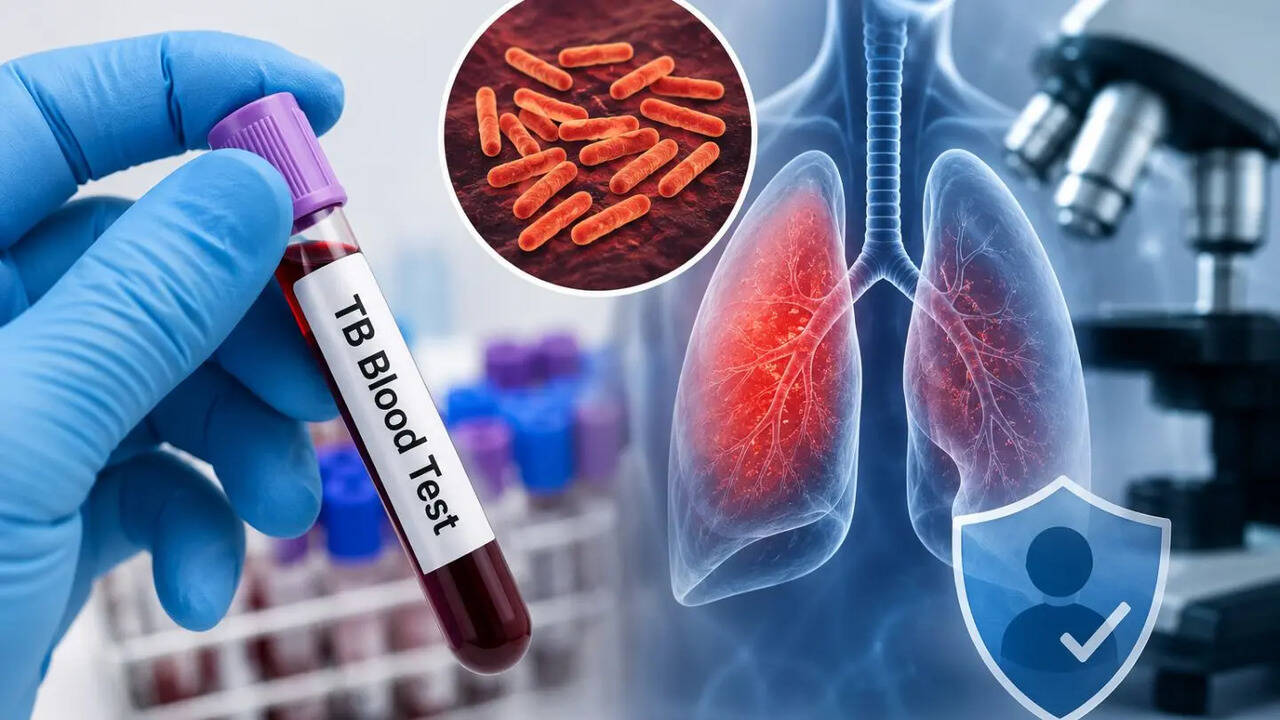
A simple blood test that can accurately identify tuberculosis (TB) across people with different levels of exposure help earlier diagnosis and speedy treatment,, according to new research presented at the Association for Diagnostics & Laboratory Medicine (ADLM) 2026 Annual Scientific Meeting. The study discovered that the experimental blood test can distinguish individuals with active tuberculosis from those who are healthy, regardless of whether they have had prior exposure to the disease. Researchers say the findings could help address one of the biggest hurdles in TB control: identifying and tracing infectious patients before they unknowingly spread the disease. "If validated in larger clinical studies, this test has the potential to transform tuberculosis screening by enabling earlier and more accurate detection of active disease," the study authors said. They observed that such a tool can significantly help control transmission, particularly in nations where TB still remains a public health issue. Do We Need A Better TB Test?Tuberculosis, caused by Mycobacterium tuberculosis, remains one of the world's deadliest infectious diseases. It spreads through the air when an infected person coughs, sneezes or speaks. Although TB is preventable and curable, delayed diagnosis continues to fuel transmission and contributes to deaths that are preventable. Current diagnostic methods have important limitations. Sputum-based tests can be difficult to perform, especially in children and people with TB outside the lungs. Meanwhile, commonly used blood tests can indicate exposure to the bacteria but cannot reliably distinguish between active disease and latent infection, meaning additional investigations are needed.Also read: World Tuberculosis Day: A 2nd Surge In Tuberculosis Cases Again Seen In The US About The New Blood Test For TBAccording to the researchers, the new test examines the immune signatures in a blood sample to identify active tuberculosis, rather than merely detecting previous exposure. In the study, the test successfully differentiated active TB cases from healthy individuals with varying degrees of TB exposure, suggesting it could be used as an effective screening tool across diverse populations. The investigators emphasized that larger, multi-center studies are still needed before the test can become part of routine clinical practice. However, the early results point toward a faster and less invasive way of diagnosis.Also read: Over 8 Million People Diagnosed With TB Last Month: Know Early SignsEarly Diagnosis Is Key Early diagnosis is one of the most factors for controlling tuberculosis. Patients with untreated active TB can infect many others. A simple blood test that identifies active disease quickly could allow doctors to start treatment sooner, reduce transmission, and improve patient's health.This could also be useful where resources are particularly limited. Places where collecting sputum samples is challenging and access to a sterile laboratory testing is limited can benefit from this blood test. As blood samples are easier to obtain in many clinical situations, the test could help screen vulnerable populations, including children and people with extrapulmonary TB. Public health experts have repeatedly stressed that improved diagnostics are essential for achieving the World Health Organization's End TB Strategy.You May Carry TB And Not Know Treating latent TB is like stopping the virus, while it's still small and easy to treat. It's much easier to kill the dormant germs than to fighting the active disease. You could be carrying the disease and not realise. This increases the risk of transmission.A 2017 study published in the Viruses Journal explained that we all have slightly different versions of our genes (polymorphisms) and these differences can affect how our bodies react to any virus. Some gene variations might make your immune system stronger against a specific virus, while others might make you more vulnerable.