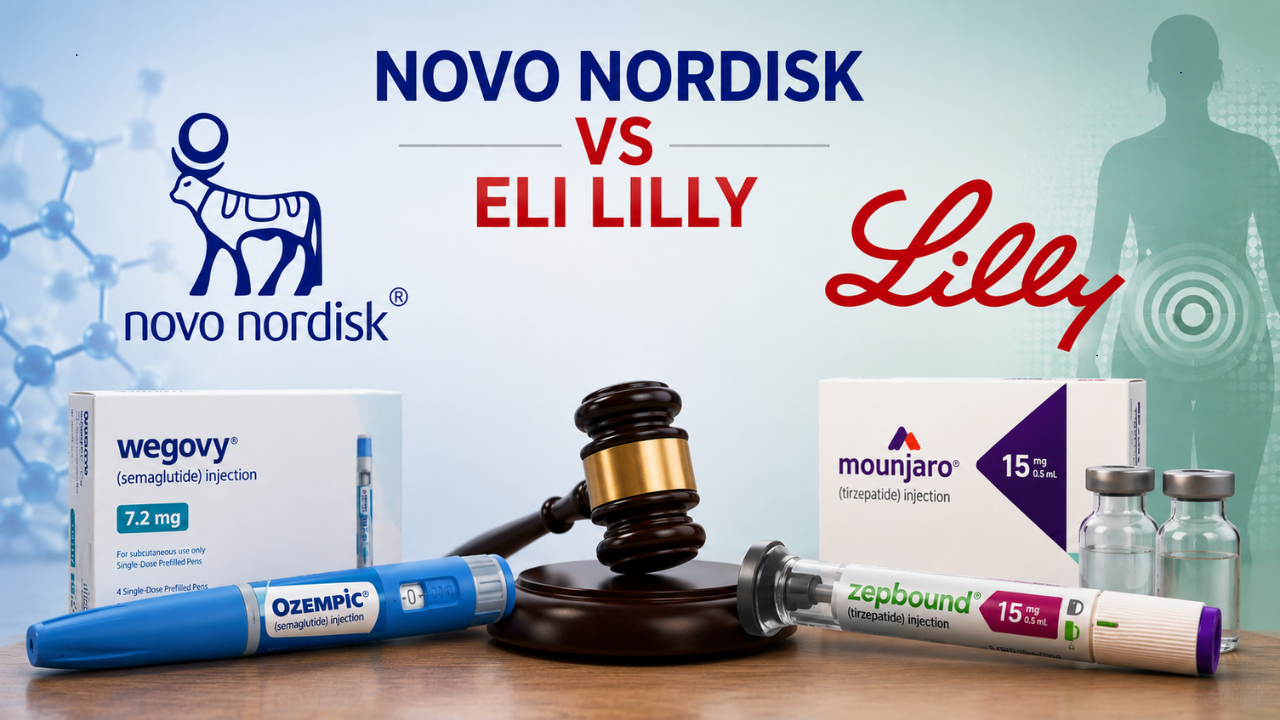
The makers of blockbuster weight-loss drugs Novo Nordisk and Eli Lilly are locked in a legal battle after Novo accused its rival of misleading advertising by claiming its obesity and diabetes medicines outperform Novo's treatments.Danish drugmaker Novo Nordisk has filed a lawsuit against Eli Lilly in the US District Court in New Jersey, alleging the company violated federal and state false advertising and unfair competition laws, including the Lanham Act, through nationwide advertising campaigns for its obesity drug Zepbound and diabetes treatment Mounjaro, media reports said.Novo Alleges Ads Used Outdated ComparisonsNovo claims Lilly's advertisements:Compared the highest approved doses of Zepbound and Mounjaro with lower doses of Novo's Wegovy and Ozempic.Omitted data on the newer 7.2 mg dose of Wegovy, which, as per Novo, delivers greater weight loss.Relied on older clinical trial data that no longer reflects current approved dosing."The ads are maliciously and deceptively false because Lilly knowingly cites outdated clinical trials that compare the highest doses of the Lilly medicines to lower doses of Novo Nordisk's medicines," Novo said in its complaint.Also read: Novo Nordisk's GLP-1 Drug Wegovy Approved for Fatty Liver Disease in IndiaWhat Did Eli Lilly Say Eli Lilly rejected the allegations, saying its advertisements accurately reflect findings from its SURMOUNT-5 clinical trial.According to the company:The study, completed in 2024, compared 10 mg and 15 mg doses of Zepbound with 1.7 mg and 2.4 mg doses of Wegovy.Novo's 7.2 mg Wegovy received US FDA approval only in March 2026, after the trial had concluded."Rather than compete on the merits of its products, Novo is asking a court to stop Lilly from communicating the results of that trial," an Eli Lilly spokesperson said. "We will continue to focus on the science and defend against this lawsuit vigorously."Battle For Expanding Obesity Market The lawsuit comes as Novo Nordisk and Eli Lilly compete for dominance in the rapidly expanding US obesity drug market, which analysts expect to exceed $100 billion by 2030.Both companies dominate the GLP-1 medicine market:Novo Nordisk's medicines contain semaglutide.Eli Lilly's medicines contain tirzepatide.These medicines:Mimic the GLP-1 hormone.Slow digestion.Help regulate blood sugar.Suppress appetite.Beyond weight loss, studies have shown that GLP-1 medicines can reduce the risk of major cardiovascular events, including heart attack and stroke, and may also lower the risk of several cancers.WHO Guidance on GLP-1 TherapiesIn December 2025, the World Health Organization (WHO) issued its first guideline on the use of GLP-1 therapies for obesity, describing the condition as a chronic, relapsing disease affecting more than 1 billion people worldwide. It recommends: GLP-1 therapies may be used for long-term obesity treatment in adults, excluding pregnant women.Treatment should be combined with structured lifestyle interventions, including a healthy diet, regular physical activity, and behavioral support to improve outcomes.Will Patients Be Affected?For now, patients are unlikely to be affected. The lawsuit does not challenge the safety, effectiveness, or FDA approval of the medicines. Instead, it focuses solely on how Eli Lilly marketed its products.Patients prescribed the medicines Wegovy and Ozempic (Novo Nordisk) or Zepbound and Mounjaro (Eli Lilly) can continue taking them as directed. Any outcome of the case is more likely to influence how pharmaceutical companies advertise and compare their medicines than the availability of these treatments.