
- Health Conditions A-Z
- Health & Wellness
- Nutrition
- Fitness
- Health News
- Ayurveda
- Videos
- Medicine A-Z
- Parenting
Sperm Donor With Cancer Causing Gene Fathered Almost 200 Children Across Europe
Credits: Canva
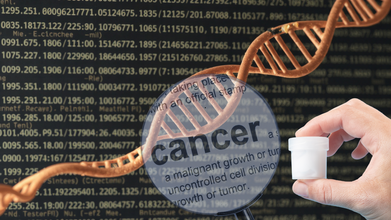
An unknowing harboring of genetic mutation that raised the risk of cancer by a sperm donor who fathered at least 197 children across Europe. BBC reported on a major investigation that revealed that some children have already died and only "a minority who inherit the mutation will escape cancer in their lifetimes".
According to BBC, the sperm was not sold to UK clinics, in fact, a "very small" number of British family used the sperm while they had their fertility treatment in Denmark. It was the European Sperm Bank of Denmark that admitted that the sperm was used to make too many babies in some countries and that they had their "deepest sympathy" for the families affected.
What Was The Investigation All About?
The investigation was conducted by 14 public broadcasters, which included BBC, as part of the European Broadcasting Union's Investigative Journalism Network.
This is what the investigation revealed: This sperm donor, who was perfectly healthy on paper started donated sperm as a young student in 2005. He was paid for each donation. He passed all the routine screening tests and showed no signs of illness. For nearly 17 years, women across Europe used his sperm to have children.
But there was something inside his DNA that no one could have detected at the time.
Before the donor himself was born, a random change occurred in some of the cells that were forming his body. This mutation damaged a crucial gene called TP53. This gene acts like the body’s security guard. Its job is to spot dangerous changes in cells and stop them from turning cancerous.
Most of the donor’s body does not carry this mutation, which is why he has never become ill. However, his sperm cells are a different story. Up to 20% of them carry the faulty TP53 gene.
This created a devastating possibility. If a sperm carrying the mutation fertilizes an egg, the resulting child will have the mutation in every single cell of their body. That child is then born with Li Fraumeni syndrome, a condition that brings an up to 90 percent lifetime risk of cancer. These cancers often appear in childhood and include leukemia, bone cancers, brain tumors and breast cancer later in life.
The donor had no idea any of this was happening. Neither did the clinics using his sperm.
How Was This Mutation Discovered?
The alarm was first raised when doctors across Europe began seeing children with aggressive cancers whose genetic tests all pointed back to the same TP53 mutation. Eventually, they discovered that the children were conceived using sperm from the same donor.
By the time this was uncovered, the donor’s sperm had been used by 67 fertility clinics across 14 countries. At least 197 children are known to have been born using his donations, though the final number could be higher. It is not yet known how many of them inherited the dangerous gene.
Doctors say several of these children have already been diagnosed with cancer, some have developed more than one cancer, and some have died.
Dr Edwige Kasper, a cancer geneticist in France, has been helping families navigate the diagnosis.
“We have many children who have already developed cancer,” she said. “Some have had two cancers and some died very early.”
A Mother’s Discovery
One mother, whose name is changed to Céline (as per the BBC report), conceived her daughter with the donor’s sperm in Belgium. 14 years later, she received a call from the clinic urging her to get her child screened.
Her daughter tested positive for the mutation.
Céline says she does not blame the donor but is devastated that she was given sperm that “was not safe”. She knows cancer could strike at any point.
“We do not know when, we do not know which cancer, and we do not know how many times,” she said. “When it comes, we fight.”
How Regulation Failed
There is no global law limiting how many families a sperm donor can help. Each country sets its own rules.
In Belgium, for example, one donor should be used for no more than six families. This donor helped create 38 families in Belgium alone.
The UK limit is ten families, but the donor’s sperm was never sold directly to UK clinics. Instead, the Danish authorities informed the UK that a small number of British women travelled to Denmark for treatment using this donor’s sperm. Those women have since been contacted.
The European Sperm Bank admits national limits were breached in some countries and says the donor was immediately blocked once the mutation came to light. They say the donor and his relatives are healthy and that this type of mutation cannot be detected with standard screening.
Can Donor Screening Ever Catch Everything?
Experts say cases like this are extremely rare but nearly impossible to prevent entirely.
“You cannot screen for everything,” said Prof Allan Pacey from the University of Manchester. “If we make screening even tighter, we would not have any donors left.”
He added that countries have become too dependent on large international sperm banks, which supply multiple nations simultaneously.
Important Questions Parents Must Ask
Experts advise choosing licensed clinics and asking:
- Is the donor local or from another country?
- How many families has this donor helped?
- What screening has been done?
Bacteria Found in Amul Milk Pouches, Officials Urge Pasteurization
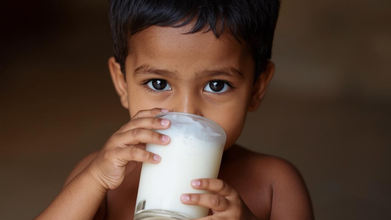
In a now viral video from Trustified, an independent testing platform, food testers claim that Amul Taaza and Gold milk pouches contain coliform bacteria levels 98 times higher than FSSAI’s prescribed limits.
Additionally, Mother Dairy and Country Delight milk pouches showed total plate count levels far above safe thresholds. Total plate count (TPC), also known as Aerobic plate count (APC), measures viable microbial contamination, with lower levels indicating better quality.
Last month, the agency also claimed that the Amul Masti Dahi sold in pouches showed high coliform bacteria, yeast and mold, while tetrapack milk and dahi sold in cups passed quality checks.
However, Amul has aggressively dismissed these allegations, citing them to be fear-mongering and noting that all of its products meet safety standards. Instead of manufacturing failure, the company has pointed to possible breaks in the cold chain at the retail or distribution level.
What Is Coliform Bacteria?
According to ScienceDirect.com, coliform bacteria are rod-shaped, gram-negative bacteria that do not form spores. They may or may not be able to move and they can break down lactose to produce acid and gas when grown at 35–37°C.
E. coli is a specific type of coliform bacteria that lives in the intestines of humans and animals and can cause infections in your gut, urinary tract and other parts of your body.
Coliform bacteria typically doesn't cause serious illness but if high amounts of coliform bacteria are found, it suggests that harmful germs from feces, like bacteria, viruses or parasites, may also be present.
Certain strains of coliform bacteria can make you sick with watery diarrhea, vomiting and a fever, according to Cleveland Clinic.
In many Indian milking setups, milk is extracted by hand and there is a high possibility that cows' udders are not being cleaned thoroughly before extracting milk from them, making it easy for bacteria in the cow dung to contaminate milk.
Why Is Milk Pasteurization Necessary?
Developed by Louis Pasteur in the 19th century, pasteurization is a critical food safety process that involves heating liquids, most commonly milk but also juice, eggs and beer, to a specific temperature for a set period to destroy harmful bacteria, viruses, and pathogens including E. coli, Campylobacter, Listeria, and Salmonella.
This process significantly reduces the risk of foodborne illnesses such as typhoid, tuberculosis, and listeriosis without significantly altering the nutritional value or taste of the product.
In most milk processing plants, chilled raw milk is heated by passing it between heated stainless-steel plates until it reaches 161 degrees Fahrenheit. It’s then held at that temperature for at least 15 seconds before it’s quickly cooled back to its original temperature of 39 degrees.
Pasteurization is essential for children, pregnant women and the immunocompromised, as it prevents infections that can cause severe complications, including miscarriage or death.
Unlike sterilization, pasteurization does not destroy all microorganisms, which is why pasteurized milk must be kept refrigerated.
John Lucey, a food science professor at University of Wisconsin-Madison, notes: "Pasteurization is an absolutely critical control point for making dairy products safe. There really isn’t another single aspect that is as important as it is. If there is a pathogen or anything in the milk that we don’t want, pasteurization destroys it. It is our industry’s shield."
Lindsey Vonn Says She Is 'Making Progress' After Winter Olympics 2026 Crash
Credit: Instagram/Lindsey Vonn
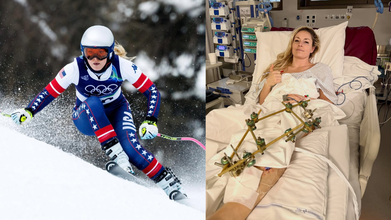
American skier Lindsey Vonn told fans she is "making progress" after undergoing a successful third surgery for her broken left leg she suffered during the women’s Winter Olympics 2026 downhill over the weekend in Milan Cortina, Italy.
She was in pursuit of becoming the oldest Alpine skier, man or woman, to win an Olympic medal at the Winter Olympics 2026 in Milan, Italy, However, her dream came to an end after she crashed only 13.4 seconds into the downhill final and ended up with the life-changing injury.
The 2010 Winter Olympic gold medalist wanted to create a new record despite skiing in a brace merely nine days after rupturing the ACL in her left knee.
In a sentimental Instagram post, Vonn wrote: "I had my 3rd surgery today and it was successful. Success today has a completely different meaning than it did a few days ago. I’m making progress and while it is slow, I know I’ll be ok.
"Thankful for all of the incredible medical staff, friends, family, who have been by my side and the beautiful outpouring of love and support from people around the world. Also, huge congrats to my teammates and all of the Team USA athletes who are out there inspiring me and giving me something to cheer for."
The day after her debilitating crash, a devastated Vonn took to Instagram and told her followers: "My Olympic dream did not finish the way I dreamt it would. It wasn't a story book ending or a fairy tale, it was just life. I dared to dream and had worked so hard to achieve it.
"Because in Downhill ski racing the difference between a strategic line and a catastrophic injury can be as small as 5 inches.
"I was simply 5 inches too tight on my line when my right arm hooked inside of the gate, twisting me and resulted in my crash. My ACL and past injuries had nothing to do with my crash whatsoever. Unfortunately, I sustained a complex tibia fracture that is currently stable but will require multiple surgeries to fix properly.
"While yesterday did not end the way I had hoped, and despite the intense physical pain it caused, I have no regrets. Standing in the starting gate yesterday was an incredible feeling that I will never forget.'
READ MORE: Lindsey Vonn Airlifted With Broken Leg After ACL Injury Mid-Winter Olympics 2026
What Happened To Lindsey Vonn?
The 41-year-old American lost control over the opening traverse after cutting the line too tight and was spun around in the air, according to AP.
Vonn was heard screaming on camera after the crash while being surrounded by medical personnel. After being examined on site, she was strapped to a gurney and flown away by a helicopter, possibly ending the skier’s championship-packed career.
Vonn’s sister Karin Kildow said Vonn “put her whole heart” into making the Olympics. “That’s definitely the last thing we wanted to see,” Kildow told NBC. “When that happens, you’re just immediately hoping she’s OK, and it was scary. When you start to see the stretchers being put out, it’s not a good sign. She dared greatly, and she put it all out there.”
According to supplier Dainese, a mandatory safety air bag had inflated under Vonn’s racing suit during the crash. The air bag, which is triggered by a complicated algorithm when racers lose control, is expected to have softened her fall.
The US Ski Team later assured that Vonn is in stable condition and the Ca' Foncello hospital confirmed she is undergoing surgery to stabilize a fracture in her left leg.
Vonn's teammate and this year's gold medalist, Breezy Johnson later said of the crash: "To have this course burn you and to watch those dreams die, it was one of the most heartbreaking moments of my life.
"It’s not the physical pain, we can deal with physical pain, but the emotional pain is something else. I wish her the best and I hope that this isn’t the end."
What Is An ACL Injury?
The Anterior Cruciate Ligament (ACL), a vital ligament in your knee that connects the femur, or thighbone, to the tibia, or shinbone, is crucial for maintaining your stability and agility when playing sports. However, it is also among the most susceptible to harm.
An ACL rupture is basically described as a tear in the ligament that typically occurs in sports that involve quick changes in direction, such as basketball, soccer and skiing. Athletes typically hear a loud “pop” in the knee, which immediately gives out, followed by significant swelling.
An ACL tear may be a game-changer for players, keeping them out of the game for months and interfering with their training.
England's Ben Stokes Undergoes Facial Surgery After Cricket Accident
Credit: Instagram/Ben Stokes
England cricket legend Ben Stokes recently took to Instagram to reveal he underwent major surgery after he ended up with a broken cheek when he was hit by a ball while coaching at Durham's indoor cricket center, according to multiple reports.
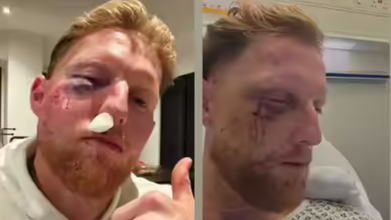
The 34-year-old Test captain posted an image on his Instagram story showing his bruised and swollen right eye and cheek accompanied by the message: "May not look like it... but the surgery was a success."
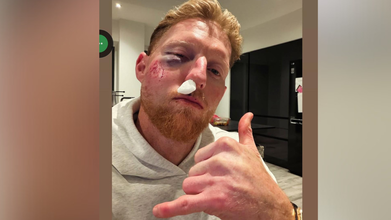
Images show showed his eye heavily swollen and bruised. One picture posted on his Instagram stories also showed a graze on his cheek and lip and a bandage stuffed in his nose following the incident.
He captioned the image, "You should see the state of the cricket ball," followed by a laughing face emoji.
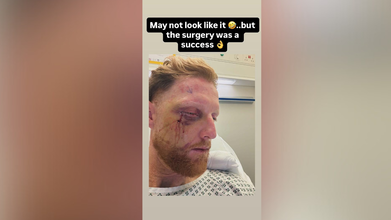
It remains unclear when Stokes will make a recovery and return to the pitch. The all-rounder has not played since the conclusion of the Ashes in Sydney on January 8.
He will be part of England Lions' coaching staff for the development side's series against Pakistan Shaheens in the United Arab Emirates next month. England's next Test is against New Zealand on 4 June, the start of a three-match series.
What Is A Facial Fracture?
Facial fractures are broken bones in the face, which can include the jaw, nose and eye sockets. Since facial bones are thinner than a majority of the other bones in the body, they are the most prone to injury.
In Stokes case, he sustained a facial fracture on his cheek that usually causes pain, swelling, bruising and a flattened appearance. Immediate medical attention is necessary if the injured begins to experience numbness, vision changes or difficulty opening their mouth.
General symptoms may include:
- Bruising.
- Swelling.
- Pain or tenderness.
- Facial numbness.
- Disfigurement.
- Difficulty breathing through your nose.
- Nosebleeds.
- Blurred vision.
- Double vision.
- Bulging eyeballs.
- Sunken eyeballs.
- Difficulty moving your eyes up, down or back and forth.
- Drooling.
- Difficulty chewing or speaking.
- Pain when opening your mouth.
- Loose, broken or missing teeth.
How Long Does It Take To Recover From A Facial Fracture?
Treatments for facial fractured depend on the severity of the injury. Non-surgical treatment plans include using ice packs for 15–20 minutes per hour, pain medication and resting with the head elevated.
However, if the bone is displaced, surgeons may use incisions inside the mouth or hairline to reset the bone, sometimes using small plates and screws to fix the fracture.
Recovery depends on several factors, including the extent of the facial trauma, treatment plans and the body’s own healing capacity. People who go through facial reconstructive surgery usually notice that swelling and bruising fade after about two weeks. But it can take up to a few months for complete recovery.
- Follow Us :


© 2024 Bennett, Coleman & Company Limited