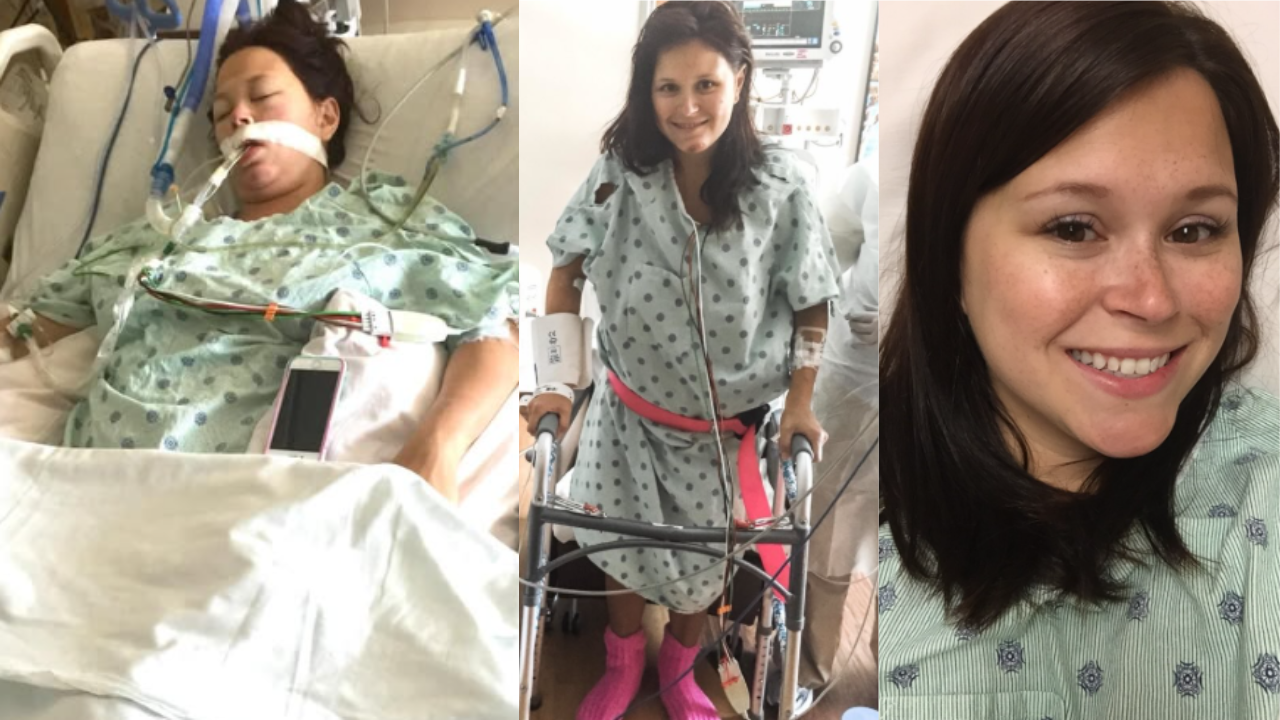
Audrey Leishman, wife of professional golfer Marc Leishman, initially believed she was suffering from the flu after developing common flu-like symptoms. However, her condition rapidly worsened and was later diagnosed as sepsis, a life-threatening medical emergency. The Virginia woman nearly lost her life, spending 10 days in the intensive care unit (ICU). Following the ordeal, she faced a long recovery and had to relearn how to walk, Fox News reported. Now recovered, Leishman is dedicated to raising awareness about the condition through her nonprofit organization, the Begin Again Foundation. She has also written a children's book aimed at helping families recognize the warning signs. Symptoms Began After IUD Removal Leishman faced the ordeal in 2015. She started experiencing symptoms of what she initially thought was an upset stomach a couple of days after having her intrauterine device (IUD) removed, according to the nonprofit Sepsis Alliance. The next day, the mother of three said she began feeling unwell, experiencing stomach cramps and "severe pain in my right elbow and left big toe," along with a high fever, nosebleeds, diarrhea, and shortness of breath. "I could barely hold my 18-month-old son because I was so weak. My temperature was 102°F," Leishman said. She eventually went to urgent care, where doctors initially thought she had some form of an autoimmune disease, Fox News reported. As the days went on, Leishman started to feel worse. Her fever spiked higher, and she developed severe stomach issues. "I actually thought I was going a little bit crazy … I hadn't injured myself. I was really confused as to what was going on," Leishman said. "They took a very long time to figure out what was going wrong with me." "They kept testing me for different things," she continued. "Eventually, they admitted me, and I was in the ICU for a total of 10 days — five of which were in a medically induced coma." During this time, her temperature and heart rate were abnormally high, and her blood pressure was dangerously low. Sepsis Led to Respiratory Failure The sepsis ultimately developed into acute respiratory distress syndrome. "I very much remember not being able to breathe," Leishman recalled. "That was by far the scariest part. It got to the point where I had to pause between every word to take a breath, and it was basically like sipping air." Leishman was eventually diagnosed with sepsis and toxic shock syndrome (TSS), according to Sepsis Alliance. While she did recover, she was unable to walk, and the first year of recovery was "very difficult." "When I finally did wake up, it was quite the process of relearning how to walk again, dealing with at-home physical therapy and being on a PICC line (peripherally inserted central catheter)," Leishman said. "My immune system was so compromised that I was sick constantly," she added, noting that although she is now healthy, her memory "is not what it used to be" and that she gets fatigued more often. The original cause of her sepsis remains unclear, she said, but it may have been linked to her recent IUD removal. Warning Signs of Sepsis Sepsis is a life-threatening reaction to an infection that harms the immune system, tissues, and organs. It can lead to organ failure or death if not treated urgently, according to the Cleveland Clinic.According to Sepsis Alliance, the acronym TIME can help people recognize potential warning signs of sepsis and seek urgent medical care. T — Temperature: Body temperature is unusually high or low. I — Infection: Signs or symptoms of an infection are present. M — Mental Decline: Confusion, excessive sleepiness, or difficulty waking up. E — Extremely Ill: Severe pain, extreme discomfort, or shortness of breath.