
- Health Conditions A-Z
- Health & Wellness
- Nutrition
- Fitness
- Health News
- Ayurveda
- Videos
- Medicine A-Z
- Parenting
Wegovy Starter Dose Now Available As Daily Pill, Replacing Weekly Injections

Credits: Canva
Americans can now buy the starter dose of the widely used weight loss drug Wegovy in pill form. The announcement was made on Monday by drugmaker Novo Nordisk. Higher strengths of the medication are expected to be rolled out as pills by the end of the week.
Wegovy Pill: How Much The Pill Costs Compared To Injections
The once-a-day pill is available with a prescription and is generally cheaper than the weekly injection for people paying out of pocket. This applies to patients who choose to purchase the drug directly from Novo Nordisk and do not use insurance. Until now, Wegovy’s high price had kept it out of reach for many people trying to lose weight, especially since most private insurance plans do not cover obesity treatment.
The oral starter dose of 1.5 mg costs $149 per month for cash-paying patients. This pricing follows a recent agreement between Novo Nordisk and the Trump administration. The 4 mg pill is priced the same until April 15, after which it will rise to $199 per month. Higher doses come at a steeper cost. The 9 mg and 25 mg pills are priced at $299 a month, according to the company.
By comparison, the injectable version of Wegovy costs $349 per month for people paying without insurance. However, new users can access two months of the lowest two injection doses at $199 each until March, Novo Nordisk says.
Wegovy Pill: What Insured Patients May Pay
As per CNN, Patients whose insurance plans do cover Wegovy for obesity may pay as little as $25 a month for either the pill or the injection through a savings programme offered by the company. The pill can be obtained through pharmacies, selected telehealth platforms, NovoCare Pharmacy, and other approved outlets.
Wegovy is also approved to lower the risk of heart attack, stroke, and death in adults who are overweight or obese and already have heart disease.
Wegovy Pill: FDA Approval And How The Pill Performs
The US Food and Drug Administration approved the daily pill version of Wegovy in late December. According to Novo Nordisk, clinical trials showed that the pill led to weight loss and side effects that were broadly similar to those seen with the injectable form.
Like the injection, the pill contains semaglutide. This is the same active ingredient used in Wegovy’s diabetes counterpart, Ozempic.
Wegovy Pill: Competition from Eli Lilly
Rival drugmaker Eli Lilly is also working on an oral GLP-1 medication. The drug, currently known as orforglipron, is still awaiting a brand name. It is expected to receive FDA approval by summer and will also launch with a $149 starting price under the same Trump administration agreement. Higher doses of orforglipron could cost up to $399 a month for patients paying cash, as per CNN.
Wegovy Pills Are More Effective
The Wegovy pill and Lilly’s orforglipron have not been directly compared in a single clinical trial. However, results from separate studies give some insight. The Wegovy pill led to an average weight loss of 14 percent over 64 weeks, compared with 2 percent in people taking a placebo. Orforglipron showed an average weight loss of 11 percent over 72 weeks at its highest dose, also compared with 2 percent for placebo.
In trials of injectable versions, Wegovy resulted in about 15 percent weight loss, versus 2 percent for placebo. Lilly’s Zepbound showed even higher results, with 21 percent weight loss at its highest dose, compared with 3 percent for placebo.
Wegovy Pill Side Effects And Dropouts
Digestive problems such as nausea and vomiting remain the most common side effects of GLP-1 drugs. These issues were also reported in studies of the pill versions. Around 7 percent of participants taking the Wegovy pill stopped treatment because of side effects, compared with 6 percent in the placebo group. In orforglipron’s trial, up to 10 percent of patients discontinued treatment, compared with 3 percent on placebo.
One key difference lies in how the medications are used. The Wegovy pill must be taken on an empty stomach with a small amount of water. Patients are advised not to eat, drink, or take other medicines for at least 30 minutes afterward. Doctors say this requirement has limited the use of Rybelsus, the pill form of semaglutide approved for diabetes, compared with Ozempic.
Eli Lilly highlights that orforglipron was taken once daily in trials without restrictions on food or water, which may make it easier for patients to use consistently.
Scientists Forecast Over 100 Conditions Through One Night's Sleep Using New AI Model

Credit: Canva
Researchers at Stanford University have developed a new AI model which can predict more than 100 health conditions including cancer, mental health, cardiovascular issues and death using sleep study data.
SleepFM uses polysomnography, a comprehensive sleep assessment that utilizes various sensors to record brain activity, heart activity, respiratory signals, leg movements, eye movements and more to provide an accurate prediction of future disease risk, according to the study published in Nature on January 6.
Emmanuel Mignot, Craig Reynolds Professor in Sleep Medicine and co-senior author of the study, said, "We record an amazing number of signals when we study sleep. It’s a kind of general physiology that we study for eight hours in a subject who’s completely captive. It’s very data rich."
It remains unclear when SleepFM will be commercially available to the public and whether it will be incorporated into wearable technology such as watches and phones.
How Does It Work?
The AI model has been trained on nearly 600,000 hours of sleep data collected from 65,000 participants which had been split into five-second increments to combine multiple body signals, such as brain activity, heart activity, muscle activity, pulse and breathing and understand how they relate to each other.
James Zou, PhD, associate professor of biomedical data science and co-senior author of the study commented, "One of the technical advances that we made in this work is to figure out how to harmonize all these different data modalities so they can come together to learn the same language."
After being trained to identify and link different body signals, SleepFM was taught how to understand standard sleep analysis tasks such as different stages of sleep and diagnosing the severity of sleep apnea, a serious sleep disorder where breathing repeatedly stops and starts often due to airway blockage or the brain failing to signal muscles.
Once the model was seen successfully identifying sleep-related issues, it was paired with the sleep recordings and health data of 35,000 patients collected over 25 years for it to learn how to identify chronic diseases through nighttime body signals.
Which Diseases Can It Accurately Predict?
The AI model analyzed over 1,000 disease categories in the health records and found 130 that could be predicted with reasonable accuracy using merely sleep data. The model’s predictions were particularly strong for cancers, pregnancy complications, circulatory conditions and mental disorders.Particularly, SleepFM excelled at predicting Parkinson’s disease, dementia, hypertensive heart disease, heart attack, prostate cancer, breast cancer and death.
“We were pleasantly surprised that for a pretty diverse set of conditions, the model is able to make informative predictions,” Zou said.
Even though heart signals were prominently used to predict heart disease and brain signals were predominant in mental health predictions, the researchers noted that it was the combination of all the data modalities that achieved the most accurate predictions.
“The most information we got for predicting disease was by contrasting the different channels. Body constituents that were out of sync. A brain that looks asleep but a heart that looks awake, for example, seemed to spell trouble,” Mignot said.
Zhou added, "From an AI perspective, sleep is relatively understudied. There’s a lot of other AI work that’s looking at pathology or cardiology, but relatively little looking at sleep, despite sleep being such an important part of life.
"SleepFM is essentially learning the language of sleep."
Sewage Found In Greater Noida Water Supply, Over 30 Residents Report Illness After Indore Crisis

Dozens of Greater Noida residents, including children and teenagers aged 12 to 15, have been found suffering from vomiting, stomach pain, diarrhea, headaches and fever after allegedly consuming water mixed with sewage for the last three days.
Dr Narayan Kishore, CMS, CHC Kasna, told Times of India that over 30 residents of Sector Delta 1 received treatment for the condition at a medical camp. "Around 30 people visited the doctors, of them five to six were given medicines, while others were advised ORS. The situation is under control, and if required, we will organize another camp," he said.
According to Manoj Choudhary, Greater Noida Industrial Development Authority (GNIDA) Assistant Manager (water department), a dilapidated section of a water pipeline in Block C was found leaking and was repaired immediately by January 7 afternoon. He said inspections were also carried out in other parts of the sector, where two additional leaking pipelines were identified and replaced.
"We checked the quality of water supply post repairs in the evening and found it to be normal," he told TOI.
Despite claims of repairs, affected residents have revealed that the damaged water pipeline has instead been diverted into a drain and sewage is being mixed into a leaking water supply pipeline that runs through the same channel.
Deepak Kumar Bhati, convenor of the sector's RWA said, "Instead of repairing the blocked sewer line, it was diverted into a drain. The uncovered manhole allowed dirty water to seep into an old leaking water pipeline, contaminating the drinking supply. How would anyone feel knowing the water they drink and bathe in is mixed with feces?
Also Read: New Food Pyramid 2026 Reshapes Dietary Guidelines For Americans Under RFK Jr
"We pay our bills yet are forced to use contaminated water."
Pramod Bhati, RWA President of Sector Delta 1, added that this was not the first time residents in the area had fallen ill due to contaminated water. According to the official, the recent incident marks the third time such damage has been reported within a week in the sector that houses around 20,000 people across its six blocks, A to F.
What Officials Are Doing To Deal With The Issue?
Officials from the GNIDA and the local health department has begun inspections in the area and sent water samples to nearby laboratories for testing. Choudhary has also urged residents to immediately report any water or sewer leakages, assuring that such complaints would be addressed on priority.He added that GNIDA teams are working continuously to maintain water supply lines and that proposals are being prepared to replace pipelines in older sectors facing persistent problems.
Moreover, Ravi Kumar, GNIDA CEO NG has ordered random water testing across Greater Noida to prevent similar incidents and ensure the safety of the water supply, according to News18.
The Indore Crisis?
Even though residents are being assured by local officials that appropriate steps are being taken to maintain their wellbeing, many remain fearful due to the recent Indore sewage water controversy which has claimed the lives 10 people and left over 1,400 people hospitalized, according to Indore Mayor Pushyamitra Bhargava.However, locals claim that the outbreak has instead caused the death of 17 residents, including a six-month-child. The situation has also left Parvati Bai, 67, with kidney failure, a brain stroke and symptoms of Guillain-Barré Syndrome, or GBS.
GBS is a rare condition where your immune system attacks the nervous system and can cause paralysis as well as death, in certain cases.
The outbreak occurred due to lapses in civic infrastructure. Investigation revealed that a toilet constructed directly above a main drinking pipeline near a police outpost, without a mandatory safety tank resulted in the sewage mixing with drinking water.
New Food Pyramid 2026 Reshapes Dietary Guidelines For Americans Under RFK Jr
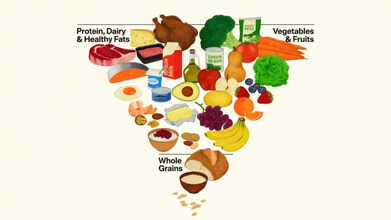
Credits: U.S. Department of Agriculture/U.S. Department of Health and Human Services
Health Secretary Robert F. Kennedy Jr. has announced sweeping changes to the dietary guidelines for Americans, positioning the new food pyramid as a reset of long-standing nutrition policy. Unveiled at a press conference on Wednesday, the revised pyramid places red meat, cheese, fruits, and vegetables at the top, reflecting a renewed focus on whole foods, protein, and healthy fats.
Kennedy described the update as the most significant change to federal nutrition advice in decades, arguing that earlier guidelines unfairly promoted low-fat, highly refined foods while discouraging nutrient-dense options.
New Food Pyramid 2026: RFK Jr Food Pyramid Moves Away From the Old Food Pyramid Model
The food pyramid 2026 marks a clear departure from the old food pyramid, which emphasized grains and low-fat diets. Under the new dietary guidelines 2026, Americans are encouraged to reduce their reliance on ultra-processed foods and refined carbohydrates while prioritizing protein-rich meals, as per USA Today.
Kennedy said previous dietary advice wrongly framed saturated fat as the primary cause of chronic disease, a claim the new guidelines seek to revisit.
New Dietary Guidelines 2026 Target Added Sugar and Ultra-Processed Foods
As part of the updated dietary guidelines for Americans 2026, the administration has set firmer limits on added sugar consumption and called for a dramatic reduction in highly processed foods. Kennedy and Agriculture Secretary Brooke Rollins stressed that modern diets heavy in refined carbs, excess sodium, and chemical additives have contributed to rising obesity rates, as per USA Today.
According to the administration, more than 70 percent of American adults are now overweight or obese, a trend they attribute largely to dietary patterns shaped by convenience foods and sedentary lifestyles.
Food Pyramid 2026 Elevates Meat and Dairy in Federal Nutrition Advice
One of the most debated changes in the new food pyramid 2025–2026 is the elevation of red meat, cheese, and other dairy products. The updated framework encourages diets that include meat and dairy as core components, framing them as important sources of protein and healthy fats.
This shift also opens the door for full-fat milk and dairy products to return to school meal programs, a move supporters say reflects newer nutrition science suggesting dairy can be beneficial when consumed in moderation.
RFK Jr Dietary Guidelines Retain Limits on Saturated Fat Intake
Despite the emphasis on protein and fats, the new dietary guidelines still maintain the long-standing recommendation to limit saturated fat to no more than 10 percent of daily calorie intake. Health organizations, including the American Heart Association and the Academy of Nutrition and Dietetics, continue to cite evidence linking excessive saturated fat consumption to heart disease.
These groups argue that the presence of red meat and saturated fat sources at the top of the pyramid risks confusing the public about portion size and frequency.
Old Food Pyramid vs New: Experts Raise Concerns Over Scientific Evidence
The new food pyramid has drawn criticism from several nutrition experts. Stanford University nutrition researcher Christopher Gardner said prioritizing animal-based foods over plant-based protein sources runs counter to decades of research.
Gardner, who previously served on the Dietary Guidelines Advisory Committee, emphasized that beans, legumes, and other plant proteins offer proven cardiovascular benefits that are underrepresented in the updated pyramid.
Brooke Rollins and the Broader Push Behind New Dietary Guidelines
Brooke Rollins framed the changes as part of a broader effort to rethink federal health policy. Alongside Kennedy, she called for Americans to move away from ultra-processed foods and toward diets built around whole, minimally processed ingredients, as per NPR News.
The new dietary guidelines, tied closely to the administration’s MAHA agenda, have also drawn political attention, with figures such as Dr Oz weighing in on the future direction of public health messaging
- Follow Us :


© 2024 Bennett, Coleman & Company Limited