
- Health Conditions A-Z
- Health & Wellness
- Nutrition
- Fitness
- Health News
- Ayurveda
- Videos
- Medicine A-Z
- Parenting
Bruce Willis Does Not Have Alzheimer's, According to Wife Emma Hemmings; More Details Inside

(Credit-Brucewillisbw/Instagram)
Sharing a health update of the beloved actor Bruce Willis, his wife Emma Hemmings opened up about how the condition is affecting the actor. In an interview with NewsNation, she spoke on the misconception that the Die-Hard superstar had Alzheimer’s.
“FTD isn’t Alzheimer’s,” she stressed. She clarified that while Frontotemporal Dementia (FTD) affects his ability to communicate and behave, “Bruce doesn’t have Alzheimer’s. So, he does know who we are.”
She noted that while he struggles to verbalize his love, words are not necessary for their family. "We don’t need words," she said. "We have a very deep connection, and we have learned to sort of meet him where he’s at." FTD symptoms can include difficulty with speech, changes in personality, and slow movements, and there is currently no cure.
The Alzheimer’s Research Association explains that dementia is an "umbrella term" used to describe problems with memory, thinking, and reasoning. It's not a single disease. Instead, diseases like Frontotemporal Dementia (FTD) and Alzheimer's are two different causes that lead to similar, but different symptoms.
It is very important for doctors to know the differences between FTD and Alzheimer's. Getting the correct diagnosis early helps patients get the right treatment sooner. This can greatly improve their health and overall quality of life.
How Is FTD Different from Alzheimer’s Disease?
The biggest difference between these two conditions is which part of the brain they damage first. This difference explains why the early symptoms are so distinct.
What Part of the Brain Does FTD affect?
Frontotemporal Dementia (FTD), as its name suggests, mainly affects the front (frontal) and sides (temporal) of the brain. These areas are like the control center for your personality, behavior, and language skills. For example, the frontal lobe handles judgment and controlling your emotions, and the temporal lobe helps you process what you hear and form memories.
What Part of the Brain Does Alzheimer’s Affect?
In contrast, Alzheimer's disease usually starts by damaging areas crucial for memory, such as the hippocampus. These are the parts of the brain that help you learn new things and retrieve old memories. As Alzheimer's gets worse, the damage spreads to more areas of the brain, affecting memory, behavior, language, and even how you see things.
What Ages Do FTD and Alzheimer’s Typically Start?
Another key difference is when people usually start showing symptoms.
FTD often begins when people are younger, typically between 40 and 60 years old. This is why it's sometimes called an earlier-onset dementia.
Alzheimer's is much more common in older adults, usually affecting people who are 65 and over. Getting older is the biggest risk factor for Alzheimer's, but remember, it is not a normal part of getting older or healthy aging.
How Are The Symptoms of FTD different from Alzheimer’s?
While both diseases cause dementia, the first symptoms are usually very distinct, which helps doctors tell them apart.
In early Alzheimer's, the main symptom is memory loss.
- Often forgetting recent conversations or events.
- Having trouble with spatial orientation, which means they might get lost in places they know well.
- Struggle to find the right word, their ability to speak clearly and understand others usually stays better for longer than in FTD.
- Delusions or hallucinations also happen more often as Alzheimer's gets worse.
In early FTD, the initial signs are usually behavioral changes or language problems.
- Acting impulsively
- Lose their filter in conversation
- Become very withdrawn.
This is common in the most frequent type of FTD, called behavioral variant FTD (bvFTD). In another type of FTD called Primary Progressive Aphasia (PPA), the first problem is a difficulty with,
- Speaking
- Understanding language
- Writing.
- While people with advanced FTD will eventually have memory loss, it's not the primary symptom at the beginning.
How Has FTD Affected Bruce Willis?
In the interview Emma Hemmings admitted Bruce is unaware of his frontotemporal dementia (FTD) diagnosis.
She explained that it is a part of the disease itself for the person not to realize their health is declining. When asked about a fear that Willis might have voiced his distress about his condition, she confirmed:
"The person doesn’t realize that they are experiencing a decline in their health. So it’s not denial; this is just a part of the disease. So, it’s a blessing and a curse. But I am grateful that Bruce never tapped into the idea that he had FTD.”
The New Era of Cardiac Care: How Advanced Transplant Techniques are Saving Lives in India
Credit: Canva
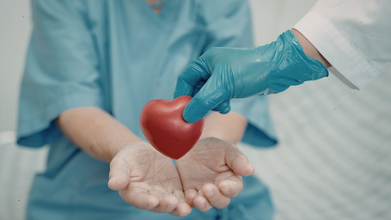
Heart failure has quietly emerged as one of India’s most serious and underestimated health challenges, driven by a rise in hypertension, diabetes, obesity, and delayed diagnosis of heart disease.
Due to a shortage of donor organs and a long waiting period before receiving the right treatment, end-stage heart failure patients in India faced a lot of difficulties a few years ago.
Today, advancements in heart transplant techniques are changing the situation from what was once an untreatable condition to a second chance at life.
Data from the National Organ and Tissue Transplant Organization (NOTTO) shows a significant year-on-year rise in heart transplants, with 253 transplants done in 2024, showcasing improved organ donation awareness, better coordination between hospitals, and stronger transplant networks.
What was once considered the only option is now emerging as a life-saving solution, offering patients not just a second chance but a return to a more meaningful and active life.
Why Are Heart Transplants Needed?
A heart transplant offers hope and gives a second life to patients whose hearts no longer support the body even after the best available medical aid.
Although it is never performed instantly, it becomes necessary whenever conditions of the heart result in end-stage heart failure, where the pumping function of the heart is compromised.
Also read: Harish Rana’s Family Donated His Heart Valves And Corneas After His Death From Passive Euthanasia
When medications and modern technologies cannot supply an adequate amount of blood and oxygen to the organs, patients experience extreme breathlessness, fluid buildup, fatigue, and repeated hospitalizations, making even simple activities like walking, eating, or lying flat exhausting.
As the flow of blood continues to deteriorate, failure is also expected in other vital organs such as the kidneys and liver. It is at this point that the transplantation of the donor heart is considered the only treatment option to ensure that the blood flow is normalized.
How Heart Transplantation Transforms Life?
Heart transplant is not just a surgical replacement of a failing organ, but a complete life restoration for patients with end-stage heart failure.
Its benefits include:
- Normalizes Heart Functioning: A healthy donor heart can immediately restore normal and effective blood flow. This will reduce weakness and fatigue that makes carrying out everyday tasks rather difficult.
- Enhances Survival Rates: Patients diagnosed with end-stage heart failure can only experience the best post-transplant survival outcomes when they undergo the transplant procedure as compared to other medical treatments.
- Enhances Quality of Life: The patients are able to attain independence once again as they are able to walk, sleep, travel, and socialize with their families and friends.
- Prevents Frequent Hospitalization: The successful transplant procedure prevents constant hospitalization, especially in cases with deteriorating heart failure, infections, and organ dysfunction.
- Protects Other Vital Organs: By restoring adequate blood flow, heart transplantation helps reverse damage to the kidneys, liver, and lungs caused by prolonged heart failure
- Permits Return to Normal Roles and Responsibilities: Patients regain their ability to work, take care of others, and carry out their daily responsibilities, which helps their emotional well-being.
Olympic Legend Liz McCollgan Warns Athletes To Protect Skin From Sun
Credit: Liz McCollgan/Instagram
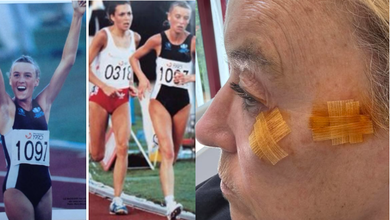
Scottish Olympic legend Liz McColgan has warned athletes to wear sun protection during their training hours to protect their skin from “lasting consequences”.
Liz McColgan shared the health warning to athletes after undergoing surgery to remove lesions on her face.
The Olympic silver medalist from Dundee shared post-surgery photographs on the social media platform Instagram and lamented that, as a young runner, she never focused on wearing sun protection.
Avoiding sun cream because she felt it made her "sweat more" was her “ignorance”, said the 61-year-old former athlete.
“As a young athlete, I trained and raced in all weathers. Sun protection was never something I gave much thought to. In fact, I avoided it. I didn’t like the feeling of creams on my skin - I thought they made me sweat more, so I convinced myself I was better off without them. Looking back, that was ignorance,” Liz McColgan said.
“Recently, I had to undergo surgery to remove two lesions on my face. It was a stark reminder that the choices we make early on - especially the ones we dismiss as unimportant - can have lasting consequences,” she added.
Liz McColgan noted that athletes keep all their focus on "performance - mileage, sessions, recovery, nutrition”, but simple things like protecting their skin are often ignored.
“Yet it’s just as much a part of our overall health and wellbeing as any training session,” she said.
Sharing the health message to both young and old athletes, McColgan said, “Take sun protection seriously. Whether you’re training, racing, or even just spending time outdoors, protecting your skin matters.”
McColgan won a silver medal in the same event at the 1988 Olympic Games in Seoul. In 1991, she went on to win the 10,000m World Championships title in Tokyo.
Also read:5 Simple Do's And Don'ts For Healthy Skin
Why Sunscreen Is Essential
Using sunscreen protects the skin from harmful ultraviolet (UV) radiation, which causes
- skin cancer,
- premature aging,
- painful sunburns.
Should Sunscreen Be Used Indoors Too?
Sunscreen is meant to be part of a daily skincare routine. But most people reach for sunscreen when heading to the beach or stepping out for a long day in the sun.
According to dermatologists, sunlight can still reach you indoors.
Dr Khushboo Jha, Chief Dermatologist Consultant at Metro Hospital, explains that sunlight entering through windows can still affect the skin.
“While standard window glass blocks most UVB rays, which cause sunburn, UVA rays can still pass through. These rays penetrate deeper into the skin and are linked to long-term concerns such as premature aging, uneven pigmentation, and loss of skin elasticity,” she said.
These UVA rays are often overlooked because they do not cause immediate redness or burning like UVB rays. However, over time, they can lead to visible signs of skin aging and pigmentation.
Also read: Why Should You Must Apply Sunscreen Inside A Plane?
A Practical Approach To Daily Skincare
Dermatologists suggest viewing sunscreen as a preventive skincare habit rather than a rigid rule.
Dr Jha recommends incorporating sunscreen into your morning routine, particularly if your day includes stepping outdoors or spending time in naturally lit environments.
In simple terms, if daylight reaches your workspace or you plan to go outside later in the day, applying sunscreen in the morning is a small step that can help protect your skin over time.
Why Many Older Men Struggle to Conceive Despite ‘Good Health’

Chronic stress can take a toll on sperm count. (Photo credit: iStock)
Many men believe that as long as they feel healthy, active, and free from major illness, their fertility remains intact. While men do not have a sudden fertility cut-off like women, age still plays an important role when it comes to male fertility. Currently, a large number of men wish to start families later in life, often thinking their good health guarantees easy conception and fatherhood. They often neglect the age factor, even though it is linked to hormonal imbalance, stress, and genetic issues. A large number of men are unaware of their fertility health and continue to suffer. However, even in the absence of visible health problems, older men may face unexpected fertility challenges. Dr Madhukar J Shinde, Fertility Specialist at Nova IVF Fertility, PCMC, Pune, answered this for Health and Me.
Read more: The Overlooked Role of Men in IVF: Why Their Silent Strength Is Key to Fertility Success
Why do older men struggle with infertility?
Decline in sperm quality: Various studies have confirmed that as men age, sperm count, movement, and shape can slowly decline. Even if the numbers appear normal, DNA damage in sperm increases with age, which can reduce the chances of successful fertilisation.
- Hormonal imbalance: It is important to note that testosterone levels naturally decrease over time. Lower testosterone can affect sperm production, sexual function, and overall reproductive performance, even when a man feels physically fit.
- Some medical conditions tend to take a toll on fertility: Conditions such as diabetes, high blood pressure, and thyroid disorders become more common with age. These may be well-managed and symptom-free, but can still affect sperm health and fertility.
- Stress and other lifestyle factors can impact fertility: Chronic stress, lack of sleep, smoking, alcohol consumption, or exposure to pollution can take a toll on sperm quality and lead to fertility issues that can be worrisome for men. Preservatives in a lot of frozen and junk food not only contribute to poor fertility health, but research suggests they may also affect DNA function. Therefore, men should stay vigilant.
- Genetic issues: Advanced paternal age is associated with a higher risk of genetic mutations in sperm. This can further affect embryo development and increase the risk of miscarriage or certain developmental conditions.
Men must stay in touch with a fertility consultant who can design an appropriate treatment plan. The expert will evaluate them thoroughly and suggest lifestyle modifications such as a well-balanced diet, exercise, stress management through meditation, and medication for conditions such as diabetes, hypertension, and cholesterol. Awareness helps men take informed steps towards parenthood, even later in life. Certain pre-medications, including antioxidants advised by a fertility consultant, may significantly help in reducing DNA fragmentation, which contributes to poor sperm function. Therefore, men should prioritise their reproductive health, stay informed, and not suffer in silence.
- Follow Us :


© 2024 Bennett, Coleman & Company Limited