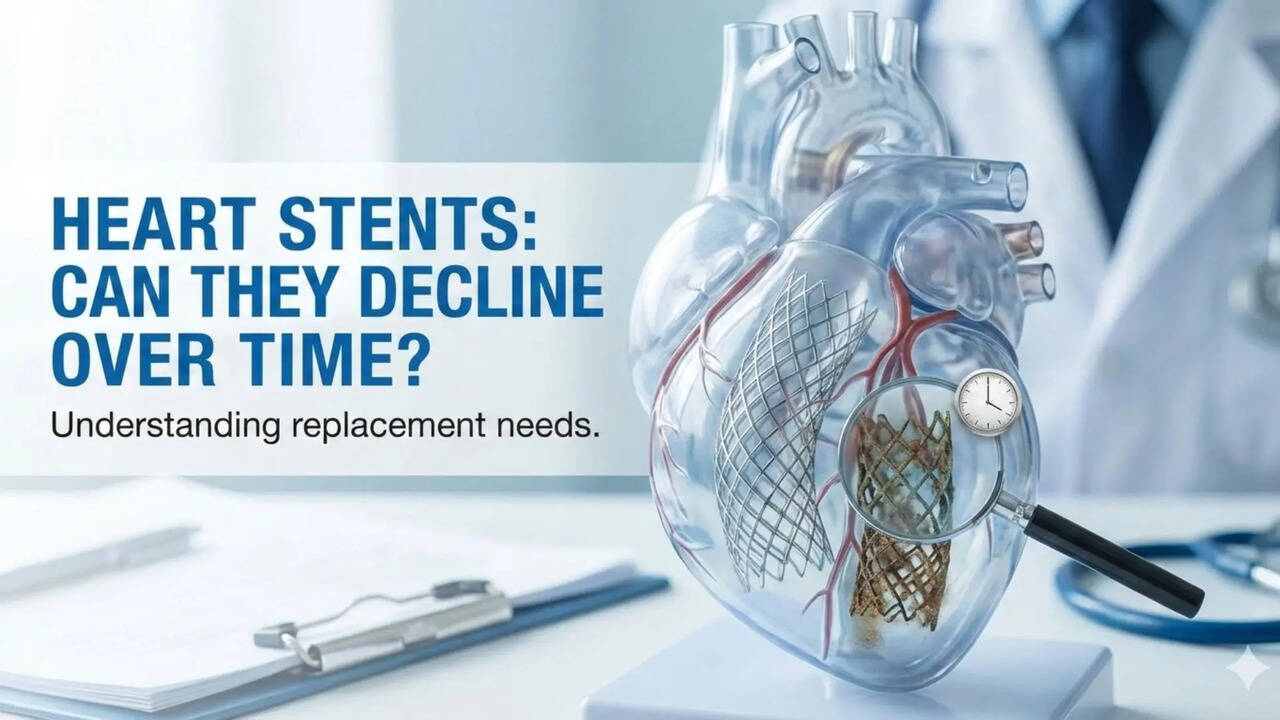
Heart stents have saved countless lives and remain one of the most effective treatments for blocked coronary arteries. By improving blood flow to the heart, they help relieve chest pain and lower the risk of serious events such as heart attacks. Today, stent placement is a routine, minimally invasive procedure performed on millions of patients each year. Yet as more people live longer with stents, an important question is gaining attention: how well do these devices hold up over time inside a constantly moving, living artery?Stents are widely used to treat blocked or narrowed arteries, particularly in people with severe or advanced coronary artery disease. By restoring blood flow, they help ease chest pain, known as angina, which occurs when the heart muscle does not receive enough oxygen and nutrients because of reduced circulation.Each year, millions of patients undergo stent procedures, making it one of the most commonly performed minimally invasive treatments worldwide. While stents have transformed heart care, it is still important to understand their limitations, especially as newer and more advanced technologies continue to emerge.Why Are Stents Placed In Blocked Heart Arteries?Before looking at how stents behave over time, it helps to understand the environment in which they are placed. We got in touch with Dr. Tamil Selvan Muthusamy, Primary Investigator in the MY-IVL Study of Elixir Medical’s Device and Consultant Cardiologist at Cardiac Vascular Sentral Kuala Lumpur (CVSKL), who told us, that coronary arteries, which supply blood to the heart, are living, flexible structures. They bend, twist, stretch, and move constantly with every heartbeat to manage changing blood flow and pressure.These arteries travel along the surface of the heart, wrapping around its curves from base to tip, delivering oxygen-rich blood to every heart muscle cell. As the heart contracts and relaxes, the arteries shift side to side, stretch lengthwise, and twist repeatedly. Blood flow within them also changes throughout the heartbeat, moving more slowly during contraction and faster during relaxation. This constant motion creates friction and stress along the artery lining, known as the endothelium. Under healthy conditions, this stress helps maintain vessel function. However, when blood flow is disrupted, small areas of damage can occur, allowing plaques to form, harden, and eventually block the artery.A stent is a tiny metal mesh tube mounted on a deflated balloon catheter and guided through the arteries to the site of blockage. Once the balloon is inflated, the stent expands, pushing the plaque aside. The balloon is then removed, leaving the stent in place to keep the artery open, much like internal scaffolding.Why Does Heart Stent Performance Decline Over Time?Over the past two decades, research has shown that stents can behave like rigid cages inside arteries. Dr Selvan Muthusamy told us that depending on their length and position, they may restrict the artery’s natural ability to bend, twist, stretch, and pulse with each heartbeat. This stiffness can damage the delicate inner lining of the artery and increase stress on the vessel wall by limiting its natural movement.When these mechanical changes alter normal blood flow patterns, they can trigger inflammation or excessive tissue growth inside the stent. This process, known as restenosis, is one of the main reasons stents fail over time. Long-term studies suggest that stents have an annual failure rate of around 2 to 3 percent. For patients, this may show up as the return of chest pain and, in some cases, can lead to a heart attack.As explained by Dr Selvan Muthusamy, the challenge lies in matching rigid implants with arteries that are meant to move continuously. When this balance is disrupted, long-term complications become more likely.Can Lifestyle Changes Help Prevent Stent-Related Complications?Healthy habits play a major role in protecting stents and overall heart health. Patients are advised to stop smoking, follow a heart-friendly diet low in salt and unhealthy fats, and stay physically active, such as walking for at least 30 minutes a day. Dr Selvan Muthusamy said, “Managing weight, blood sugar, blood pressure, and cholesterol is equally important. Taking prescribed medications consistently, participating in cardiac rehabilitation, and attending regular follow-up appointments all help reduce strain on the arteries and lower the risk of complications.”In recent years, newer technologies have also been developed to address some of the mechanical drawbacks of traditional stents. One such innovation is the bioadaptor implant. Unlike conventional stents that remain permanently fixed, the bioadaptor is designed to change over time. After about six months of healing, it unlocks within the vessel wall and becomes a dynamic scaffold. This allows the artery to regain flexibility, stretch, and natural pulsation. Studies have shown improved blood flow, healthier artery lining, and more than 50 percent better long-term outcomes compared to standard stents.Warning Signs To Detect Problems With Heart StentsThe most common cause of stent failure is restenosis, where tissue growth gradually narrows the artery again. Patients should pay close attention to symptoms such as chest pain or pressure, shortness of breath, unusual fatigue, a rapid heartbeat, nausea, sweating, or swelling in the legs. These signs may become more noticeable during physical activity.Seeking medical help promptly when these symptoms appear is critical. Early detection can prevent more serious complications, including heart attacks, and allow doctors to intervene before the problem becomes life-threatening.