
- Health Conditions A-Z
- Health & Wellness
- Nutrition
- Fitness
- Health News
- Ayurveda
- Videos
- Medicine A-Z
- Parenting
Coffee Benefits Your Body The Most When You Drink It At This Time

(Credit-Canva)
For many people coffee is the beginning of their day. It tastes good, it's routine, and it gives a boost of energy. Coffee has good things in it, like antioxidants, and it can help you focus and even improve your mood. But now, more people are thinking about their hormones and how their body deals with stress and sleep. So, there's a growing interest in how coffee actually impacts our bodies as a whole.
Studies show that having coffee between 10 AM and 11 AM works better for most people. This way, it helps with energy without messing up your sleep later. The Cleveland Clinic explains that drinking coffee around 9:30 am and 11 am helps you reap the most benefits. People who wait about 90 to 120 minutes after waking up before having their first coffee often have more steady energy and better hormone balance throughout the day.
Some people find that drinking too much coffee can lead to high stress hormone levels. When they cut back to just one cup a day, their stress hormones got better, and they slept much more soundly.
Also, having coffee on an empty stomach might make your stress system work harder. This isn't good if you're already stressed or dealing with hormone imbalances, as you might be extra sensitive. So, it's a good idea to eat something before you have your morning coffee.
How Much Coffee Helps Your Health?
You might already know that drinking a moderate amount of coffee—around three to five cups a day—has been linked to living longer. Research has also hinted that when you drink your coffee could play a big role in these benefits. A study published in the National heart, Lung and Blood Institute found that adults who enjoyed their coffee before noon saw the biggest drop in their risk of dying early from any cause, including heart problems.
To figure this out, researchers looked at nutrition information from over 40,000 adults in the U.S. who were part of a long-term health study. About half of these individuals, 52%, drank coffee. Out of those, more than a third (36%) drank their coffee only in the morning, while the rest (16%) drank it throughout the day.
After accounting for various other health factors, the study found that adults who stuck to drinking coffee between 4 a.m. and noon were 16% less likely to die from any cause over nearly 10 years, compared to those who didn't drink coffee at all. Even more impressively, they were 31% less likely to die from heart disease. These benefits didn't apply to people who drank coffee all day long.
Coffee and Women's Cycles
For women, drinking coffee during the second half of their menstrual cycle (called the luteal phase) can make PMS symptoms worse. This is because coffee increases a stress hormone when the body should be relying more on a calming hormone. Many women say they feel much better hormonally if they stick to just one coffee a day during the first half of their cycle and completely cut it out during the second half.
The main point isn't just about coffee itself. It's about how coffee mixes with your own body, your stress levels, your sleep schedule, and your hormones. Some people can handle it fine, while others might feel worse over time without realizing coffee is part of the problem. So, like with many things, you should pay attention to what works and what doesn't work for your unique body and its hormones.
Why Morning Coffee May Be Better For the Body?
The researchers think there are two main reasons why morning coffee might be so beneficial:
Better Sleep
Drinking caffeinated coffee earlier in the day, instead of in the afternoon or evening, is less likely to disrupt your sleep. Good sleep is crucial for your overall health, especially for your heart.
Anti-Inflammatory Boost
Coffee has properties that fight inflammation. These effects might be strongest in the morning because that's when inflammation levels in your body can be at their highest.
World Chagas Disease Day: Women Key To Prevent, Eliminate The Fatal Neglected Tropical Disease
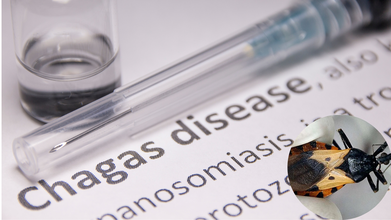
Credit: Canva/WHO
Women can play a major role in preventing as well as eliminating Chagas Disease, a potentially life-threatening neglected tropical disease that affects 8 million people globally and causes 10,000 deaths every year, according to UN agencies.
World Chagas Disease Day is observed every year on April 14 to raise awareness around the disease, and the impact it has on lives.
In a statement, the Pan American Health Organization (PAHO) and the Global Chagas Coalition urged health authorities to make women central to the fight against the disease and to empower them to make early detection, prevention, and care.
“Eliminating Chagas disease as a public health problem requires placing women at the center of diagnosis, treatment, and care strategies,” said Dr. Jarbas Barbosa, PAHO Director.
“Ensuring timely access to quality health services, particularly for women of reproductive age, is essential to prevent new infections and advance toward the elimination of congenital Chagas disease in the Region of the Americas,” he added.
What Is Chagas Disease?
Chagas disease, also known as American trypanosomiasis, is a illness caused by the parasite Trypanosoma cruzi, and is primarily transmitted by triatomine insect vectors.
It gets spread through
- oral transmission,
- blood transfusion,
- mother-to-child.
- through transplants of some organs (such as heart or kidney)
- through laboratory accidents.
If left untreated, one third of infected people—including women and the children they carry—will develop life-altering heart, digestive, and even neurological conditions, and may even become fatal.
Once endemic to 21 countries in Latin America, the disease has now spread globally due to migration. It is now a global health concern with cases found in 44 countries including the US, Canada, Europe, Australia, and Japan.
World Chagas Disease Day 2026: Theme
World Chagas Disease Day was celebrated for the first time in 2020.
The theme this year is “Women at the heart of care, protecting the next generation” and underscores the key role women play in family and community caregiving, as well as their greater interaction with health services, particularly during pregnancy.
Chagas Disease: Role Of Women
According to the World Health Organization (WHO), about 2 million women aged 15-44 years are living with Trypanosoma cruzi infection worldwide.
Congenital transmission or mother-to-child transmission remains a major challenge, occurring in about 3–5 percent of pregnancies. However, it also provides a key opportunity for effective intervention.
The transmission cycle of the disease can be effectively broken by
- Treating infected girls and women before pregnancy
- Strengthening screening in maternal and child health services
- Eaccess to diagnosis and treatment.
- Newborn screening can help diagnose and treat, with a cure rate exceeding 90 percent.
- Increase awareness at community and family levels.
- Avoid foodborne transmission
“On the contrary, it represents a strategic opportunity to strengthen more equitable, accessible, and responsive health systems that recognize and respect women’s needs.”
BBC Host Naga Munchetty Opens Up About Suffering From ‘Evil Twin Sister Of Endometriosis’

Credit: Naga Munchett/ Instagram
The BBC Breakfast host Naga Munchetty has opened up about her experience of suffering from a painful womb condition, known as the "evil twin sister of endometriosis".
The 51-year-old Naga Munchetty explained her condition as adenomyosis, which can cause extreme pain at any time. Munchetty added that she has faced the condition even while presenting her show, The Independent reported.
Naga Munchetty said that adenomyosis has caused her severe pain since she was in her teens, and she has “become conditioned to accept” it.
“If you’re curled up on the floor screaming, sweating, flooding, passing out, vomiting, that is debilitating. But you end up normalizing that pain.”
What Is Adenomyosis
Adenomyosis is an extremely painful condition, which affects the womb and causes the uterus to enlarge. Although it affects an estimated one in 10 women, it remains undiagnosed in most women.
It is a lesser-known but significantly debilitating gynecological disorder that is commonly mistaken for endometriosis.
Adenomyosis leads to debilitating symptoms such as
- intense pain
- heavy menstrual bleeding,
- cramps,
- abdominal bloating
- fertility issues.
Differences Between Endometriosis And Adenomyosis
Adenomyosis occurs when endometrial cells—typically restricted to the lining of the uterus—break through the myometrium, the muscular wall of the uterus.
Endometriosis, on the other hand, happens when tissue similar to the lining of the uterus grows outside the uterus. These tissues commonly develop on the ovaries, fallopian tubes, or the pelvic lining.
In contrast, adenomyosis is inside the uterus but produces serious complications. These out-of-place endometrial cells continue to act as they would in a regular menstrual cycle, becoming thick and shedding, which leads to internal bleeding, inflammation, and intense pain.
Adenomyosis: The Condition Without Treatment
Despite going to the doctors several times, Naga Munchetty was not diagnosed until recently, as she was led to believe the pain she was experiencing was “normal”.
No absolute cure for adenomyosis exists except for a hysterectomy, which involves the removal of the uterus. Nevertheless, several treatment options can alleviate symptoms and enhance quality of life. These include:
1. Pain Relief
Ibuprofen and naproxen, over-the-counter pain medications, are usually prescribed to relieve menstrual cramps and pain.
2. Hormonal treatment such as
- Birth control pills
- Hormonal IUD (Intrauterine Device)
- Progesterone therapy
GnRH agonists, such as Lupron, induce temporary menopause by suppressing estrogen production, thereby reducing adenomyosis symptoms. However, these injections can cause severe side effects, including mood swings, hot flashes, and bone density loss, making them unsuitable for long-term use.
4. Surgical Intervention
- Endometrial Ablation: This involves the removal of the uterine lining to manage heavy bleeding, but it is not a permanent solution and is not suitable for women who want to become pregnant.
- Uterine Artery Embolization (UAE): A non-surgical procedure that cuts off the blood supply to the affected areas, reducing the size of the adenomyotic tissue.
- Hysterectomy: The only permanent solution for adenomyosis, a hysterectomy is usually considered as a last option for women who have finished their childbearing years.
Laughing Out Loud? Watch Out, New Study Claims It Could Give You High BP

According to experts, the brain is responsible for high BP. (Photo credit: iStock)
Hypertension, or high blood pressure, is caused by excessive salt intake; however, according to scientists, there are more reasons. Experts also blame a brain glitch. A part of the brain that makes us breathe while laughing or coughing could also cause a blood pressure spike, as per researchers from New Zealand and Brazil. This could explain why medication is not enough for controlling BP in some people. According to experts at the University of Auckland, there is a part of the brain that could cause high BP, thereby suggesting that the brain is responsible for hypertension.
Is the brain responsible for high BP?
Experts say that the lateral parafacial region is located in the brainstem. It is the oldest part of the brain and regulates heart rate, digestion, and breathing. Its action causes one to exhale during a cough, laugh, or workout. These actions are driven by abdominal muscles. Researchers also found that this area could connect to the nerves that tighten blood vessels and raise blood pressure. However, it is possible to reverse this action by inactivating this region.
What is hypertension?
Hypertension, or high blood pressure, is a condition wherein blood pushes against the walls of the blood vessels with too much force. Initially, it has no symptoms, but it is a silent killer. Over time, untreated high BP can lead to a stroke or a heart attack. While it is mostly believed to be a consequence of smoking, drinking alcohol, eating salty foods, and not exercising, experts have found other causes as well. As per research by the University of São Paulo in Brazil and the University of Auckland in New Zealand, published in the journal Circulation Research, rat brains had their brain cells in the lateral parafacial region switched off.
How is high BP triggered by the brain?
Researchers in the study successfully reactivated neurons in some rats and found that brain circuits ultimately raised BP. Experts mapped out what happened and compared it with rats that did not have hypertension. In the hypertensive group, lateral parafacial region neurons were helping with breathing but were also raising BP. This suggests that changes in breathing, which involve abdominal muscle contractions, can also trigger high BP. This is why patients with sleep apnoea experience interrupted breathing while sleeping and high blood pressure.
Apart from normal breathing, lateral parafacial region neurons are activated when oxygen levels are low. Experts also checked whether they could trigger the brainstem with medication. They noted that it was tricky because drugs would work on the entire brain and not a specific region. It could be activated by signals from the neck cells near the carotid artery. These can be safely targeted with medication.
How to control persistent high BP?
To control persistent high BP, medication every day is a must. But to intensify the benefits, try the following simple tricks:
- Reduce salt intake
- Meditation
- Quit smoking
- Lose weight
- Limit alcohol intake
- Follow Us :


© 2024 Bennett, Coleman & Company Limited