
- Health Conditions A-Z
- Health & Wellness
- Nutrition
- Fitness
- Health News
- Ayurveda
- Videos
- Medicine A-Z
- Parenting
Cold Or Flu? NHS Reveals 3 Symptoms To Spot The Difference

Credits: Canva
Catching a cold during winter is fairly common because viruses spread more easily in packed indoor settings, and cold weather can weaken the immune defence inside the nose, making it harder to fight infections. Having a stuffy nose or a mild cough is one thing, but many people often confuse their illness with a cold when it may actually be flu. Flu symptoms are usually more intense and can include fever, headaches and body aches, along with a dry cough and sore throat. A cold, on the other hand, tends to peak within two to three days, with recovery usually taking about a week.
Cold vs Flu: Why Knowing the Difference Matters
With a strong flu strain causing disruption across the UK, knowing how to tell the difference between a cold and flu has become especially important. Berkshire NHS, which has around 17,100 followers on TikTok, has outlined three key differences between the two illnesses.
In a caption, the community NHS trust said: “Cold and flu symptoms can look similar, but flu is usually more severe. The flu vaccine helps protect against flu. Visit the NHS website to learn more.”
NHS Shares 3 Symptoms to Tell Cold and Flu Apart
The video features an NHS staff member pointing out three signs as she walks toward the correct option. The first is that flu comes on suddenly, often within a few hours, while a cold mainly affects the nose and throat. The final sign is that flu can leave you feeling drained and too unwell to go about your normal routine.
Can Flu Get Better on Its Own?
Flu often clears up on its own, but it can make some people very unwell. That is why it is important to get vaccinated if you are advised to do so and to follow safe distancing to reduce the spread of infection.
Flu Symptoms 2025
As per NHS, below are the flu symptoms that people need to take care of:
- A sudden high temperature
- An aching body
- Feeling tired or exhausted
- A dry cough
- A sore throat
- A headache
- Difficulty sleeping
- Loss of appetite
- Diarrhoea or tummy pain
- Feeling sick and being sick
What Are The Symptoms Of A Cold?
- A blocked or runny nose
- Sneezing
- A sore throat
- A hoarse voice
- A cough
- Feeling tired and unwell
- A high temperature
- Aching muscles
- A loss of taste and smell
- A feeling of pressure in your ears and face
How Long Does a Cold Last?
In most cases, a cold can be managed at home without seeing a GP. You should start to feel better within one to two weeks, with symptoms developing over two to three days.
Cold Symptoms in Children: What Parents Should Know
Cold symptoms can last longer in young children. They may become more irritable, struggle with eating and sleeping, breathe through their mouth, and sometimes vomit after coughing. As per NHS, try to get enough rest over the Christmas holidays if possible, drink plenty of fluids, and eat nourishing food to help lower the risk of illness.
Ozempic Baby: Can GLP-1 Drugs Help Women With PMOS Conceive?
Credit: iStock
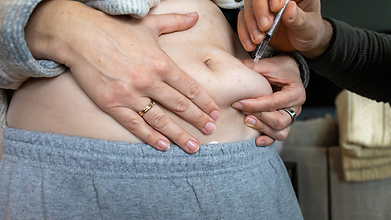
Originally developed to treat type 2 diabetes and obesity, GLP-1 receptor agonists have shown benefits beyond blood sugar control and weight loss, including for cardiovascular and kidney health.
Some women, particularly those with polyendocrine metabolic ovarian syndrome (PMOS), formerly known
as PCOS, have reported conceiving after taking these medications.
Although GLP-1 drugs can support weight loss and improve metabolic health, evidence that they directly improve fertility remains limited.
Woman Says GLP-1 Drug Helped Her Conceive
For 30-year-old Ashlee Amborn, pregnancy was challenging. According to ABC News, she had PMOS, one functioning fallopian tube and half a uterus, which complicated her chances of conceiving naturally.
After years of fertility treatments, she conceived her first two children. Four months after her second child's birth, she became pregnant again.
Amborn said a GLP-1 drug prescribed to manage her PMOS symptoms, including inflammation and hormonal imbalances, helped her conceive. She became pregnant after taking the medication for a month.
"It was kind of these mixed emotions of, 'Holy cow, I'm pregnant,'" Amborn said. "I did this on my own without fertility treatment. All it took was a GLP-1."
Also read: Sorority Rush Sees Ozempic Trend: What Young Women Should Know Before Using GLP-1 Drugs
What Does Research Say?
A recent review published in the Journal of the Brazilian Reproduction Association (JBRA) Assisted Reproduction suggests a possible association between GLP-1 use and improved fertility outcomes in women with obesity and PMOS, particularly those also taking metformin, a medication used to manage blood sugar.
Weight loss and improved insulin sensitivity may support ovulation and reduce ovarian dysfunction. However, more research is needed to establish whether these medications improve pregnancy or live-birth rates.
Can GLP-1 Drugs Affect Ovulation?
Dr. Jacinta Anyaoku, a physician at Maven Clinic specializing in obesity and women's health in midlife, told ABC News that research has not established a direct link between GLP-1 use and ovulation rates, although she has observed potential benefits among her patients.
"When you lose weight, your inflammation goes down," Anyaoku said. "It actually can help with improving your rate of ovulation. Your egg quality could potentially improve if you have reduced inflammation, and so these are all potential effects that come with GLP-1 use."
Sharrón L. Manuel, a board-certified OB/GYN and reproductive endocrinology specialist at HRC Fertility, attributes the reported "Ozempic Baby Boom" largely to weight loss and improved metabolic health, which may help restore ovulation.
Excess body weight can disrupt the hypothalamic-pituitary-ovarian (HPO) axis, contribute to insulin resistance and affect egg and uterine lining quality.
Manuel also points to preliminary research suggesting GLP-1 drugs may influence reproductive function through hormonal regulation, reduced inflammation and improved insulin sensitivity. However, preclinical findings involving ovarian function and endometrial receptivity require further investigation in humans.
Read More: GLP-1 Drugs Ozempic, Zepbound Use Rises 24-Fold Among American Women After Childbirth
Can GLP-1 Drugs Be Used During Pregnancy?
GLP-1 drugs should not be used during pregnancy. Women planning to conceive should consult their healthcare professional about stopping treatment. For semaglutide, prescribing guidance recommends discontinuation at least two months before a planned pregnancy.
Women should also seek medical advice about using these medications while breastfeeding.
The American College of Obstetricians and Gynecologists advises against weight-loss medications during pregnancy. Women considering GLP-1 treatment should discuss the risks, benefits and timing with their healthcare professional, particularly if they plan to conceive.
What About Birth Control?
Tirzepatide, sold under the brand names Mounjaro and Zepbound, can affect oral contraceptive absorption. Its prescribing information recommends switching to a non-oral contraceptive method or adding a barrier method for four weeks after starting treatment and for four weeks after each dose increase.
Parkinson’s Disease: Women Have More Motor Complications, Depression
Credit: iStock
Parkinson’s disease (PD) symptoms differ between women and men, a new study has found, with potential implications for treatment.
Presented at the 2026 International Congress of Parkinson’s Disease and Movement Disorders in Seoul, the study found that women experienced more severe motor complications and depression. Men, however, had greater cognitive impairment.
“Sex differences in movement disorders remain understudied and undervalued despite having an important impact on clinical outcomes in both real-life and clinical trial settings,” said Dr. Marina Picillo, assistant professor of neurology at AOU San Giovanni di Dio e Ruggi d’Aragona.
What Did The Study Find?
Researchers retrospectively analyzed 10 years of clinical data from more than 10,000 Parkinson’s patients examined at a movement disorders clinic in Germany.
The findings showed that women had a greater burden of motor complications and depression. Men were more likely to experience cognitive impairment, REM sleep behavior disorder (RBD) and loss of smell.
“By analyzing data for more than 10,000 PD patients, this study confirmed that depression is more common in women, while RBD, worse cognition, and poorer olfaction are more prevalent in men,” Picillo said. “With good representation of women (40%), it also confirmed a greater female burden of motor complications.”
How Could The Findings Help?
The findings highlight the need to account for sex differences in Parkinson’s disease management and clinical trial design, particularly given the historical underrepresentation of women in neurological research. However, the factors underlying these differences remain unclear.
Picillo stressed that considering sex differences when tailoring treatment and designing clinical trials could be an important first step toward precision medicine in Parkinson’s disease.
“This would be the very first, basic step for boosting precision medicine in PD,” she said.
What Is Parkinson’s Disease?
Parkinson’s disease is a progressive neurodegenerative disorder caused by the loss of dopamine-producing nerve cells in the brain.
Common symptoms include tremors, muscle stiffness, slowed movement and impaired balance. As the disease progresses, patients may have difficulty walking, speaking and performing everyday tasks.
The condition can also cause cognitive impairment, depression, anxiety, sleep disturbances, pain and swallowing difficulties, affecting patients’ independence and quality of life. Although it primarily affects older adults, younger people can also develop Parkinson’s disease.
Global Burden Of Parkinson’s Disease
Parkinson’s disease affected an estimated 11.9 million people worldwide in 2021. The number is projected to reach 25.2 million by 2050, a 112% increase.
Can Parkinson’s Disease Be Prevented?
There is currently no established way to prevent Parkinson’s disease. However, research suggests that certain lifestyle and environmental factors may influence disease risk.
- Physical activity: Regular exercise supports overall health, although its role in preventing Parkinson’s disease remains under investigation.
- Diet and nutrition: A balanced diet supports brain health, but no specific diet has been proven to prevent the disease.
- Environmental factors: Exposure to certain pesticides and other environmental pollutants has been associated with Parkinson’s disease risk. Reducing harmful exposures may help address potential risk factors.
Can Panty Liners Pose A Cancer Risk? What Science Says

Credit: iStock
A US lawsuit has accused feminine hygiene brand Carefree of exposing women to perfluorooctanoic acid (PFOA), a chemical linked to certain cancers. The complaint alleges that users developed health problems ranging from yeast infections to liver disease.
The lawsuit, filed in Los Angeles County Superior Court, claims the panty liners contained PFOA, a member of the per- and polyfluoroalkyl substances (PFAS) group, New York Post reported.
The women in the suit claim they suffered health problems, including breast, ovarian and kidney cancer; thyroid disease; chronic inflammation; infections; high cholesterol and immune disorders.
Others allegedly suffered reduced fertility or infertility, while the lawsuit claims the women now live in fear of developing cancer because of their alleged exposure.
“Each plaintiff suffered physical, mental, and emotional pain and suffering, anxiety over her diagnosis and treatment, and loss of enjoyment of life,” the papers state.
But can chemicals in panty liners pose a health risk? Scientific research has detected potentially harmful substances in menstrual products, raising questions about repeated exposure.
What Are PFOA And Forever Chemicals?
Also read: 43% Of Women With Autoimmune Diseases Say They Were Told It Was ‘All In Their Head’: Lancet
PFOA is a synthetic chemical belonging to the PFAS family, commonly known as forever chemicals because some can persist in the environment and human body for years.
Research has linked PFOA exposure to an increased risk of kidney and testicular cancers. Studies have also associated exposure with health concerns involving cholesterol, thyroid function and the immune system.
However, the risks depend on the chemical, the level and duration of exposure, and how it enters the body. The allegations against Carefree do not, by themselves, establish the extent of exposure from panty liners or the resulting health risks.
What Does Research Say About Chemicals In Panty Liners?
A February study published in Science of the Total Environment detected endocrine-disrupting chemicals (EDCs), including phthalates, bisphenols and parabens, in sanitary pads and panty liners.
Detection frequencies ranged from 75% to 100% in panty liners and 50% to 100% in sanitary pads. Phthalates were more prevalent in liners, while bisphenols were detected more frequently in pads.
The researchers estimated daily exposure doses of 2–20 nanograms per kilogram of body weight under normal skin-absorption assumptions, rising to 8–80 nanograms per kilogram under alternative exposure assumptions.
The findings highlight menstrual products as a potential source of chemical exposure, particularly when use is repeated over long periods and exposure occurs alongside other sources.
Some endocrine-disrupting chemicals have been investigated for their potential effects on hormonal and reproductive health. However, detecting these substances in menstrual products does not establish that using the products causes cancer.
More research is needed to determine how much of these substances is absorbed during normal use and whether the resulting exposure poses a measurable health risk.
Can Panty Liners Cause Irritation Or Infections?
Read More: More Women Buying Testosterone Without Prescription: Can It Help With Menopause?
Chemical exposure is not the only concern associated with panty liner use. Fragrances and other ingredients may trigger allergic reactions or contact dermatitis in people with sensitive skin.
Prolonged moisture and friction can also aggravate irritation around the vulva. Although liners do not necessarily cause bacterial or yeast infections, continuous use may cause discomfort in some people.
Persistent itching, unusual discharge or recurring irritation should be assessed by a healthcare professional.
How To Use Panty Liners More Safely
- Choose unscented liners: Fragrances may irritate sensitive skin.
- Change them regularly: Replace liners when damp or soiled to reduce prolonged moisture and friction.
- Avoid unnecessary use: Skip liners when you do not need them, particularly if they cause irritation.
- Check product information: Look for disclosures about materials and whether PFAS are intentionally added. Such claims do not guarantee the complete absence of these chemicals.
- Seek medical advice: Consult a healthcare professional if irritation or other symptoms persist.
- Follow Us :


© $2026 Times Horizon Private Limited