
- Health Conditions A-Z
- Health & Wellness
- Nutrition
- Fitness
- Health News
- Ayurveda
- Videos
- Medicine A-Z
- Parenting
Dementia Is Directly Linked To Obesity And High Blood Pressure: Study

(Credit-Canva)
Your weight not only affects your heart health but also your brain health. A recent study published in the Journal of Clinical Endocrinology & Metabolism has revealed a powerful connection between your body weight, heart and brain.
After studying over 500,000 people, scientists discovered that having a high Body Mass Index (BMI) can nearly double your chances of developing brain-related illnesses later in life, which confirms that being overweight and having high blood pressure are not just general health concerns, they are direct causes of dementia.
How Does Your Weight Affect Brain Health?
The study focused heavily on vascular dementia, a specific type of memory loss that occurs when the brain is damaged because of a lack of blood flow.
Think of your blood vessels like a system of pipes. If those pipes are narrowed or blocked due to weight-related issues, the "engine" (your brain) doesn't get the fuel it needs. Over time, this lack of oxygen and nutrients leads to permanent brain damage and the loss of memory and thinking skills.
Researchers found that high blood pressure, often caused by carrying extra weight, is the main "middleman" in this process. Blood pressure is measured with two numbers, and both play a part in brain health:
Systolic
This is the pressure when your heart beats. It accounts for about 18 percent of the link between obesity and dementia.
Diastolic
This is the pressure when your heart rests between beats. It accounts for about 25 percent of the link. When these numbers stay high, they constantly "batter" the delicate vessels in the brain, causing them to weaken or clog.
How Weight Affects the Brain
Beyond just blood flow, a high BMI impacts the brain in several other ways:
Increased Inflammation
Obesity often causes the body to be in a constant state of "alarm" or inflammation. This can irritate the immune system and eventually damage brain cells.
Metabolism Issues
When the body struggles to process energy and food properly, it changes how the brain uses energy, which can lead to cognitive decline.
Heart Strain
A heart that has to work harder to pump blood through a larger body eventually becomes less efficient at sending blood all the way up to the brain. Your heart essentially has to do twice as much work as it would at a lower weight.
Can Preventing Obesity Help Dementia?
The most encouraging takeaway from this study is that dementia isn't always a matter of bad luck or "old age." Researchers call this an unexploited opportunity.
By managing your weight and blood pressure early in life, through a healthy diet, consistent exercise, and good sleep, you are essentially "dementia-proofing" your brain. The researchers suggested that intervening early, possibly even with weight-loss medications before symptoms start, could be a key strategy for protecting brain health in the future.
How Much Does Obesity Affect Worldwide?
According to the World Health Organization, one in eight people in the world are living with obesity. In 2022, about 2.5 billion adults were overweight. Causes of it vary, from things like diseases or chronic conditions, to the kind of food that is available to consume.
You Can Stop A Heart Attack With This Medicine, Cardiologist Reveals Heart Attack 101
(Credit-Canva)
Heart attacks need immediate intervention and Dr. Balbir revealed one medicine that can save a life when this happens: Aspirin. In an interview with HealthandMe, Dr. Singh revealed that one does not need fancy equipment to help a person having a heart attack.
“If the history of the family history or cholesterol or diabetic. This patient is at risk, so what is the medicine if you get such a symptom? Aspirin.”
What Medicine Can Help a Heart Attack?
Dr. Singh points out that if you or someone near you begins to experience symptoms of a heart attack, such as heavy chest pain, pressure, or unexplained sweating, taking a dissolvable aspirin immediately can be a lifesaver.
By dissolving a tablet (like Dispirin) in a glass of water and drinking it, the medicine dissolves into the bloodstream much more quickly than simply ingesting it.
Aspirin works by thinning the blood and preventing further clotting in the arteries, which can stop a heart attack from getting worse before medical professionals arrive.
Other Preventative Measures To Take For Heart Attack
Before medical professionals arrive, performing CPR can also help save a person's life; however, one must know the right way to do CPR.
While speaking to HealthandMe, Dr Singh mentioned a viral video where a person collapses and someone attempts to give them CPR while they are still sitting in a chair, notng that this was 'a dangerous mistake' and people should steer clear away from such false videos.
He explained that you cannot perform CPR on someone who is sitting up as the body must be positioned correctly for the heart and lungs to receive the benefit of the chest compressions.
Without the proper technique, blood will not reach the brain and your efforts will not help the patient. Understanding the proper sequence of events is the difference between a failed attempt and a saved life.
Step 1: The Importance of Positioning
If someone collapses, immediately place them flat on their back on a hard floor. You need the ground's resistance to pump the heart manually. In this position, the heart is "sandwiched" between the rib cage and spine. On a soft bed, your presses will fail to squeeze the heart effectively.
Step 2: Focus on the Heart First
Dr. Singh emphasizes that restarting the heart is the absolute priority. Place both hands in the center of the chest and use your body weight to press firmly. By pushing the rib cage toward the spine, you force the heart to pump. Often, once circulation starts, the patient begins breathing again spontaneously.
Step 3: The Proper CPR Sequence
If the person doesn't wake up, begin a rhythm of three chest presses followed by one mouth-to-mouth breath. Lock your elbows and press hard to ensure the heart is being squeezed between the bones. This specific cycle keeps oxygenated blood moving to the brain, preventing permanent damage during a cardiac emergency.
How Common Are Heart Attacks?
According to the Centers for Disease Control and Prevention, heart attacks claim a life every 34 seconds. In 2023, it caused nearly 920,000 deaths, one in every three recorded. Hence it is important to know not just the ways to help when someone has a heart attack but also how to prevent them.
You Can Stop A Heart Attack With This Medicine, Cardiologist Reveals Heart Attack 101
(Credit-Canva)
Heart attacks need immediate intervention, and Dr. Balbir revealed one medicine that can save a life when this is happening: Aspirin. In an interview with HealthandMe, Dr. Balbir Singh revealed that one does not need fancy equipment to help a person having a heart attack.
“If the history of the family history or cholesterol or diabetic. This patient is at risk, so what is the medicine if you get such a symptom? Aspirin.”
What Medicine Can Help a Heart Attack?
Dr. Singh points out that if you or someone near you begins to experience symptoms of a heart attack, such as heavy chest pain, pressure, or unexplained sweating, taking a dissolvable aspirin immediately can be a lifesaver.
By dissolving a tablet (like Dispirin) in a glass of water and drinking it, the medicine enters the bloodstream quickly.
Aspirin works by thinning the blood and preventing further clotting in the arteries, which can stop a heart attack from getting worse before medical professionals arrive.
Other Preventative Measures To Take For Heart Attack
Before medical professionals arrive, doing CPR also helps; however, one must know the right way to do CPR.
There is a lot of misinformation online. Dr. Singh mentions a viral video where a person collapses and someone attempts to give them CPR while they are still sitting in a chair. This is a dangerous mistake.
He explained that you cannot perform CPR on someone who is sitting up. The body must be positioned correctly for the heart and lungs to receive the benefit of the chest compressions. If the technique is wrong, the blood will not reach the brain, and your efforts will not help the patient. Understanding the proper sequence of events is the difference between a failed attempt and a saved life.
Step 1: The Importance of Positioning
If someone collapses, immediately place them flat on their back on a hard floor. You need the ground's resistance to pump the heart manually. In this position, the heart is "sandwiched" between the rib cage and spine. On a soft bed, your presses will fail to squeeze the heart effectively.
Step 2: Focus on the Heart First
Dr. Singh emphasizes that restarting the heart is the absolute priority. Place both hands in the center of the chest and use your body weight to press firmly. By pushing the rib cage toward the spine, you force the heart to pump. Often, once circulation starts, the patient begins breathing again spontaneously.
Step 3: The Proper CPR Sequence
If the person doesn't wake up, begin a rhythm of three chest presses followed by one mouth-to-mouth breath. Lock your elbows and press hard to ensure the heart is being squeezed between the bones. This specific cycle keeps oxygenated blood moving to the brain, preventing permanent damage during a cardiac emergency.
How Common Are Heart Attacks?
According to the Centers for Disease Control and Prevention, heart attacks claim a life every 34 seconds. In 2023, it caused nearly 920,000 deaths, one in every three recorded. Hence it is important to know not just the ways to help when someone has a heart attack but also how to prevent them.
Elton John Undergoes Major Knee Surgery, Here Is What He Did With His Bones
(World Gold Council Youtube/Elton John Instagram)
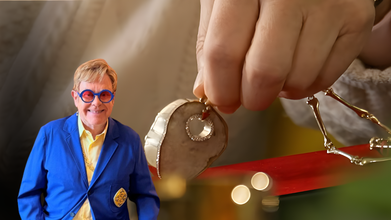
Sir Elton John continues to surprise his fans as he shares how he made jewelry out of his old knee. His eccentric style and rockstar allure took over the music industry; however, recently the 78-year-old shared how he transformed his old kneecap into a fashion statement.
In a short documentary about what he did with his body parts after undergoing a double knee replacement in 2024, he revealed that when he had his kneecaps first removed, he asked is he could keep the kneecaps, which startled his surgeon.
The right kneecap was turned into a gold-framed necklace. Elton pointed out a natural hole in the bone, joking that his surgeon called his knees the "worst" he had ever seen.
Why Did Elton John Get Knee Replacement Surgery?
While the exact reason for the Rocket Man singer’s knee replacement surgery is not known, according to the Mayo Clinic a knee replacement surgery is done to replace parts of injured or worn-out knee joints.
During a knee replacement surgery, the damaged bone and cartilage are replaced with parts of metal and plastic. To check whether you need a knee replacement surgery, the doctor first determines whether you need a replacement or not. They also understand your knee’s range of motion, stability and strength.
When Is Knee Replacement Surgery Needed?
While knee replacement surgery may not be necessary all the time, how does one recognize the need for it? Experts explain that deciding on surgery can be difficult, but here are some signs you should look out for:
Severe Physical Changes
The most common indicator is "bone-on-bone" pain, caused by worn-down cartilage. While genetics and weight play roles, surgery becomes necessary when pain stops you from enjoying life, like playing with grandkids or cycling.
Exhausted Other Options
Before choosing surgery, try physical therapy or joint injections. If these fail, a replacement is the logical next step.
Commitment to Recovery
Modern implants can last over 20 years, but you must commit to months of physical therapy. Prioritizing your current quality of life is more important than worrying about future wear.
Other Body Part Elton Had To Remove Or Replace
This knee surgery is just one of many health challenges the 78-year-old star has faced. Elton has joked that he is a bit like a "bionic man" because so many of his original parts are gone. Over the years, he has had his tonsils, appendix, and prostate removed as well as undergone a hip replacement.
Beyond surgeries, Elton has managed Type 2 diabetes for over twenty years, which means he has to be very careful about blood sugar levels and insulin production. He has also survived a terrifying health scare following a prostate cancer diagnosis, where a rare infection left him "24 hours from death."
Despite all these health battles and retiring from touring in 2023, Elton says he is happier than ever. He is proud to have ended his performing career on a "high note" with his final shows and feels lucky to still be here, celebrating his life through music and his one-of-a-kind jewelry.
- Follow Us :


© 2024 Bennett, Coleman & Company Limited