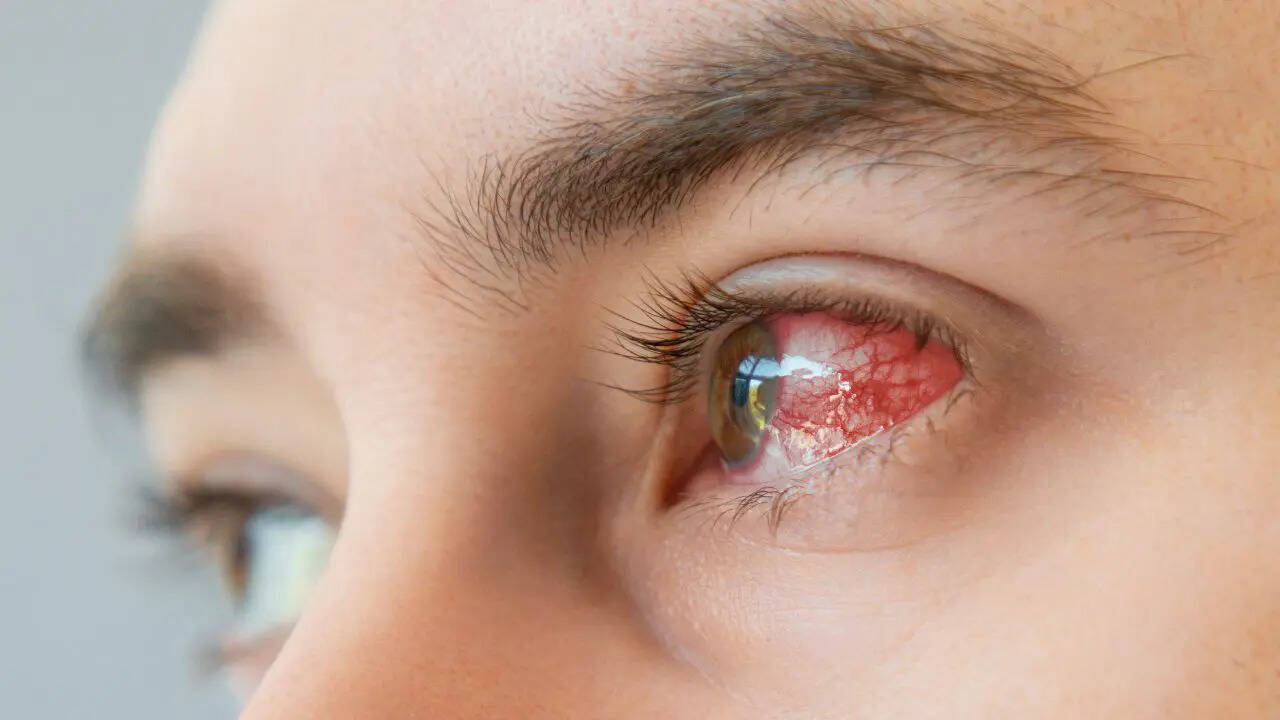
Nearly four years ago, Teresa Sanchez was in Mexico for a medical procedure when her right eye began to feel unusually dry and irritated. At first, it seemed minor. She assumed her contact lens might be torn or that the switch from daily lenses to monthly ones was causing dryness. She even wondered if her body was fighting off an infection, as per CNN.What she did not realize at the time was that a microscopic organism was slowly attacking her cornea. Over the next three months, the parasite caused irreversible damage to her vision and triggered searing pain that spread across her head.“I couldn’t even keep the blinds open in my room,” said Sanchez, now 33 and living in Las Vegas. “Light would cause unbearable pain. That’s when I knew something was seriously wrong.”By then, she had already seen multiple optometrists and had been misdiagnosed. Frustrated and desperate for answers, Sanchez began researching her symptoms on her own.What Is Acanthamoeba Keratitis?Online searches led Sanchez to a condition she had never heard of: acanthamoeba keratitis. An eye specialist later confirmed it. Keratitis refers to inflammation of the cornea, the clear, dome-shaped layer at the front of the eye that plays a central role in focusing vision. Acanthamoeba is a microscopic, single-celled organism that cannot be seen without a microscope.According to Dr. Jacob Lorenzo-Morales, a professor of parasitology at the University of La Laguna in Spain, acanthamoeba is commonly found in soil and water. It does not require a host to survive, which makes it especially resilient.Once the organism comes into contact with the eye, it can attach itself to the cornea. Dr. Paul Barney, an optometric physician and director at the Pacific Cataract and Laser Institute in Alaska, explained that even tiny breaks in the corneal surface can allow the parasite to burrow deeper into the eye.Why Contact Lens Wearers Face Higher Risk?Acanthamoeba keratitis is considered rare. Based on data from 20 countries, including the UK, India, the US, Canada and Brazil, there are more than 23,000 cases worldwide each year. Yet a striking pattern stands out. Between 85% and 95% of people who develop the infection wear contact lenses.Contact lenses can cause microscopic abrasions on the cornea, creating an entry point for the parasite. The organism can also cling to the lens itself or become trapped between the lens and the eye, making it easier to penetrate the corneal tissue.“If it’s not diagnosed early and treated aggressively, the outcome can be devastating,” Barney said. “The parasite feeds on the cornea, triggering inflammation and tissue damage that can lead to permanent vision loss.”In some cases, vision can be partially restored with treatment. Others require a corneal transplant.A Parasite Built To SurviveTreating acanthamoeba keratitis is especially difficult because the organism has strong defense mechanisms. It can sense threats and respond by forming a cyst, allowing it to lie dormant for months or even years.This resilience means treatment often stretches over long periods and involves intense discomfort. Because the eye is extremely sensitive, patients must work closely with specialists and strictly follow treatment instructions.Why The Condition Is Often Missed?Early diagnosis is one of the biggest challenges Because acanthamoeba keratitis is uncommon, many optometrists may not recognize it right away. As a result, many contact lens users only learn about the condition after they develop it or come across viral videos discussing it online.Many patients have expressed surprise that they were never clearly warned about the risks of wearing contacts while showering or swimming.The Contact Lens Society of America emphasized that contact lenses are medical devices and require strict hygiene. This includes avoiding water exposure during swimming, showering or sleeping. The organization also stressed the importance of patients asking questions and carefully reviewing care instructions.Acanthamoeba Keratitis: Symptoms That Mimic Other Eye InfectionsIn addition to severe pain and light sensitivity, acanthamoeba keratitis can cause redness, blurred vision, dryness, excessive tearing and the sensation that something is stuck in the eye.Because these symptoms overlap with other conditions, misdiagnosis is common. Barney said the infection is frequently mistaken for herpes simplex keratitis, a major cause of infection-related blindness. In its earliest stages, it can even resemble pink eye.That was the case for Sanchez. Her first optometrist diagnosed pink eye. The prescribed drops blurred her vision. A second optometrist suspected a bacterial infection, and while antibiotic drops offered brief relief, she soon lost vision in the affected eye.Acanthamoeba Keratitis: How To Reduce Your Risk?Experts stress that contact lens hygiene is critical. Always clean and store lenses using approved contact lens solution, never water. The solution in your lens case should be replaced daily. Wash and dry your hands thoroughly before handling lenses.Sleeping in contact lenses should be avoided, as it increases dryness, irritation and the risk of corneal damage. Daily disposable lenses may lower infection risk compared to monthly lenses.For water-based activities, glasses or prescription goggles are safer options. Some people may also consider vision correction surgery after discussing risks and suitability with a doctor.