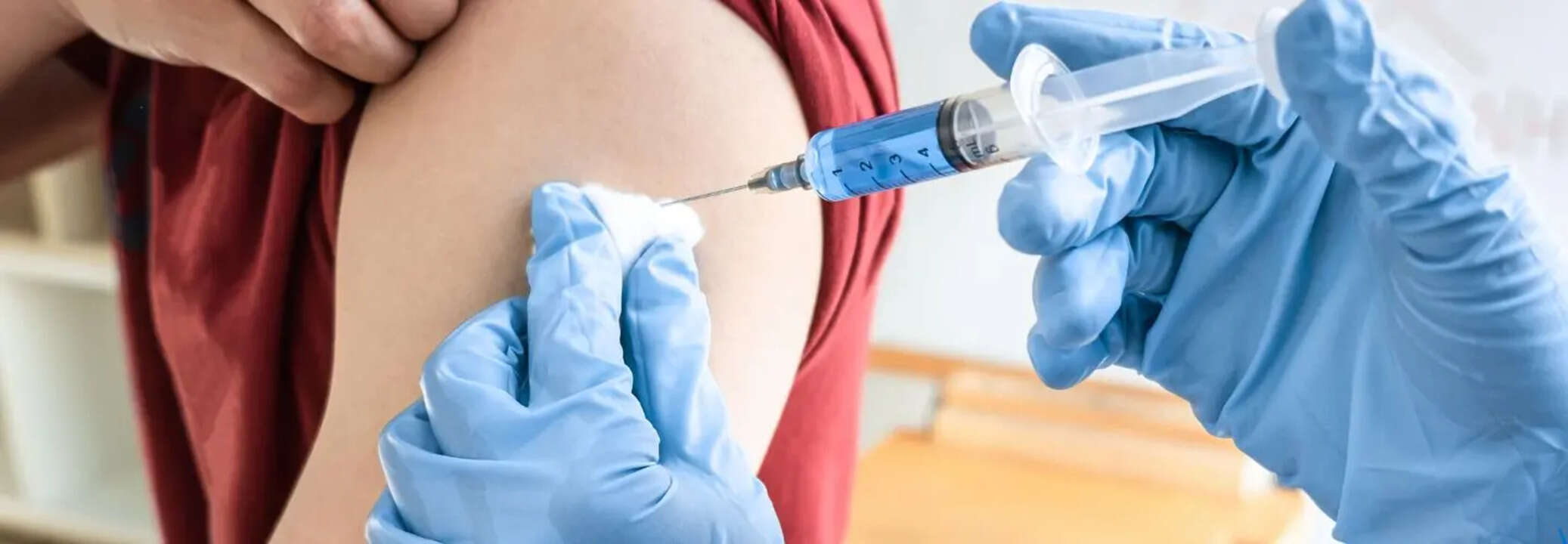
Receiving a vaccine booster in the same arm as the first dose triggers a faster and stronger immune response and helps the body build protection faster, a new study from Australian scientists has revealed. The findings could help improve vaccine strategies and may eventually lead to vaccines that need fewer boosters. The study was published in the journal Cell and finds that the immune system responds more quickly when both doses are given in the same arm.Why Will It Work?Researchers have reasoned that getting jabbed in the same arm works better because immune cells in nearby lymph nodes, which are the body's infection-fighting hubs, become "primed" after the first shot. When the booster arrives in the same spot, these cells spring into action and help produce stronger antibodies. "This is a fundamental discovery in how the immune system organises itself to respond better to external threats," said the study's co-senior author Tri Phan, director of the Precision Immunology Program at the Garvan Institute.Researchers discovered this effect first in mice, then confirmed it in a clinical study involving 30 people who received the Pfizer COVID-19 vaccine. Those who had both doses in the same arm developed faster and more effective protection, especially against COVID-19 variants like Delta and Omicron. While both groups ended up with similar antibody levels after four weeks, the same-arm group gained protection more quickly, a potential game-changer during pandemic outbreaks."If you've had your COVID jabs in different arms, don't worry, our research shows that over time the difference in protection diminishes," said the study's co-senior author, Mee Ling Munier from the Kirby Institute. How Do Vaccines Work?The immune system has a wonderful layered system of defences, and when it comes to vaccines, two major defenses are activated. One of them is antibodies, which are proteins in the blood. Then you have something called cell-mediated immunity, which involves cells, usually T lymphocytes. You almost always get both. From a regulatory point of view, you often measure antibodies in people and basically know how effective a vaccine is in a population.