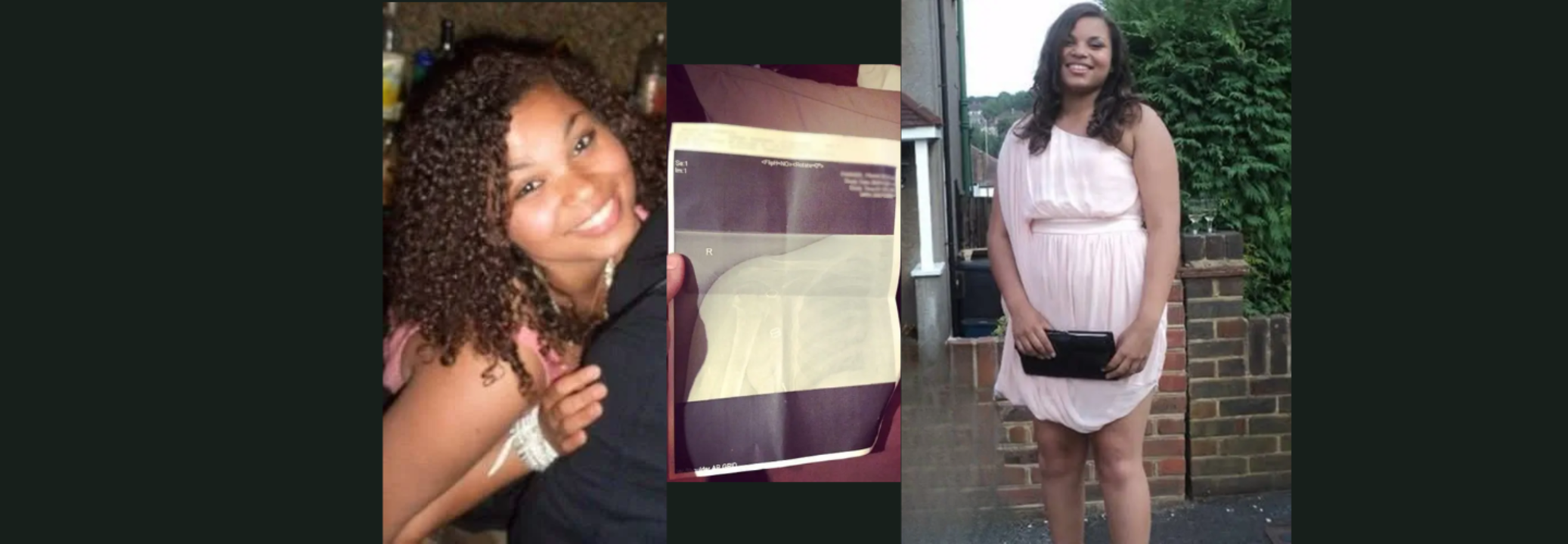
When most teenage girls are navigating their first period, 15-year-old Frankie Parker was grappling with something far more bewildering: menopause. Diagnosed with premature ovarian insufficiency (POI) in 2010, Frankie entered a phase of life most associate with their 50s—hot flashes, night sweats, hormonal imbalances—while still in high school.Now 30, Frankie’s story is not just one of a rare medical condition but of misdiagnoses, emotional isolation, and physical pain. Most shockingly, the hormonal aftermath left her with what doctors described as “the skeleton of a 75-year-old,” prone to fractures from even the most mundane tasks.This is her story—and it opens an urgent conversation on the silent struggles of early menopause, the gap in understanding POI, and the resilience required to reclaim life in the face of an invisible illness.What Is Premature Ovarian Insufficiency (POI)?POI, sometimes referred to as premature menopause, occurs when the ovaries stop functioning normally before age 40. While some women may never experience menstrual cycles, others may lose theirs abruptly. According to the National Institutes of Health (NIH), POI affects approximately 1% of women under 40, and fewer than 0.1% under 20—making Frankie’s diagnosis at 15 exceedingly rare.Symptoms typically mimic those of natural menopause: hot flashes, mood swings, brain fog, night sweats, and, crucially, reduced estrogen. Estrogen not only regulates the menstrual cycle but plays a pivotal role in bone health, cognitive function, and cardiovascular stability.Growing up in Croydon, England, Frankie was raised by her father, with whom she never felt comfortable discussing menstruation. "I remember being embarrassed that my periods hadn’t started,” she says. “It wasn’t something I could easily bring up.”Her isolation was compounded by the lack of understanding around early menopause. It wasn’t until a complex shoulder fracture from a fall at a roller disco that doctors discovered her bone density resembled that of an elderly woman. Blood tests revealed severely diminished estrogen levels and a diagnosis of POI.“I just wanted to fit in and be like other girls my age,” Frankie recalls. “Instead, I was living with symptoms that made me feel decades older.”Living with the Body of a 75-Year-Old at 15Estrogen deficiency caused Frankie to develop osteopenia—a condition where bone mineral density is lower than normal. As a result, she experienced multiple fractures over the years, including breaks in her shoulder and foot.“I broke bones just by walking or falling lightly,” she explains. “It wasn’t just painful—it was embarrassing and confusing.”Her adolescence was marked by frequent hot flashes, joint pain, mood instability, and cognitive dysfunction. She struggled silently with brain fog that made it difficult to concentrate in school, and the stigma around menstruation often pushed her out of conversations and rooms when the topic came up.While Frankie’s diagnosis was clear, the road to effective treatment was anything but. She was initially prescribed hormone replacement therapy (HRT), but the regimen proved ineffective. Her other chronic conditions—type 1 diabetes, hypothyroidism, and chronic kidney disease—often muddled her symptoms and diverted attention from her POI.“Doctors would say my symptoms were due to my thyroid or diabetes,” she says. “I felt like they weren’t listening to the bigger picture.”One particularly hurtful experience came when a nurse commented on her childlessness: “Oh my god, your partner is a saint for staying with you for not having children.” That moment, she says, encapsulated the cruelty of societal expectations and the insensitivity she often faced.Frankie and her long-term partner, roofer Shawn Gowan, attempted IVF using an egg donor in 2019. Initially hopeful, they were crushed when fertility clinics labeled her a “high-risk” candidate due to her kidney health and hormonal instability. She was placed on a two-year waitlist for a menopause clinic—an eternity in the context of fertility.“We hadn’t even chosen an egg donor,” she recalls. “Then lockdown happened, and everything was paused. I wasn’t even on medication anymore.”During that time, Frankie’s symptoms returned in full force. Hot flashes, brain fog, and emotional strain took over her days, with very little hope in sight.In March 2024, after years of being caught in the healthcare limbo, Frankie finally received a proper consultation at a menopause clinic. She was prescribed an HRT gel, which doctors hoped would alleviate her symptoms and reduce the long-term risks of estrogen deficiency, including early-onset Alzheimer’s and ovarian cancer.However, the gel didn’t work as expected, leading her to question whether she had POI at all. “I thought it might just be my underactive thyroid playing up again,” she said.It wasn’t until a follow-up appointment in November 2024 that POI was reconfirmed through additional blood tests. She was switched to HRT patches—finally, a form of treatment that began to stabilize her condition.Today, Frankie is post-menopausal at 30, relying on daily HRT patches to regulate her hormones. While she is no longer eligible for IVF, she and Shawn have turned their hopes toward adoption.“It’s an invasive and lengthy process, so we’ve paused for now,” she says. “But our goals have changed. We’re focused on healing and rediscovering ourselves.”Frankie is set to travel to Thailand this May, a symbolic gesture of reclaiming her 20s, which she says were lost to hospital visits, doctor rejections, and bone breaks.“I am hopeful that one day, I will become a mother,” she says with quiet resilience.Frankie Parker’s story is not just about premature menopause; it’s a testament to the importance of listening to patients—especially young women whose symptoms fall outside the conventional narrative. POI is often misdiagnosed or misunderstood, especially when it overlaps with other chronic conditions.Healthcare providers must be educated to recognize rare hormonal disorders and respond with sensitivity, not dismissal. And society at large must be willing to expand its definition of womanhood, fertility, and aging.For Frankie, it’s no longer just about fighting for a diagnosis—it’s about making peace with her body, reshaping her dreams, and advocating for others like her.“I lived with the embarrassment of my diagnosis for too long,” she says. “Now, I want others to know they’re not alone.”