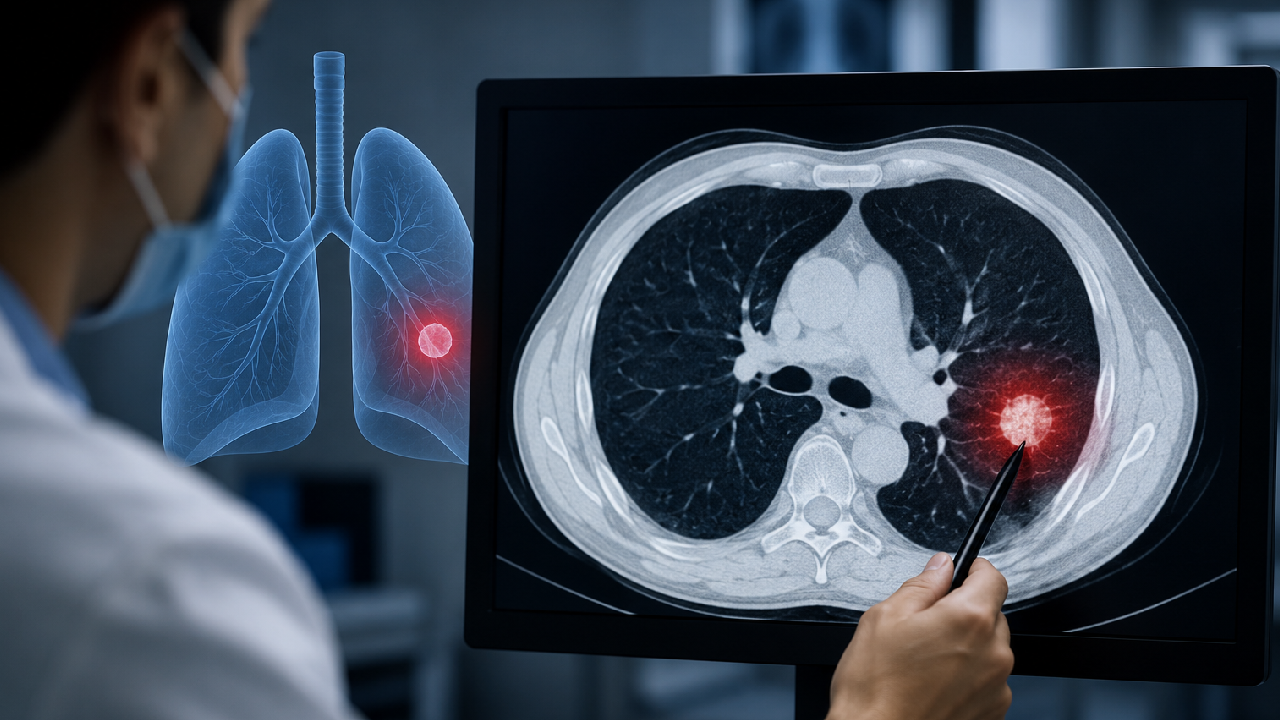
A small spot on a lung CT scan can be alarming, with many people immediately fearing the worst. However, doctors say that a lung nodule is a common finding and, in most cases, is not cancer. On , specialists explain what lung nodules are, why they appear, which features may warrant closer evaluation, and how timely diagnosis can help detect serious conditions early and prevent unnecessary anxiety.Dr. Gyanendra Agrawal, Senior Director - Interventional Pulmonology & Pulmonary Intensive Care, Max Super Speciality Hospital, Noida, told Health and me, "It is essential to talk about one of the most serious concerns of the patients who have undergone a CT scan on World Lung Cancer Day, oftentimes linked with the description of a spot/nodule found in the lungs. Some people see this term in the report and are gripped by fear; unfortunately, not all spots in the lung signify lung cancer."According to Dr. Vinayak Maka, Senior Oncologist, Department of Oncology, Ramaiah Memorial Hospital, "A lung nodule is a small, round or oval-shaped growth in the lung, typically less than 3 cm in size, most often discovered incidentally during a chest X-ray or CT scan done for an unrelated reason."Also Read: Rare Tick-Borne Bourbon Virus Detected In New York For The First TimeNotably, nodules are extremely common; many people carry one without ever knowing it, and without it causing any symptoms. They can form due to a wide range of causes, including old infections, inflammation, scar tissue, or benign growths. In a smaller proportion of cases, a nodule may represent an early cancerous growth, which is why understanding its characteristics matters."A lung nodule finding on a CT scan often triggers panic, but the reality is reassuring: over 95% of lung nodules are benign, arising from old infections, scars, or inflammation. Still, understanding when a nodule warrants concern can be lifesaving." Dr. Vinayak Maka added.What Determines Risk?Size is the key factor when assessing a lung nodule, alongside the patient's overall health. Nodules smaller than 6 mm have a very low cancer risk (under 1%) and usually only need routine follow-up. Those measuring 6–8 mm carry a slightly higher risk (1–2.5%) and are typically monitored with a repeat CT scan after 6–12 months.On the other hand, Dr. Shyam Krishnan, Lead Consultant, Clinical & Interventional Pulmonology, CMRI (CK Birla Hospitals), Kolkata, told Health and me, "This World Lung Cancer Day, my message is simple. Do not ignore the shadow on your scan — but do not be paralysed by it either. Get it checked by people who can tell you exactly what it is. In lung cancer, a precise and early answer is the single most powerful thing we have. And that answer is now closer, gentler, and faster than most people realise."Finding a lung nodule does not automatically mean a diagnosis of lung cancer. Experts stress that the size, appearance, and a person's medical history all play a role in determining the next steps.