
- Health Conditions A-Z
- Health & Wellness
- Nutrition
- Fitness
- Health News
- Ayurveda
- Videos
- Medicine A-Z
- Parenting
Melatonin Overuse: Side-Effects, Long-Term Risks, And How To Use It Safely

Credits: Canva
Melatonin has become one of the most widely used sleep aids in recent years. Many people rely on it to manage jet lag, night-shift sleep cycles, or occasional insomnia. Surveys show that a large share of adults have tried melatonin at some point, often assuming it is completely harmless because it is available over the counter.
In most cases, short-term use is safe, but a growing number of emergency calls and medical reports show that misuse and high doses can cause real problems, especially when taken without guidance.
We got in touch with Dr Lohit Kumbar, Endocrinologist at SDM College of Medical Sciences and Hospital in Dharwad, who explained how melatonin overuse affects the body, the long-term concerns linked to prolonged use, and the safest way to take it.
How Melatonin Overdose Affect the Body?
Melatonin is produced naturally by the pineal gland at night. It plays a central role in sleep regulation, but it also influences blood pressure, body temperature, and the body’s antioxidant activity. Dr Kumbar told us, supplements mimic this natural hormone and are often used for insomnia and several neurological or developmental conditions, including Alzheimer’s disease, autism spectrum disorder, and mild cognitive impairment. Because it supports these functions, many assume that more melatonin means better sleep, which is not true.
Dr Kumbar notes that even though melatonin is generally safe, high doses can cause immediate discomfort. The most common signs of excess intake include daytime sleepiness, headache, dizziness, nausea, and sleep disturbances. These symptoms usually appear when the dose goes beyond 10 mg per day, which is far above what most people need. In a few rare situations, more serious reactions have been reported. These include autoimmune hepatitis, confusion, optic neuropathy, psychotic episodes, seizures, and unusual skin eruptions. Such cases are linked to a wide range of doses, from as little as 1 mg to as high as 36 mg, suggesting that individual sensitivity varies.
Melatonin Long-Term Risks You Should Know About
While overdose symptoms appear quickly, long-term risks build up slowly. Prolonged melatonin use, especially over six months or more, may affect reproductive hormones. According to Dr Kumbar, this can lead to reproductive dysfunction, delayed puberty in younger users, and concerns about fetal development if the supplement is taken during pregnancy. These risks are not yet fully understood, largely because long-term data is limited, but the existing evidence is strong enough for doctors to urge caution.
Pregnant and breastfeeding women, in particular, are advised to avoid melatonin unless a doctor specifically recommends it. Children and adolescents should also use it only under strict medical guidance.
How to Use Melatonin Safely
Safe use begins with sticking to the lowest effective dose. Dr Kumbar recommends keeping daily intake at or below 5 to 6 mg. Most adults respond well to even smaller amounts, and higher doses do not improve sleep quality. If melatonin becomes a regular part of your routine, medical supervision is important. A doctor can help determine the right dosage, ensure there are no interactions with other medicines, and monitor any side effects.
Melatonin can be helpful when used responsibly, but it is not a cure-all for sleep problems. Understanding the risks of overuse ensures you protect your long-term health while still getting the rest you need.
Amanda Peet Opens Up About Breast Cancer Battle, Shares Toughest Moment

Credit: Instagram
Amanda Peet, the Hollywood actress known for roles in Something’s Gotta Give, The Whole Nine Yards, and Jack & Jill, recently opened up about her breast cancer diagnosis and how informing her kids about her health became the toughest part for her.
In a New Yorker essay published March 21, the 54-year-old actress announced how a routine scan in August 2025 showed an unusual ultrasound result. Later, a biopsy detected a tumor that “appeared” small.
The Dirty John star found to be in stage 1 of lobular cancer that is “hormone-receptor-positive” and “HER2-negative,” making her “happier than the pre-diagnosis” stage.
It is because Hormone-receptor-positive and HER2-negative cancer is less aggressive and often easier to treat than more aggressive forms of breast cancer.
However, informing her children, Frances, 19, Molly, 15, and Henry, 11, about the cancer was the toughest part for her, and she had to be in the right mindset before sharing the news with them.
“They've been great,” Peet told E! News.
“I definitely had to get myself together before including them. The hard part was realizing that nothing is certain and there was going to be no perfect time to tell them,” she added.
Peet stated that between her diagnosis, she had also been navigating a series of family health crises — with both of her parents' final months in hospice care.
The Your Friends & Neighbors actress, in her essay, also noted that she would “only need a lumpectomy and radiation,” not a double mastectomy.
Also read: Jane Fallon Diagnosed With Breast Cancer, This Is How She Caught It Early
What is Lobular Cancer?
Invasive Lobular Carcinoma (ILC) the second most common form of breast cancer, representing 5 to 15 percent of breast cancer cases.
Rather than a distinct lump, it can appear as a thickening or "fullness" rather than a tumor.
It is often difficult to detect on mammograms, thus MRI or ultrasound are more effective for detection
It is usually hormone receptor-positive.
What Is Hormone receptor-positive (HR+) and HER2-negative (HER2−) Breast Cancer
HR+ and HER2− breast cancer is the most common subtype and is seen among 60–75 per cent of cases.
It is not two different cancers, but rather specific, defining characteristics of the same cancer type (breast cancer). It grows:
- due to hormones estrogen/progesterone,
- lacks excess HER2 protein,
- it can occur in either or both breasts
- has a better prognosis
- slower growth rate
- often treated with hormone therapy and sometimes chemotherapy.
Why Early Diagnosis Matters for Breast Cancer
According to the Centers for Disease Control and Prevention (CDC), breast cancer screening is a proactive checkup used to find cancer before any physical signs or symptoms appear. While screening doesn’t prevent cancer, its goal is early detection, making the disease much easier to treat.
Since every person’s body and history are different, you and your doctor should engage in informed and shared decision-making. This means discussing the pros and cons to decide together if, and when, screening is right for you.
The US Preventive Services Task Force (a group of national medical experts) provides guidelines based on the latest research:
Average Risk
Women aged 40 to 74 should generally get a mammogram every two years.
High Risk
If you have a family history or other risk factors, your doctor may recommend a different schedule or additional tests.
GLP-1 Drugs: Why India Needs Stricter Rules Now

Credit: iStock
GLP-1 receptor agonists are a modern class of medicines that have changed the treatment of type 2 diabetes and obesity. In simple terms, they help the body respond to food more smartly. After eating, the intestine naturally sends signals that help regulate sugar and appetite levels.
GLP-1 RA medicines imitate this signal. As a result, blood sugar rises less after meals, appetite becomes more controlled, and many people feel full with smaller amounts of food. This is why these medicines are used not only for diabetes, but also for weight reduction in selected people.
GLP-1 Drugs: Not A Miracle Injection
These medicines are important because their benefits can go beyond sugar control alone. Studies and current diabetes guidelines show that some GLP-1 RAs can reduce body weight, improve long-term sugar levels, and lower the risk of major heart-related problems in people who have type 2 diabetes and high cardiovascular risk.
Recent guidance also supports their use in some people with chronic kidney disease when cardiovascular risk reduction is an important goal. This does not mean every drug in the group is identical, but it means the class has become medically important for more than just lowering sugar.
For the general public, one important point is that these are not “miracle injections.”
They work best when combined with better food choices, regular walking or exercise, good sleep, and medical follow-up. They are usually started slowly because the commonest side effects are stomach-related, such as nausea, vomiting, constipation, loose motions, or a feeling of fullness.
Not everyone is suitable for them, and the decision depends on a person’s diabetes status, weight, heart or kidney disease, other medicines, and cost. Used properly, GLP-1 RAs are powerful tools that can improve health, but they should always be taken under medical supervision.
GLP-1 Drugs: Urgent Need to Curb Misuse
So Indian Medical Association (IMA) is planning to seek a mandate restricting prescriptions of GLP-1 drugs to certified endocrinologists/diabetologists or MD general medicine practitioners to curb indiscriminate use and safeguard patient safety as access expands, many media report in August last year about rampant misuse of GLP1 weight loss drugs by cosmetologists, physiotherapists, dermatologists, general MBBS clinicians, and even ayurveda, and other non-modern medicine practitioners.
Many MBBS, physiotherapists, and non-modern medicine practitioners are prescribing GLP1 drugs to people who neither have diabetes nor any comorbidity or acute obesity, but purely for cosmetic reasons to lose some weight that can be otherwise easily done with some lifestyle changes like exercise and diet.
It is a duty of the government to take care of it because there is a lot of misuse and misprescription that needs to be curbed immediately, because these medicines also have side effects.
We will write to the government to take necessary action to stop the misuse of the drug. We will discuss it in our meeting in the first week of April 2026.
1 In 4 Diabetic Patients in India Suffer from Liver Fibrosis, Finds Lancet Study
Credit: iStock
One in four or 25 percent of adults with type-2 diabetes in India also suffer from liver fibrosis, according to an alarming study published in The Lancet Regional Health Southeast Asia journal today.
With data from more than 9,000 patients across the country, it is the largest ever real-world survey of liver fibrosis in type 2 diabetes from any low- or middle-income country.
While fatty liver disease has been touted as the most common liver condition among diabetes patients, the new study established liver fibrosis as the real danger among people with high blood sugar.
“Type 2 diabetes is closely linked to fatty liver disease (also known as MASLD). But how common is liver Fibrosis — the real danger — in Indian diabetics? Our answer: 1 in 4 has clinically significant liver fibrosis. One in 20 already has probable cirrhosis. Most had no symptoms. We propose liver fibrosis as the ‘4th major complication’ of diabetes,” said Ashish Kumar, from Ganga Ram Postgraduate Institute of Medical Education and Research (GRIPMER), from Sir Ganga Ram Hospital, in a post on social media platform X.
What Did The Study Find?
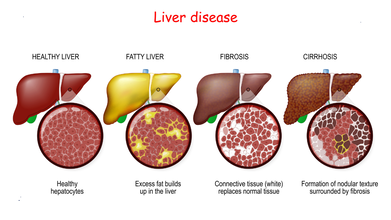
Fatty liver is typically the first and reversible stage of liver disease, where excess fat builds up in liver cells. Left untreated, it progresses to liver fibrosis, which is the excessive accumulation of scar tissue (collagen) in the liver resulting from chronic inflammation. The condition then progresses to the third and late stage, irreversible scarring (fibrosis) of the liver. The final stage is liver cancer.
The DiaFib-Liver Study included a total of 9,202 adults with type-2 diabetes patients who underwent FibroScan (VCTE) to assess liver fibrosis in routine diabetes care.
Of these:
- 26 percent had clinically significant fibrosis,
- 14 percent had advanced fibrosis,
- 5 percent had probable cirrhosis
- 65 percent had fatty liver disease.
- obesity
- dyslipidaemia
- kidney problems
- diabetes duration ≥10 years.
Fibrosis: The Screening Target
The study suggested the urgent need to integrate fibrosis screening into national diabetes programs.
“One in four adults with type 2 diabetes in India has clinically significant liver fibrosis and one in twenty already has probable cirrhosis, establishing advanced liver disease as a 'fourth major complication' of diabetes,” said the researchers.
“The DiaFibLiver Study calls for: Fibrosis — not steatosis — as the screening target. FibroScan integration into routine diabetes care. Moving beyond ultrasound-based referral,” Jha said.
“We hope this data from India adds to the global conversation on diabetes and liver disease,” he added.
Also read: The Silent Rise of Fatty Liver Disease: How India-Specific Guidelines Can Help
The findings highlight the urgent need to:
- move beyond steatosis
- systematically integrate fibrosis assessment into routine diabetes care,
- deploy non-invasive tools such as vibration-controlled transient elastography (VCTE) in community practice
- define screening strategies,
- evaluate therapeutic interventions.
Everyday Habits That Harm the Liver
Certain lifestyle choices can accelerate liver damage, such as:
Overeating processed or fried foods
High sugar intake (soft drinks, sweets, desserts)
Physical inactivity or prolonged sitting
Ignoring health issues like diabetes or hypertension
Crash dieting or taking unprescribed supplements.
How To Improve Liver Health?
Early screening and detection are key to prevent irreversible stages. Yet liver disease can be prevented with lifestyle changes such as:
- Eating a balanced diet with vegetables, fruits, whole grains, and lean protein
- Engaging in at least 30 minutes of exercise daily
- Staying hydrated to help the liver flush out toxins
- Avoiding alcohol and smoking
- Avoiding self-medication and unnecessary pills
- Getting routine health screenings.
- Follow Us :


© 2024 Bennett, Coleman & Company Limited