
- Health Conditions A-Z
- Health & Wellness
- Nutrition
- Fitness
- Health News
- Ayurveda
- Videos
- Medicine A-Z
- Parenting
Nipah Virus: An 'Underestimated' Threat, Can Turn 'More Severe', Say Scientists
Credit: iStock
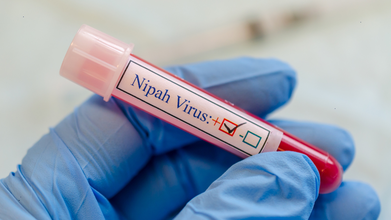
Nipah virus, first identified in 1999, is a serious threat that is 'underestimated' and with its repeated emergence in South and Southeast Asia, it has the potential to turn 'more severe', according to a global team of scientists.
Nipah virus is a zoonotic virus, usually transmitted from animals to humans, but can also be transmitted through contaminated food or directly between people.
In a correspondence published in The Lancet, the scientific team led by the Campus Bio-Medico University of Rome in Italy stated: “the danger of the Nipah virus is in its persistence, that is, it is periodic, lethal, and preventable".
The researchers argued that although the Nipah virus is well understood, there is little action on it, with delays in surveillance, sporadic funding, and episodic preparedness.
“How South and Southeast Asia respond now will determine whether the Nipah virus remains a regional epidemic or if it escalates into something far more severe,” said the experts.
Also read: Why The Nipah Virus Still Persists After 25 Years In Southeast Asia
Recent Nipah Outbreaks In India
According to the Ministry of Health & Family Welfare, two cases of the deadly Nipah virus Disease (NiVD) -- a male nurse from Purba Medinipur district and a female nurse from Mongolkot in Purba Bardhaman district who worked at a private hospital in Barasat in North 24 Parganas district -- were confirmed in West Bengal since last December.
Of these, the 25-year-old female nurse died of cardiac arrest after recovering from Nipah virus infection.
"She died of cardiac arrest this afternoon. Though she had recovered from Nipah infection, she was suffering from multiple complications," a state health department official told PTI in February. The male nurse had recovered and returned home.
Nipah has been endemic to both West Bengal and Keralam (formerly known as Kerala).
The first recorded Nipah outbreak in India occurred in 2001 in West Bengal’s Siliguri, where about 66 cases were reported with high fatality, with significant hospital-based transmission among healthcare workers. Again in 2007, the eastern state’s Nadia district reported an outbreak.
Keralam reported its first Nipah virus outbreak in 2018. The state’s northern districts, Kozhikode and Malappuram, have been on high alert with sporadic and periodic cases occurring in the state in 2019, 2021, 2023, 2024, and 2025.
These cases “are not anomalies and are a reminder of a virus causing recurrent outbreaks for more than two decades, with high mortality, frequent infections of health-care workers, and no approved vaccines or treatments,” said the scientists in the Lancet Correspondence.
Also read: These 24 Pathogens Could Trigger The Next Pandemic, Says UKHSA
What Is The Nipah Virus? How To Prevent?
Nipah is essentially a zoonotic infection -- from animals to humans -- and then from human to human.
The Nipah virus spreads through
- saliva,
- urine,
- other body fluids of an infected person.
The Nipah virus, although rare, is unpredictable. It is not limited to just one part of the body. In severe cases, it can affect multiple organs.
The Lancet paper also highlighted the "lack of diagnostics, protective equipment, and trained personnel" in many facilities in rural and peri-urban areas.
- The researchers suggested
- prioritizing sustained investment
- boosting surveillance,
- improving infection prevention and control,
- decentralizing laboratory capacity,
- One Health implementation,
- regional data sharing,
- accelerated development of vaccines and therapeutics.
“Viruses do not depend on political visibility or public concern to spread; transmission occurs when ecological disruption, delayed detection, and health-system susceptibilities converge,” the experts said.
Expert Reveals Why Childhood Autism Is Going Undetected In India
While the statistics for Autism Spectrum Disorders (ASD) are alarming, what is even more alarming is the lack of recognition and timely intervention.
Many parents whose children are diagnosed with ASD have common statements – "I just didn’t ignore the signs, I did not know they were signs", when my child did not respond to his name, I just thought he was busy in play, when he did not talk by a particular age I just felt its ok, kids talk late and if it’s a boy, they always talk late. Many boys in my family spoke late."
While these statements are real, they are alarming and indicate that ASD signs are not obvious and can be missed. Autism spectrum disorder (ASD) affects approximately one in 68 Indian children aged 2-9 years, equating to about 18 million individuals nationwide, with diagnoses often delayed until age 4-5 due to limited screening and awareness gaps.
This lag overlooks subtle early signs amid typical toddler behaviors and cultural norms, forfeiting a prime window for interventions that profoundly influence lifelong development.
Why Early Signs Are Overlooked
The signs for ASD should be recognized before the age of two as there are many indications which parents miss or do not want to address. Parents frequently ignore subtle cues such as reduced eye contact or lack of social smiling by 6 – 9 months sometimes calling their kids shy or introvert.
By 12 months, if a child does not respond to their name or by 14 months, there is an absence of pointing and gesturing, these are signs not to be ignored. Repetitive
behaviors like obsessively lining up toys, spinning wheels, or fixating on objects should be treated, not looked as harmless quirks or strong preferences.
Sensory sensitivities, such as aversion to loud noises, scratchy fabrics, or bright lights, manifest as tantrums or fussiness, especially in bustling Indian homes where joint families normalize varied child responses.
Surveys reveal over 50 percent of Indian cases go undiagnosed before preschool, due to lack of awareness (especially in rural areas) and stigma around developmental labels.
A Real Life Case
Aditya, a nine-year-old boy from Delhi was asked to visit a neurologist as he had constant academic struggles and was very much to himself. Intellectually, he is smart, but he could not concentrate in class. He had no friends in school as he did not socialize and found the school routine difficult to adapt to. On consultation, it was recognized thatAditya has some signs when he was a kid such as delayed speech, repetitive play patterns, and sensitivity to loud noises. On evaluation, it was recognized that as he grew older when academic needs increased, Aditya began experiencing several issues such as anxiety, meltdowns, and reduced school performance. He became more withdrawn and struggled with group activities.
Critical Need for Screening Before Age Three
The case in point addresses the fact that a child's brain grows super-fast before age three as neuroplasticity peaks, forming millions of connections daily that you can reshape easily.
Thus, it is essential to screen children early, which is critical so that possible signs of autism can be identified and therapies suggested effectively, boosting language, social skills, and independence. Based on the therapies, many children show signs of improvement by 50 percent compared to delayed diagnosis.
We need to understand that delaying of small issues can turn into major behavioural struggles. In India, pediatric doctors now recommend regular checks for toddlers,
especially in smaller towns, so that timely support can be administered to kids making them reach normal milestones instead of facing lifelong hurdles.
Value of Multidisciplinary Therapy
Despite early diagnosis, parents and families need to understand that there is no single approach to treating ASD. It is a combined effort of multidisciplinary teams such as
neurologists, speech therapists, occupational therapists, psychologists, and educators deliver that deliver holistic care. Sensory integration therapy addresses the sensory issues while Applied Behaviour Analysis (ABA) builds daily skills for children and understating routine.
Speech therapy helps the child build communication skills but despite all the therapies, it is the parent’s total understanding and acceptance that will enable success of
the therapies skills. Plexus Neuro Centre exemplifies integrated, evidence-based models prioritizing child-led progress that is backed by the support of the family.
It is important to raise awareness and reduce the spread of myths. Every child should have the right to a healthy and independent childhood, thus we urge parents to trust their instincts and act swiftly. This can be achieved through routine screenings and analysis by pediatric neurologists, participating in the right therapies and encouraging kids to have live an independent life, thereby empowering their futures
New Deep Learning Model Reads Heart MRI Scans As Accurately As Specialists
Credit: iStock
A newly developed deep learning-based artificial intelligence (AI) system can read heart MRI scans as accurately as medical specialists.
The deep learning model developed by researchers at the University of Pennsylvania is trained on more than 300,000 MRI video clips from roughly 20,000 patients.
The system matches specialists in assessing heart function and diagnosing many heart conditions, according to a study published in the journal Nature Biomedical Engineering.
“Cardiac MRI is one of the most powerful tools available to cardiologists, but interpreting these scans requires rare expertise, and many hospitals -especially community and rural centers- lack specialists who regularly read complex cardiac MRI studies,” said Rohan Shad, an integrated cardiothoracic surgery resident in the Perelman School of Medicine at the University of Pennsylvania.
How The Deep Learning Model Worked
In the study, the researchers described a foundational vision system for cardiac MRI that is capable of representing the breadth of human cardiovascular disease and health.
The “foundation model” learns by linking MRI videos to their corresponding radiology reports, enabling it to recognize a wide range of conditions without extensive labeled data.
In tests, it estimated ejection fraction with expert‑level accuracy and identified severe heart dysfunction far more effectively than traditional AI methods.
It also diagnosed 39 cardiac conditions — including genetic problems like hypertrophic and dilated cardiomyopathies.
In a real‑world screen of more than 40,000 scans, the AI flagged 112 previously undiagnosed cases of hypertrophic cardiomyopathy.
According to researchers, the system could help hospitals without specialized cardiac imaging expertise detect rare but treatable diseases earlier.
Also read: Women Turning to AI for Health Detection: Helpful Tool or Risky Trend?
What Is A Cardiac MRI
A cardiac MRI is a scan of the heart in which radio waves and magnets create images. It shows the parts of the heart, such as chambers, valves, and muscles, are working ― including how the blood moves.
A cardiac MRI is typically performed to
- decode heart symptoms like chest pain, shortness of breath, or fainting
- diagnose congenital heart disease, heart failure, heart masses, valve disease,
- understand muscle damage, infection, protein buildup, and iron deposits
- check damage post a heart attack
AI And Heart Health
AI-powered techniques such as Machine Learning and Deep Learning are transforming how heart diseases are detected, treated, and managed globally.
Also read: Women Are More Comfortable With AI-Assisted Mammography
The technology has enabled faster analysis of large amounts of medical data—such as ECGs, heart MRIs, and patient records. It also flags patterns that may be missed by humans, and helps in early detection, treatment, and improving survival rates.
In 2024, the American Heart Association issued a scientific statement on the use of AI in improving outcomes in heart disease.
The objective aimed "to enable precision medicine and implementation science in cardiovascular research and clinical care".
However, it urged policymakers to develop principles and ethical guidance for the development and application of AI/ML-based digital health.
Maternal Vaccination During Pregnancy Can Prevent COVID-related Hospitalization In Babies: Study
Credit: iStock/Canva
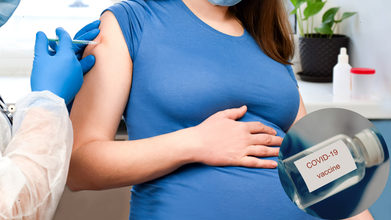
Maternal vaccination with the COVID-19 vaccine during pregnancy can be effective against severe disease and hospitalization from the SARS-CoV-2 virus in babies, according to a large study.
The study, published in the journal Pediatrics, revealed that COVID vaccination during pregnancy can protect the children against hospitalization for COVID during the first six months of life.
Amid continuing COVID cases, babies under six months old continue to have one of the highest rates of hospitalization — one in five — due to the COVID virus in the US, as per a 2024 study.
As currently no vaccines against COVID are available for neonates and babies, the American College of Obstetricians and Gynecologists (ACOG) recommends maternal vaccination during pregnancy.
Maternal COVID Vaccination Prevented Other Infections
The retrospective study included 146,031 infants born in Norway between March 2021 and December 2023. Of these, 37, 013 (25 percent) were exposed to COVID-19 vaccination in utero.
The findings showed that babies exposed to the vaccine before birth were no more likely to visit the hospital for overall infections (of any kind) than those whose mothers did not get vaccinated in pregnancy.
However, infants whose mothers were vaccinated were about half as likely to visit the hospital specifically for COVID in their first two months of life compared to babies not exposed to the vaccine in utero.
Among 3 to 5-month-old babies, the risk of a hospital visit for COVID was 24 percent lower in those exposed to the vaccine, but the vaccine's protection against COVID wore off by the time infants were older than 6 months.
Importantly, the mothers' vaccine also prevented the risk of other infections in children.
"There is often an increased risk for a subsequent infection after a viral infection, such as an increased risk of pneumonia after influenza infection, so we wanted to study whether protection against COVID-19 could influence the risk of other infections as well," said lead author Dr. Helena Niemi Eide, from the University of Oslo in Norway, the NPR reported.
"But we found that COVID vaccination in pregnancy protected the infant against COVID and had no apparent effect on other infections," Eide added.
Maternal Vaccine Recommendation in the US
Last week, the American College of Obstetricians and Gynecologists reiterated its recommendation for COVID vaccination during pregnancy.
Despite changes in federal vaccine recommendations due to the US Health Secretary Robert F. Kennedy Jr.’s anti-vaccine stance, the ACOG urged COVID vaccination for
- people who are pregnant,
- recently pregnant,
- considering pregnancy,
- lactating.
Also read: US Judge Blocks RFK Jr.’s Vaccine Schedule, Says Government Ignored Science
"Accumulated safety data from millions of administered doses show no increased risk of adverse maternal, fetal, or neonatal outcomes associated with COVID-19 vaccination in pregnancy,” the ACOG said.
- Follow Us :


© 2024 Bennett, Coleman & Company Limited