
- Health Conditions A-Z
- Health & Wellness
- Nutrition
- Fitness
- Health News
- Ayurveda
- Videos
- Medicine A-Z
- Parenting
Olivia Munn Opens Up About Detecting No-Symptom Breast Cancer With Lifetime Risk Assessment Test
Credit: Instagram
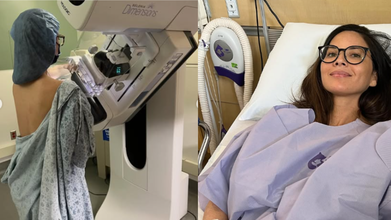
American actress Olivia Munn has opened up about her journey with deadly breast cancer, which came with no typical symptoms.
In her latest interview on CBS News Sunday Morning, the 45-year-old actress recalled being “faced with the possibility of death” in April 2023, when she was diagnosed with Stage 1 breast cancer.
Importantly, the actress had no symptoms, and even tests like a mammogram and ultrasound gave her a clean chit.
"No symptoms. And I had a clear mammogram and a clear ultrasound," Olivia was quoted as saying.
However, the condition was detected after taking the Lifetime Risk Assessment test -- a free online Q&A that gave her a high score estimating the risk of developing breast cancer in a lifetime. The test marked any score above 20 percent as a high risk. Munn's risk score was 37.3 percent.
The online test — Tyrer-Cuzick Risk Model — is publicly accessible and widely recommended by experts, and it calculates a woman’s five-year and lifetime risk of developing breast cancer using a combination of factors like age, family history, genetics, reproductive history, and more.
Post the assessment, she took "an MRI, which led to an ultrasound, which then led to a biopsy," she explained.
The biopsy showed that she had what she described as "an aggressive, fast-moving cancer" in both of her breasts.
Once she learned the diagnosis, she fought back with everything she had. She got a double mastectomy, an ovariectomy, and a partial hysterectomy. Now her risk score is zero.
Instead of recovering quietly, Olivia made it her mission to raise awareness about the condition — posting about her cancer on social media and telling the world about the risk assessment test.
In the years since Munn started sharing her story, the number of women taking the test has increased by 4,000 percent, the report said.
"Knowing that it's really changed so many people's lives. It's been the most amazing thing. There's no way I could have ever predicted it," she said.
In 2025, Olivia’s mother, Kim, was also diagnosed with breast cancer after taking the same risk assessment test.
In an Instagram post, Munn said her mother was diagnosed with Stage 1 HER2-positive breast cancer, a fast-growing but often treatable type of the disease. Her diagnosis came after Munn encouraged her mom and sister to take a free online breast cancer risk assessment.

Also read: Amanda Peet Opens Up About Breast Cancer Battle, Shares Toughest Moment
What Is A Lifetime Risk Assessment Test?
The MagView Tyrer-Cuzick Risk Assessment Calculator is an online tool that helps one calculate their lifetime risk of developing breast cancer.
The tool urges people to reach out to their healthcare professional in case they have any questions about their risk of developing breast cancer and what the best options are for breast cancer screenings or genetic counseling they may have.
Olivia stressed that any woman over 30 should take the test, and if their risk is above 20 percent, they should ask their doctor for a breast MRI.
Also read: Christy Carlson Romano’s Cancer Test Result Shows Why Regular Screening Is Important
Who Should Get Breast Cancer Screening Done?
According to the American Cancer Society, you are considered to be at average risk if you do not have a personal history of breast cancer, a strong family history of it, or a known genetic mutation (like in the BRCA gene) that increases your risk.
This also applies if you have not had chest radiation before the age of 30. These are the breast cancer screening recommendations for women who are at average risk.
Ages 40-44: You have the choice to start getting a mammogram every year.
Ages 45-54: You should get a mammogram every year.
Ages 55 and older: You can switch to getting a mammogram every other year, or you can choose to continue getting one every year.
You should continue to get screened as long as you are in good health and are expected to live at least 10 more years.
Bipolar Disorder: How Early Detection Can Help Prevent Serious Complications
Credit: iStock/Canva
Bipolar disorder is commonly misunderstood as mere mood fluctuations; however, it is a serious and complex mental health condition.
The condition presents extreme mood fluctuations — hyperactivity and impulsiveness — and depressive lows — lethargy and hopelessness.
Bipolar disorder affects over 40 million people worldwide. Yet diagnosis remains challenging, as many people remain undiagnosed or misdiagnosed for long periods. Some are treated for other mental health conditions, such as depression or ADHD, causing delays in effective treatment.
Speaking to HealthandMe, Dr. Kriti Anand, Consultant, Psychiatrist, Paras Health, Panchkula, said: “Early identification of bipolar disorder is essential for the improvement of the condition of patients. It aids in recognizing patterns early on, which helps to stabilize moods and minimize the occurrence of severe and recurring episodes”.
“With the correct identification of the condition and intervention, people can effectively maintain relationships and stay productive,” Dr. Anand added.
Importance Of Early Detection
Recognizing bipolar disorder early is critical for better outcomes. People who do not get a timely diagnosis are likely to experience more frequent and intense mood episodes, which can become harder to manage over time.
Early evaluation allows healthcare professionals to identify patterns and introduce treatments that help stabilize mood and reduce the severity of symptoms.
Notably, the experts stated that treating bipolar disorder simply as depression means that antidepressants are prescribed, which could cause a manic episode to occur.
With early diagnosis, the chances of harmful behaviors are reduced and prevent suicidal tendencies that are often a result of untreated cases of bipolar disorder.
It also enhances the quality of life, enabling patients to maintain healthy relationships, work productively, and attend to their daily responsibilities.
Early symptoms includes
- Extreme irritability, intense happiness, or sudden, uncharacteristic anger
- A sudden, unexplainable rise or decline in energy levels
- Reduced need for sleep without feeling tired or difficulty falling asleep
- Engaging in risky activities
- Racing thoughts or difficulty concentrating
It’s important to conduct a thorough evaluation to ensure an accurate diagnosis. This involves looking at the patient’s medical history and mental health history.
The symptoms are also evaluated using a structured approach. In some cases, a physical examination may also be conducted. As bipolar disorder involves long-term patterns, it’s possible to observe the patient over a long period of time.
Once diagnosed, early intervention can begin. Treatment for bipolar disorder may involve
- drugs to control mood,
- therapy to improve coping abilities,
- lifestyle habits such as sleeping and exercising regularly.
“A thorough and timely evaluation is essential for accurately diagnosing bipolar mood disorder, especially in cases where symptoms overlap with other conditions. Early intervention by mental health experts, in the form of appropriate treatment, therapy, and lifestyle adjustments, can significantly reduce complications," Surg Commodore (Dr.) Sunil Goyal (Retd), Senior Consultant - Psychiatry, Sarvodaya Hospital, Faridabad, told HealthandMe.
"This will help individuals achieve long-term stability of mood along with improved quality of life in all socio-occupational spheres," he added.
Left untreated, bipolar disorder can lead to serious problems that affect every area of your life, including:
- Problems related to drug and alcohol misuse
- Suicide or suicide attempts
- Legal or financial problems
- Trouble getting along with others
- Poor work or school performance
The experts noted that early detection of bipolar disorder is not just about diagnosis; it is about improving lives.
Identifying the condition early helps in reducing the chance of developing serious complications, decreasing the possibility of being misdiagnosed, and also allows for treatment to be delivered in a timely and appropriate manner.
This Is Much Coffee Should You Drink To Lower Stress, Study Reveals

Credit: Canva
A large new study suggests that about only two to four cups of coffee per day can reduce stress levels as well as lower the risks of developing anxiety and depression.
Researchers from Fudan University in China found that moderate coffee intake is linked to lower stress levels, while both very low and very high consumption don’t offer the same benefit.
Drinking more than four cups may start to increase stress and anxiety, likely because caffeine stimulates the nervous system and raises stress hormones.
Scientists believe this works like a “J-shaped curve”: a little caffeine can improve mood, alertness, and resilience to stress, but too much can overstimulate the body and make stress worse. Supporting research also shows that high caffeine intake is linked to higher perceived stress and anxiety symptoms.
At the top end of the scale, drinking five cups or more each day was associated with a higher risk of mood disorders – so it seems it is possible to overdo the buzz.
"J-shaped associations were identified between coffee consumption and mental disorders, suggesting that a moderate intake of coffee might be beneficial for mental health," write the researchers in their published paper.
Caffeine Can Recover Memory Loss From Lack of Sleep
In this animal study, scientists at the National University of Singapore have found that sleep-deprived mice struggle to recognize other mice however, mice that were given caffeine for a week before being being sleep-deprived performed much better on tests and did not show the same memory loss.
Additionally, when caffeine was directly applied to brain tissue from sleep-deprived mice, it improved communication between brain cells in this region -- suggesting that caffeine doesn’t just mask tiredness but may also help repair disrupted brain activity.
NUS physiologist Lik-Wei Wong explained: "Sleep deprivation does not just make you tired. It selectively disrupts important memory circuits.
"We found that caffeine can reverse these disruptions at both the molecular and behavioral levels. Its ability to do so suggests that caffeine's benefits may extend beyond simply helping us stay awake."
"Our findings position the CA2 region as a critical hub linking sleep and social memory. This research enhances our understanding towards the biological mechanisms underlying sleep-related cognitive decline. This could inform future approaches to preserving cognitive performance," NSU neuroscientist Sreedharan Sajikumar added.
Based on these results, the study concluded that sleep deprivation increases signaling linked to adenosine, a chemical that promotes sleep but can also weaken memory circuits. But with moderate amounts of intake, caffeine appears to block this effect and help the brain maintain normal function
While the discovery offers a clearer understanding of how sleep, memory and caffeine are connected, the findings are based on mice and more research is needed to confirm if the same benefits apply to humans.
How Much Coffee Should You Consume?
Due to how much caffeine can actually affect one’s body, experts recommend 400 milligrams only per day. That is about four cups, it is also better to consult a doctor about this as caffeine sensitivity is different for people. Some people are more sensitive to caffeine than others.
How you react depends on your health, what medicines you take, and how fast your body processes things. Too much caffeine can cause problems, so it's important to pay attention to how you feel and not go overboard. Here is what happens to your body when you drink too much caffeine daily.
Scientists Develop New Technique To Prevent AFib-Caused Strokes
Credit: Canva
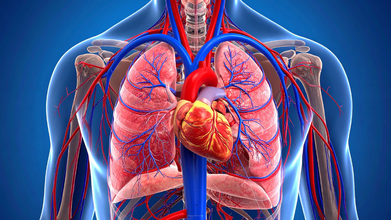
Atrial fibrillation (AFib) is an irregular and often very rapid heart rhythm, also called an arrhythmia and can create blood clots in the heart, which can increase your risk of having a stroke by five times.
When a person has AFib, the normal beating in the upper chambers of the heart (the two atria) is irregular and blood doesn't flow as well as it should from the atria to the lower chambers of the heart (the two ventricles).
Common symptoms include palpitations (the feeling that your heart is racing, pounding, fluttering or like you have missed heartbeats), chest pain, finding it harder to exercise, tiredness, shortness of breath, dizziness or feeling faint. However, a more severe symptom is a stroke.
Tucked inside the heart is a tiny pouch called the left atrial appendage. When the heart beats erratically, blood can pool and sit still in this pouch instead of flowing normally and still blood tends to clot. If one of those clots breaks free and travels to the brain, it can block blood flow and cause a stroke.
But researchers have now found new technique, in which a magnetically guided liquid is injected into the heart can harden and permanently seal the left atrial appendage from the inside. Early tests in rats and pigs suggest that this method could one day lower the risk of stroke in people with atrial fibrillation.
Based on this technique, researchers inject a magnetically responsive liquid, sometimes called a magnetofluid, directly into the left atrial appendage through a catheter.
Once inside the cavity, an external magnetic field helps guide and hold the fluid in place, so it fills the entire appendage, even against the force of circulating blood.
Within minutes, the liquid reacts with water in the blood and transforms into a soft "magnetogel" that seals off the cavity. Additionally, as the material begins as a liquid, it can adapt precisely to the highly irregular shape of each patient's left atrial appendage.
The death rate from AFib as the primary or a contributing cause of death has been rising for more than two decades.
Over 454,000 people with AFib are hospitalized in the US each year, out of which 158,000 die of the cause. It is estimated that 12.1 million people in the US will have AFib in the US will have AFib by 2050.
Who Is At Risk Of Having AFib?
Risk factors for AFib include:
- Advancing age.
- High blood pressure.
- Obesity.
- European ancestry.
- Diabetes.
- Heart failure.
- Ischemic heart disease.
- Hyperthyroidism.
- Chronic kidney disease.
- Moderate to heavy alcohol use.
- Smoking.
- Enlargement of the chambers on the left side of the heart.
Treatment for AFib includes medications to control the heart's rhythm and rate, therapy to shock the heart back to a regular rhythm and procedures to block faulty heart signals.
A person with atrial fibrillation also may have a related heart rhythm disorder called atrial flutter. The treatments for AFib and atrial flutter are similar.
How To Improve Your Heart Health
Experts recommend following the below to reduce yor risk of stroke or developing AFib and maintaining heart health:
- Don't smoke or use tobacco.
- Aim for at least 150 minutes of moderate physical activity or 75 minutes of vigorous physical activity (or an equal combination of both) each week. Eat a heart-healthy diet.
- Stay at a healthy weight.
- Get quality sleep.
- Manage stress levels
- Get regular health screening tests.
- Eat a fiber, nuts and fish-rich diet
- Limit salt intake
- Reduce saturated fat intake
- Follow Us :


© 2024 Bennett, Coleman & Company Limited