
- Health Conditions A-Z
- Health & Wellness
- Nutrition
- Fitness
- Health News
- Ayurveda
- Videos
- Medicine A-Z
- Parenting
Oral Microbiome and Placental Growth: What Every Expecting Parent Should Know

The oral microbiome is the community of bacteria, fungi, and other microorganisms that naturally live in the mouth — on the teeth, gums, tongue, and cheeks. More than
700 species are known to exist, most of which are harmless and many beneficial.
However, problems arise when harmful bacteria outnumber protective ones, leading to gum inflammation or periodontal disease. During pregnancy, hormonal changes increase blood flow to the gums and alter immune responses. As a result, many women notice bleeding, swelling, or sensitivity in the gums — a condition known as pregnancy gingivitis.
This is common and reflects physiological changes rather than poor hygiene.
The Mouth's Connection To The Placenta
Pregnancy is a systemic state in which the immune system, circulation, and inflammation are closely interconnected. Chronic gum inflammation can release inflammatory mediators into the bloodstream.
In research settings, certain oral bacteria have also been detected in placental tissues from complicated pregnancies. This suggests a biological link between oral health and
placental function, although the exact pathways are still being studied.
Importantly, this relationship reflects association rather than direct causation.
Why Does Placental Health Matter?
The placenta is an active organ that regulates oxygen and nutrient transfer, hormone production, and immune protection for the developing baby.
Healthy placental development supports:
- Efficient oxygen and nutrient delivery
- Balanced hormone production
- Protection against infections
- Steady fetal growth
What Changes In Oral Health Are Normal During Pregnancy?
Up to 60–75 percent of pregnant women experience some degree of gum inflammation. Common changes include:
- Bleeding while brushing
- Swollen or tender gums
- Increased plaque buildup
- Persistent bad breath
Can Oral Health Really Affect Pregnancy Outcomes?
Research from India and globally shows associations between periodontal disease and higher risks of preterm birth, low birth weight, and preeclampsia. Meta-analyses
suggest a modest increase in risk (around 1.5–2 times).
However, pregnancy complications are multifactorial. Oral disease alone does not directly cause these outcomes. Genetics, nutrition, metabolic health, and placental
biology all play important roles.
Treating gum disease improves oral health and reduces inflammation, though studies show mixed evidence on whether it directly lowers preterm birth risk. The goal is
prevention, awareness, and overall maternal health.
How Do You Support Healthy Oral Microbiome During Pregnancy?
Daily oral care:
- Brush twice daily with gentle pressure
- Use a soft-bristled toothbrush
- Clean between teeth once daily
- Rinse your mouth after vomiting to protect enamel
- Calcium-rich foods like curd and ragi support dental health
- Vitamin C from amla, guava, and citrus helps gum healing
- Fibre-rich foods support saliva flow and microbial balance
- Hydration and lifestyle
- Drink adequate water
- Limit frequent sugary snacks
- Avoid tobacco in all forms
Pregnancy already carries emotional and physical changes, and dental symptoms can add anxiety. Support from partners and family members helps reduce mental load.
Stress can influence immunity and inflammation. Adequate rest, gentle activity such as walking or prenatal yoga, and open communication with healthcare providers
support both oral and overall health.
Warning Signs: When Should You Contact A Doctor Or Dentist?
Seek professional advice if you notice:
- Severe tooth pain or swelling
- Pus, fever, or difficulty chewing
- Bad breath that does not improve
- Persistent gum bleeding for two weeks
Pregnancy is a time when different systems of the body work in close coordination. Oral health, immune balance, and placental function are part of the same continuum.
Gentle attention to gum health is not about perfection. It is about creating supportive conditions for a healthy pregnancy and a healthy baby.
Feeling Low? Ladies, It Could Just Be Dehydration

Dehydration can lead to poor concentration in women. (Photo credit: iStock)
Ladies, does it ever happen to you that you are not on your period, not PMSing, and still feel moody and upset? Well, as it turns out, experts say that there could be a very simple reason for this. According to researchers at the University of Connecticut, even mild dehydration could be responsible for mood changes in women. Not only this, even 1.36 per cent dehydration can affect your mood, ability to think and energy levels. The Daily Mail notes that a loss of 1.5 per cent of normal water volume levels in the body can be classified as mild dehydration, and its adverse effects can linger for some time.
Read more: The Health Problems Women Normalise, But Gynaecologists Do Not
How does dehydration affect women?
In women, the adverse effects of dehydration can be serious. Experts say that the effects are more intense in women, and they came to this conclusion after analysing the results of tests, which revealed that it does not matter if a person walks for 40 minutes on a treadmill or is in a state of rest — if an individual is even slightly thirsty, the adverse effects will be the same.
Research shows that even 1.36 per cent dehydration is enough to cause the following problems:
- 8 per cent rise in hostility and anger
- 12 per cent dip in vigour
- 17 per cent increase in fatigue
- 45 per cent dip in concentration
- 19 per cent worsening of mood
- 58 per cent dip in understanding simple tasks
- Headaches worsening two fold
Is thirst the same as dehydration?
Lead researcher of the study, Lawrence Armstrong, noted that a sensation of thirst does not appear until a person is one or two per cent dehydrated. By then, it starts to set in and act up, adversely impacting how the mind and body perform. Dehydration can affect everyone, which is why it is just as important for people in desk jobs to stay hydrated as it is for marathon runners.
Read more: Three Health Checks Every Woman Should Do Each Month, According To Experts
In this research, experts put participants through a series of tests evaluating their concentration, vigilance, reaction time, reasoning, memory and learning. The results were then compared with those of people who were not dehydrated. In younger women, mild dehydration resulted in fatigue, headaches and concentration difficulties. Women also found basic tasks more difficult to execute than usual. On the other hand, young men noted some difficulty in performing mental tasks — they experienced anxiety, fatigue and tension in the process. Mood changes were more prominent in women than in men.
Can Hormonal Imbalances Increase Endometrial Cancer Risk?

Hormonal imbalances can adversely affect women's health overtime. (Photo credit: iStock)
Hormonal imbalance plays an important role in the development of endometrial cancer, which is one of the most common types of gynaecological cancers worldwide. The endometrium is the inner lining of the uterus and is highly sensitive to hormonal changes, particularly the balance between oestrogen and progesterone. When the body is exposed to excess oestrogen without adequate progesterone, the endometrial lining grows excessively. Over time, this prolonged stimulation leads to abnormal cell changes and increases the risk of developing endometrial cancer or uterine cancer.
How does lifestyle affect hormones?
Dr Fahad Afzal, Consultant Oncologist at Saifee Hospital, while talking about the impact of lifestyle on hormones, said, “Several lifestyle and health conditions can contribute to this hormonal imbalance. Obesity is one of the most significant risk factors because excess body fat increases oestrogen production. Women who are obese therefore have higher levels of oestrogen, which stimulates the uterine lining. Moreover, conditions like PCOS, diabetes, and metabolic syndrome are also associated with hormonal disturbances that elevate the risk.”
A sedentary lifestyle and an unhealthy diet further worsen hormonal imbalance and inflammation in the body. Additionally, irregular menstrual cycles, early onset of menstruation, late menopause, and not having children increase lifetime oestrogen exposure.
Read more: Oncologists Warns Of The Cancer Rising Among Women in India
How to treat hormonal imbalances?
The encouraging aspect is that several of these risk factors are modifiable. Maintaining a healthy body weight, engaging in regular physical activity, and following a balanced diet help regulate these hormones and reduce the risks. Managing conditions like PCOS and diabetes with guidance from a trained medical professional is also important.
Equally important is awareness of symptoms. Any abnormal uterine bleeding or vaginal bleeding, especially after menopause, should never be ignored and requires prompt medical evaluation. Early detection of endometrial cancer often leads to good outcomes. Understanding the relationship between lifestyle, hormone balance, and cancer risk can help women take proactive steps towards prevention and timely diagnosis.

What is the impact of hormones on endometrial cancer?
Dr Smit Sheth, cancer physician at M|O|C Mulund, said, “Hormones play a crucial role in a woman’s reproductive health, but when they fall out of balance, they can also increase the risk of certain cancers, including endometrial cancer. Endometrial cancer, which affects the lining of the uterus, is one of the most common gynaecological cancers in India. According to World Health Organization data, its incidence is steadily rising, particularly in urban populations where lifestyle changes are more pronounced.”
At the core of this risk lies an imbalance between two key hormones: oestrogen and progesterone. When oestrogen levels remain high without adequate progesterone to counteract it, the uterine lining can grow excessively, increasing the chance of abnormal cell changes over time. Modern lifestyle factors are significantly contributing to this imbalance. Rising obesity rates, sedentary habits, delayed pregnancies, and conditions like polycystic ovary syndrome (PCOS) are increasingly common among Indian women.
Fat tissue itself produces oestrogen, meaning overweight women often have higher circulating levels of this hormone. Studies suggest that obese women may have up to 2–4 times higher risk of developing endometrial cancer compared to those with a healthy weight. Additionally, irregular menstrual cycles, early onset of menstruation, and late menopause further extend lifetime oestrogen exposure, compounding the risk.
“Lifestyle today is a major driver of hormonal imbalance,” explains Dr Smit Sheth, cancer physician at M|O|C Mulund. “Obesity, lack of physical activity, and unmanaged metabolic conditions can silently increase oestrogen levels. Over time, this creates a favourable environment for endometrial cancer to develop, especially if symptoms like abnormal bleeding are ignored.”
Read more: Think Your Hormones Are Out Of Balance? Doctors Reveal The Warning Signs You Shouldn’t Ignore
Can endometrial cancer be detected in time?
The good news is that endometrial cancer is often detectable early. Warning signs such as postmenopausal bleeding, irregular periods, or unusual discharge should never be overlooked. Simple lifestyle changes, maintaining a healthy weight, regular exercise, a balanced diet, and timely medical check-ups can significantly reduce risk. In a country like India, where awareness remains limited, early education and proactive health behaviour are key to prevention.
Abdominal Obesity Greater Risk Factor For Indians, says Dr. Jitendra Singh

Credit: PIB
Abdominal, also known as central obesity, poses a greater health risk than overall obesity, especially in Indians, said Dr. Jitendra Singh, the Union Minister of State (Independent Charge) for Science and Technology.
Speaking at the release of a cardiology textbook titled “Advances in Obesity and Lipid Management in CVD,” by eminent cardiologist Dr. H.K. Chopra, Singh said that even lean and thin-looking individuals often carry significant visceral fat.
Amid a rapidly growing number of chronic conditions, such as diabetes, hypertension, and cardiovascular diseases, the Minister shared that abdominal obesity is the driving factor.
"There is sufficient evidence to show that Central obesity, even in apparently non-obese individuals, predisposes to a wide spectrum of metabolic disorders including diabetes, hypertension, cardiovascular diseases, fatty liver, dyslipidemia, etc.,” Singh, who is also a diabetologist, said.
“In other words, Abdominal or Central obesity is a greater risk factor compared to overall obesity, particularly in the Indian context where even lean and thin-looking individuals often carry significant visceral fat,” he added.
The Minister reiterated the importance of balanced health practices and emphasized the need for following a “sustained lifestyle discipline, adequate sleep, and scientifically guided preventive care”.
What Is Abdominal Obesity?
Abdominal obesity refers to an excessive accumulation of visceral fat around the stomach and internal organs, such as the liver, heart, kidneys, and the mesentery of the intestine.
Unlike subcutaneous fat, which lies beneath the skin, visceral fat is metabolically active and poses greater health risks.
It can increase your risk of heart disease, type 2 diabetes, high blood pressure, stroke, and some types of cancer.
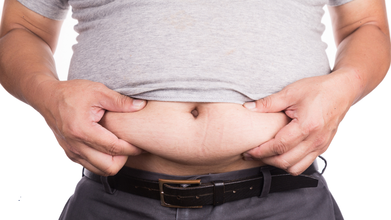
It is because visceral fat produces hormones and other substances that can cause inflammation and insulin resistance, which can lead to these health problems.
A 2024 study from the Washington University School of Medicine in St. Louis, Missouri, showed that a higher level of visceral fat was related to increased amyloid -- accounting for 77 per cent of the effect of high BMI on amyloid accumulation.
Who Is More At Risk Of Abdominal Obesity
The Minister said that while overall obesity is rising among both men and women, the prevalence of abdominal obesity remains disproportionately high and acts as an independent determinant of cardiometabolic risk. The presence of visceral fat around the abdomen, even without generalized obesity, has significant clinical implications and requires early detection and targeted intervention.
A waist circumference of more than 40 inches for men or 35 inches for women may indicate a higher risk of visceral fat accumulation.
While people with a larger waistline or pot belly are at known risk of having visceral fat, thin people too can have fat accumulation in their internal organs.
According to health experts, even people with a healthy weight can have high levels of visceral fat.
This is because visceral fat is not always visible on the outside of the body, and it can accumulate even if a person appears to be thin or in good shape.
Also read: Checking BMI For Body Weight? It Can Wrongly Mark You As Overweight or Obese, Says Study
Strategies for Successful Weight Management
To tackle obesity, one needs a holistic strategy beyond mere weight reduction. Healthy and sustainable weight reduction and improvement of health are more about body composition than mere weight. Major strategies are:
A balanced diet composed of whole foods, lean meats, and good fats in addition to physical exercise encourages sustainable weight reduction.
Resistance training helps in preserving muscle mass along with fat reduction, which improves metabolic well-being.
Prescription weight-loss medication can help manage obesity alongside lifestyle changes.
For people with severe obesity, surgeries such as gastric bypass or sleeve gastrectomy may provide significant long-term advantages.
Prioritize your metabolic health through healthy eating, portion control, and mindful eating for long-term success.
- Follow Us :


© 2024 Bennett, Coleman & Company Limited