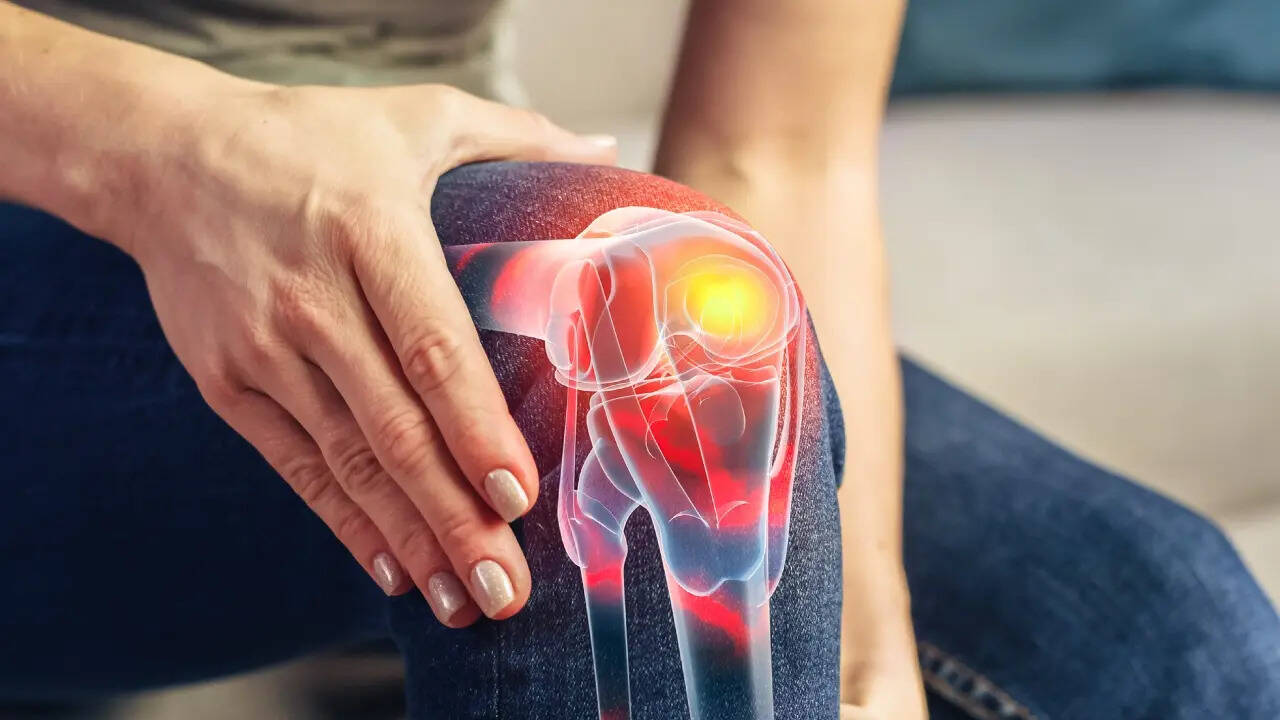
You pick up a jar on the kitchen shelf and shudder. You take a flight of stairs, and that old pain sinks into your hip. You get up in the morning, and your shoulder feels as though it has been wrung out. You attribute it to age, to a long day on your feet, to just how things are now. But what if your body is trying to tell you something very particular and you have been missing it?Dr Apoorv Dua, Consultant, Orthopaedics, ISIC Multispeciality Hospital, in an interview with Health and Me, said that this may be a sign of bursitis—a condition that is much more widespread than most people realise, and much more treatable than most people are aware. The expert went on to answer common questions regarding extreme pain that comes with this condition.What is bursitis?Bursae are small, fluid-filled sacs located between your bones, muscles, and tendons. Imagine them as the natural cushioning system of the body—shock absorbers that ensure your joints move smoothly and painlessly. Under normal circumstances, you do not even think about them. However, when inflamed, due to repetitive motion, prolonged pressure, injury, or infection, they make their presence known in a very noticeable manner. This is bursitis. Although it most often appears in the shoulder, elbow, hip, and knee, it may occur in nearly any joint in the body.Who gets bursitis—and why?This is where the lifestyle connection cannot be overlooked. Bursitis does not discriminate, but it has definite patterns. The weekend warrior who runs ten kilometres on Saturday after sitting at a desk all week. The housewife who spends hours cleaning floors or squatting in the kitchen. The office worker who has been stooped over a computer. The gym enthusiast who does not warm up. The retired teacher who begins a walking routine too vigorously. All these individuals may be silently placing stress on their bursae, and in many cases, bursitis is the eventual outcome.Age also plays a role—the bursae, like most of our connective tissue, grow weaker with age. Certain medical conditions such as rheumatoid arthritis, gout, and diabetes can increase the risk. However, in many instances, the cause is simply the way we move—or do not move—in our day-to-day lives.What does bursitis feel like?A key characteristic of bursitis is pain that is disproportionate to the activity causing it. Reaching overhead, sitting on a hard surface, pressing on your elbow, or walking downhill—these are not dramatic movements, yet with bursitis, they may trigger a sharp, deep, or burning pain that interrupts you mid-action. The affected joint is usually swollen and tender. The area may feel warm to the touch. Movement becomes guarded. Sleep, particularly in cases of shoulder bursitis, can be difficult, as lying on the affected side aggravates the pain.The challenge with bursitis is that its symptoms can resemble other conditions—tendinitis, arthritis, a muscle strain, or even a ligament tear. Many individuals self-diagnose, self-treat with painkillers, and hope it will go away. Sometimes it does. However, chronic, untreated bursitis may persist for months and, in some cases, lead to complications.Bursitis diagnosisA thorough clinical examination is usually the first step. A skilled orthopaedic specialist can identify the affected bursa through specific physical assessments. Imaging, such as ultrasound or MRI, may be recommended depending on the case to confirm the diagnosis, rule out structural damage, or guide treatment.If infection is suspected—indicated by increased redness, fever, and rapidly worsening pain—fluid may be aspirated from the bursa and tested. Septic bursitis is a serious condition that requires immediate medical attention and is treated differently from the more common non-infectious type.Bursitis treatmentThe encouraging fact about bursitis is that it responds well to treatment, particularly when detected early. Most cases are managed with a combination of rest, activity modification, ice application, and anti-inflammatory medication. Physiotherapy also plays an important role, helping to correct movement patterns, strengthen supporting muscles, and restore the full range of motion.In more persistent cases, a corticosteroid injection into the bursa may provide rapid and significant relief by reducing inflammation at its source. Surgery is rare and is typically considered only in chronic, recurrent cases that do not respond to conservative treatment.Prevention is betterIn many instances, bursitis is linked to lifestyle—and that presents an opportunity for prevention. Even small changes can help: warming up before exercise, avoiding excessive strain on joints, maintaining a healthy weight to reduce pressure on hips and knees, and ensuring workstations are ergonomically designed.Pain often becomes background noise—something we get used to, work around, and push through. However, bursitis reminds us that the body communicates with precision. That pain when you pick up a jar, that discomfort on the stairs—it is not simply ageing. It is a signal worth discussing with your doctor.