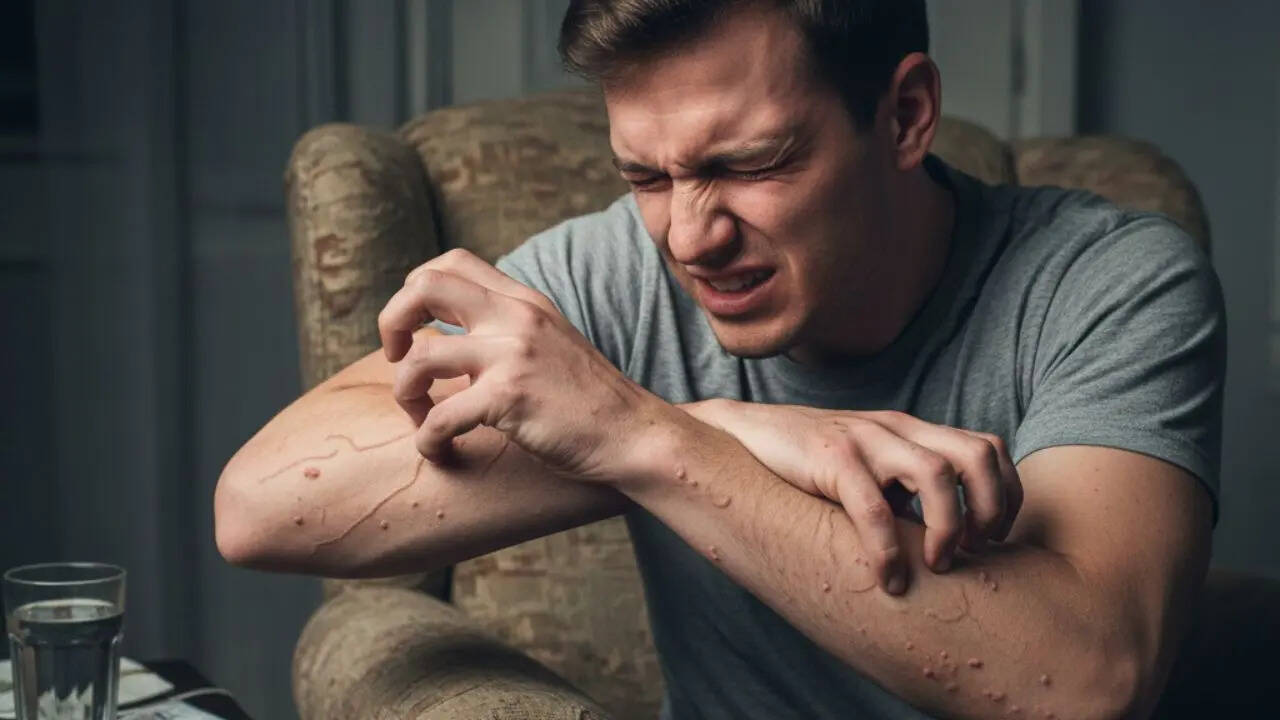
England is recording higher-than-normal scabies infections this winter. Health authorities have cautioned that the condition, caused by microscopic mites known as Sarcoptes scabiei that tunnel into the skin, spreads quickly through close physical contact and often leads to severe itching and irritation. Data from the Royal College of General Practitioners’ Research and Surveillance Centre shows scabies is circulating more widely than usual in England, with cases increasing through the autumn and winter months.Scabies UK: What Is Scabies?Scabies is caused by the Sarcoptes scabiei mite. These tiny parasites burrow beneath the skin where they survive, feed and lay eggs. The presence of the mites triggers an allergic reaction in the skin, resulting in an itchy rash. Scabies passes easily from one person to another, particularly among people living in close quarters. If one member of a household is infected, doctors usually advise checking and treating other family members and close contacts at the same time, according to the Cleveland Clinic.Scabies UK: What Are The Early Symptoms Of Scabies?Early signs of scabies include intense itching, which is often worse at night, along with a pimple-like rash, small blisters, and thin, irregular lines on the skin known as burrows. These symptoms commonly appear between the fingers, on the wrists, elbows, armpits, waist and genitals. According to the National Health Service, these reactions occur due to the body’s response to the mites and their eggs beneath the skin.Symptoms do not usually appear straight away and may take three to six weeks after the initial infection to develop. However, people who have had scabies before may notice symptoms within a few days. Typical signs include severe night-time itching and small bumps, blisters or burrow-like tracks on areas such as the hands, wrists, elbows, nipples, genitals and waist.In more severe cases, the skin may become thickened, rough and scaly. Among children and older adults, scabies can also affect the scalp, face or the soles of the feet.Scabies UK: Are There Different Types Of Scabies?Yes, scabies exists in several forms beyond the classic type. These include:Crusted (Norwegian): This form is more likely to affect people with weakened immune systems. It causes thick crusts over large areas of skin and can involve millions of mites, compared with the 10 to 15 mites typically found in classic scabies.Nodular: More commonly seen in children, this type affects areas such as the genitals, groin or armpits. Firm, raised lumps may persist even after the mites have been eliminated.Scabies UK: How Is Scabies Treated?Scabies is usually treated successfully with prescribed medicated creams and lotions called scabicides, along with careful hygiene measures. To avoid reinfection, clothes, bedding and towels should be washed at high temperatures and tumble-dried or ironed. Items that cannot be washed should be sealed in a bag for at least three days, as the mites cannot survive without contact with human skin.Professor Michael Marks, a professor of medicine at the London School of Hygiene and Tropical Medicine and former chair of the International Alliance for the Control of Scabies, said the rise in cases may be linked to delays in accessing medical care and gaps in identifying and treating close contacts, which can allow the infection to continue spreading.