
- Health Conditions A-Z
- Health & Wellness
- Nutrition
- Fitness
- Health News
- Ayurveda
- Videos
- Medicine A-Z
- Parenting
Taking Venlafaxine? Experts Flag Symptoms That Need Immediate Attention

Credits: Canva
People prescribed venlafaxine are being urged to stay alert to certain symptoms and side effects that may require medical advice from NHS 111 or their GP. Venlafaxine is a widely used SNRI antidepressant. It is mainly prescribed for depression, but doctors may also recommend it for anxiety disorders and panic attacks.
What Is Venlafaxine?
Venlafaxine, sold under brand names such as Effexor and Effexor XR, is a prescription antidepressant classified as a serotonin-norepinephrine reuptake inhibitor. It helps regulate mood by raising levels of serotonin and norepinephrine in the brain, chemicals that play a key role in emotional balance and mental stability.
Doctors Warn People Taking Venlafaxine
The medicine is usually taken as a tablet or capsule. It works by increasing levels of serotonin and noradrenaline in the brain, chemicals that help regulate mood. According to NHS guidance, venlafaxine tends to cause fewer side effects than older antidepressants. That said, it is not completely free of risks.
Most people begin to notice some improvement within one to two weeks, although it can take four to six weeks for the drug to have its full effect.
Venlafaxine Side Effects
Common side effects listed by the NHS include sweating, nausea, a dry mouth, and headaches. These are generally mild and often ease as the body adjusts to the medication.
However, there are other, more serious side effects that may need prompt medical advice. While these reactions are uncommon and affect fewer than one in 100 people, the NHS advises contacting 111 or a GP if they occur.
Venlafaxine Serious Side Effects
NHS advice says you should speak to your GP if you notice unexpected weight gain or weight loss, or sudden changes to your menstrual cycle. This may include spotting, bleeding between periods, or unusually heavy periods.
Patients are also advised to contact their doctor or NHS 111 without delay if they experience any of the following symptoms while taking venlafaxine:
- Yellowing of the skin or the whites of the eyes
- Bleeding gums
- Bruising that appears without explanation or continues to spread
- Thoughts of self-harm or suicide
- Muscle pain or weakness with no clear cause
- Breathlessness, or a heartbeat that feels fast, uneven, or irregular
- Intense feelings of elation, extreme excitement, or restlessness that makes it hard to stay still
- Changes in vision, including blurred eyesight or enlarged pupils
- Coughing up blood
- Blood in urine
- Persistent headaches along with confusion, weakness, or repeated muscle cramps
- Black or red stools, or blood in vomit, which may point to internal bleeding
From Winter Dryness To Summer Sweat: How to Prevent Seasonal Dandruff Flare-Ups
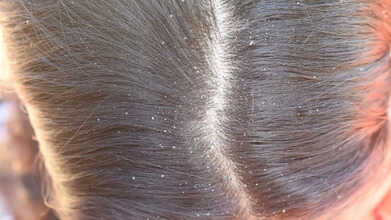
Seasonal factors can aggravate dandruff. (Photo credit: iStock)
As winter transitions into warmer summer months, many people notice a sudden worsening of dandruff. During colder months, dandruff often appears as dry, fine flakes due to scalp dryness. However, as temperatures rise and humidity increases, dandruff can become oily and sticky because of increased sweating and sebum production. This seasonal shift highlights that dandruff is not limited to a particular time of year; rather, changes in climate can disrupt scalp balance and trigger flare-ups. Dr. Anupriya Goel, MBBS, MD, DPD (UK) – Dermatology, answered this for us.
Why does dandruff recur?
Many people struggle to understand why dandruff keeps recurring. It is often treated as a temporary cosmetic concern, but in reality, dandruff is a chronic scalp condition that requires consistent care and appropriate treatment. The primary cause of dandruff is a yeast called Malassezia globosa, which naturally resides on the scalp. This microorganism feeds on sebum (the natural oils produced by the scalp). As it breaks down these oils, it releases by-products that can irritate the scalp, leading to inflammation, itching, and visible flaking.
Seasonal factors further aggravate this process. In winter, cold air, low humidity, indoor heating, and frequent hot showers can strip the scalp of its natural moisture and weaken the skin barrier, resulting in dryness and flaking. In contrast, summer brings increased sweat and oil production. The combination of humidity, sweat, and sebum creates an ideal environment for Malassezia to multiply, which can worsen dandruff symptoms.
Read here: Simple Secrets To Establishing The Right Winter Hair Care Routine
What are the external factors responsible for dandruff?
Environmental factors such as pollution can also settle on the scalp and contribute to irritation. In addition, daily habits like wearing helmets for long hours, tying up damp hair, or not cleansing the scalp regularly can further disrupt scalp health. The transition period between seasons is often the most challenging, as the scalp has limited time to adapt to changing environmental conditions.
Because dandruff is often mistaken for a temporary issue, many people rely on occasional treatments or home remedies. However, effective management typically requires regular scalp-focused care using clinically proven active ingredients.
Treating dandruff
One such ingredient commonly used in anti-dandruff formulations is Piroctone Olamine, an antifungal agent that helps control the growth of Malassezia on the scalp. By reducing fungal proliferation, it helps address the underlying cause of dandruff and can assist in decreasing flaking, itching, and scalp irritation. It also helps cleanse the scalp by removing excess oil and buildup while being relatively gentle on the hair and scalp.
Read more: 7 Ayurvedic Hair Health Tips You Should Try For Healthy Locks
For optimal results, individuals experiencing recurrent dandruff may benefit from incorporating an anti-dandruff shampoo containing Piroctone Olamine into their regular hair care routine. Consistent use is important for maintaining scalp balance. During periods of increased sweating, such as in hot and humid weather, washing frequency may be increased as needed. Maintaining hygiene practices such as regularly cleaning helmets, pillowcases, and hair accessories can also help minimise recurrence.
In addition to controlling dandruff, well-formulated shampoos containing Piroctone Olamine are often combined with conditioning and moisturising ingredients that help maintain hair softness and scalp comfort while supporting long-term scalp balance.
Why Autism In Women Is Often Overlooked And Misdiagnosed

Credit: iStock
Autism in women is not often entirely recognized because this disorder does not always have to correspond to the “classic” picture characteristic of males.
The diagnosis is based on a male criterion with such behavior as obvious withdrawal from a group, overtly displayed repetitive behaviour, and limited interests. There can be mild social deficit or internalized anger and frustration that can pass unnoticed in clinical practice.
The Art of Masking
One of the most significant reasons behind underdiagnosis is masking (also called camouflaging). Masking is one of the most significant reasons for underdiagnosis. This is helpful in masking but also covers or conceals essential symptoms.
Masking causes mental exhaustion, anxiety, and burnout, but it does not address the underlying autism and leaves it undiagnosed.
Stereotypes And Gender Bias
There is a strong societal stereotype that autism is a “male condition”. This bias is felt by parents, teachers, as well as health care professionals.
Sex bias is evident in that boys get referred for evaluation early. Girls are often tagged “shy,” “sensitive,” and “introverted.”
Their struggles are normalized instead of being explored for any issues. Gender bias is a significant contributor to delayed or wrong diagnosis.
Different Interests, Less Suspicion
A restricted interest is another hallmark of autism, but in women, it tends to be more socially acceptable. Their interests conform to the norms of society; they do not predispose clinical suspicion as opposed to more masculine interests like mechanical systems or numbers.
Overlap With Other Conditions
Autism in women being misdiagnosed as other psychiatric disorders is due to symptom comorbidity. Some of the common misdiagnoses are:
- anxiety disorders,
- major depressive disorder,
- borderline personality disorder,
- eating disorders.
In many cases, these are secondary to autism as a result of years of living with undiagnosed autism.
Social Expectations And Conditioning
From an early age, girls are often conditioned to be socially attentive, empathetic, and compliant. This societal conditioning pushes autistic girls to adapt and hide their difficulties.
These may include forcing themselves into socializing. Fitting in is deemed more important than comfort. They end up creating coping mechanisms that mask their difficulties.
While this may benefit outward functioning, it postpones the recognition of underlying neurodevelopmental differences.
The Consequences of Late Diagnosis
Delayed diagnosis or missed diagnosis has the following effects:
- Chronic mental illness
- Low self-esteem
- Confusion about identity
- Inadequate support services
Endometriosis Taught Me To Always Listen To My Body, Says Model Padma Lakshmi

Credit: Padma Lakshm/ Instagram
The World Health Organization estimates that 10 percent (190 million) of reproductive-age women worldwide suffer from endometriosis.
The chronic and complex menstrual disease that affects many women is characterized by severe pain during menstruation, heavy menstrual bleeding, chronic pelvic pain (pain that does not go away when the menstrual cycle ends), infertility, and abdominal bloating and nausea.
The incurable condition poses a significant challenge to women as it affects their personal and professional lives, relationships, and fertility, among others, due to persistent pain and fatigue.
The diagnosis also gets delayed, as endometriosis is often confused with PCOS, or Polycystic Ovary Syndrome, due to some overlapping symptoms like irregular menstrual periods. The symptoms may continue to persist or recur after treatment is initiated.
In a powerful statement resonating with millions worldwide, Indian American author and television host Padma Lakshmi has shared her experience with the condition.
Opening about her personal battle with endometriosis, the 55-year-old, Co-founder of Endometriosis Foundation of America, said that the condition made her understand how strong she is and called for greater awareness and self-advocacy among women.
"Endometriosis has taught me that I should always listen to my body. Pain is your body's way of telling you something is wrong,” said Lakshmi, in a media post on social media platform Instagram.
"Through my struggles with endometriosis, I've learned that, actually, I have a very high threshold for pain, that I may be stronger than I know, but that I shouldn't always need to be,” PopSugar quoted her as saying.
Lakshmi noted that it is now her life's mission "to advocate for my own health, and also to advocate for all women with endometriosis."
What Is Endometriosis?
Endometriosis happens when tissue similar to the lining of the uterus grows outside the uterus. These tissues commonly develop on the ovaries, fallopian tubes, or the pelvic lining.
Endometriosis affects many women and can impact their daily lives, including their ability to work comfortably. Many women continue their professional responsibilities despite experiencing severe discomfort, fatigue, and pain.
Raising awareness about the condition and encouraging supportive workplaces can help women manage both their health and career more effectively.
Since it is a progressive disorder, timely intervention remains key to managing it. In many cases, women live with symptoms for several years before receiving the correct diagnosis, which can delay treatment and affect their quality of life.
Treating Endometriosis
Treatment is particularly based on the severity of symptoms. Women will be advised lifestyle modifications such as regular exercise, stress management, and an anti-inflammatory diet. Non-steroidal anti-inflammatory drugs may help reduce discomfort.
Hormonal therapies may also be used to control symptoms. Some women will be advised to undergo laparoscopy to remove endometriotic cysts.
Minimally invasive surgery can help remove lesions and restore pelvic anatomy, which may also improve fertility in some cases. In advanced cases, surgery can be recommended to women.
- Follow Us :


© 2024 Bennett, Coleman & Company Limited