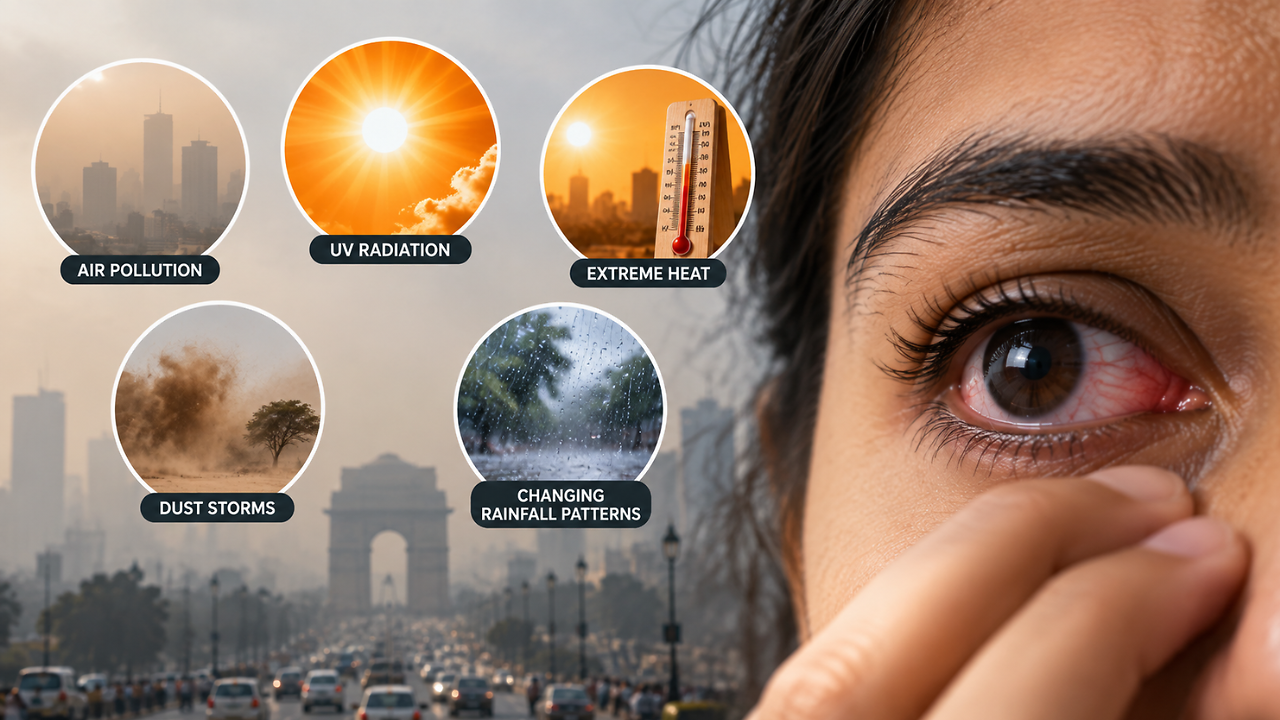
Climate change is an environmental issue, but its effects are reaching the eye clinic. Hotter summers, intense ultraviolet radiation, polluted air, shifting pollen seasons and extreme rainfall can affect the eyes. Because the eye’s surface is exposed to the environment, changes in temperature, humidity and air quality may produce symptoms. Five risks deserve attention in India. Heat and Dry-Eye DiseaseExtreme heat, dry winds and prolonged air-conditioning can accelerate evaporation of the tear film that protects the eye. Dehydration may compound the problem. Burning, grittiness, redness, watering and blurred vision are common warning signs. Outdoor workers, drivers, older adults and contact-lens users may be especially vulnerable. Hydration, protective glasses and preservative-free lubricating drops recommended by an ophthalmologist can help. Cumulative Ultraviolet DamageSunlight can affect more than the skin. Acute, intense ultraviolet exposure may injure the corneal surface and cause photokeratitis, producing pain, watering, light sensitivity and blurred vision. Exposure over years is associated with pterygium a fleshy growth on the eye and certain forms of cataract. Choose sunglasses labelled UV400 or offering 99–100 per cent UVA and UVB protection. Dark lenses without verified UV protection are not adequate. A broad-brimmed hat provides protection.Also read: US FDA Launches Expedited IND Pilot To Speed Up Drug TrialsAir Pollution and Ocular-Surface InflammationParticulate matter, vehicle emissions, smoke, ozone and construction dust come into direct contact with the tear film. They may destabilise it and trigger inflammation, worsening dry eye, redness and allergic conjunctivitis. On days with poor air quality, limit avoidable outdoor exposure, use wraparound glasses and avoid rubbing the eyes. Artificial tears may wash irritants from the surface, but persistent symptoms require examination rather than repeated use of over-the-counter “whitening” drops. Longer Allergy SeasonsChanging temperatures, rainfall patterns and plant cycles can alter the amount and timing of airborne pollen. Combined with dust and pollution, this may result in more frequent or prolonged allergic-eye symptoms. Intense itching, watering and swollen eyelids are typical. Cold compresses can provide relief, but rubbing may damage the ocular surface and, in susceptible people, contribute to corneal problems. Anti-allergy drops should be selected with medical guidance. Steroid eye drops must never be self-prescribed because misuse can raise eye pressure, promote infection and damage vision.Also read: Bouncy Castles Linked To MRSA Outbreak In 48 Children In Ireland Eye Infections After Extreme Rainfall and Flooding Heavy rain, waterlogging and disrupted sanitation increase exposure to contaminated water and surfaces. Crowding during outbreaks may also facilitate the spread of infectious conjunctivitis through hands, towels, cosmetics and shared personal items. Do not splash floodwater or questionable tap water into the eyes, and never rinse contact lenses with water. Pain, marked light sensitivity, reduced vision, corneal whiteness or symptoms in a contact-lens wearer require urgent assessment. Climate-related eye problems are not confined to one season. Prevention begins with UV protection, clean hands, hydration, sensible exposure reduction and timely eye examinations. Sudden loss of vision, severe pain, flashes, new floaters or an eye injury should always be treated as an emergency.