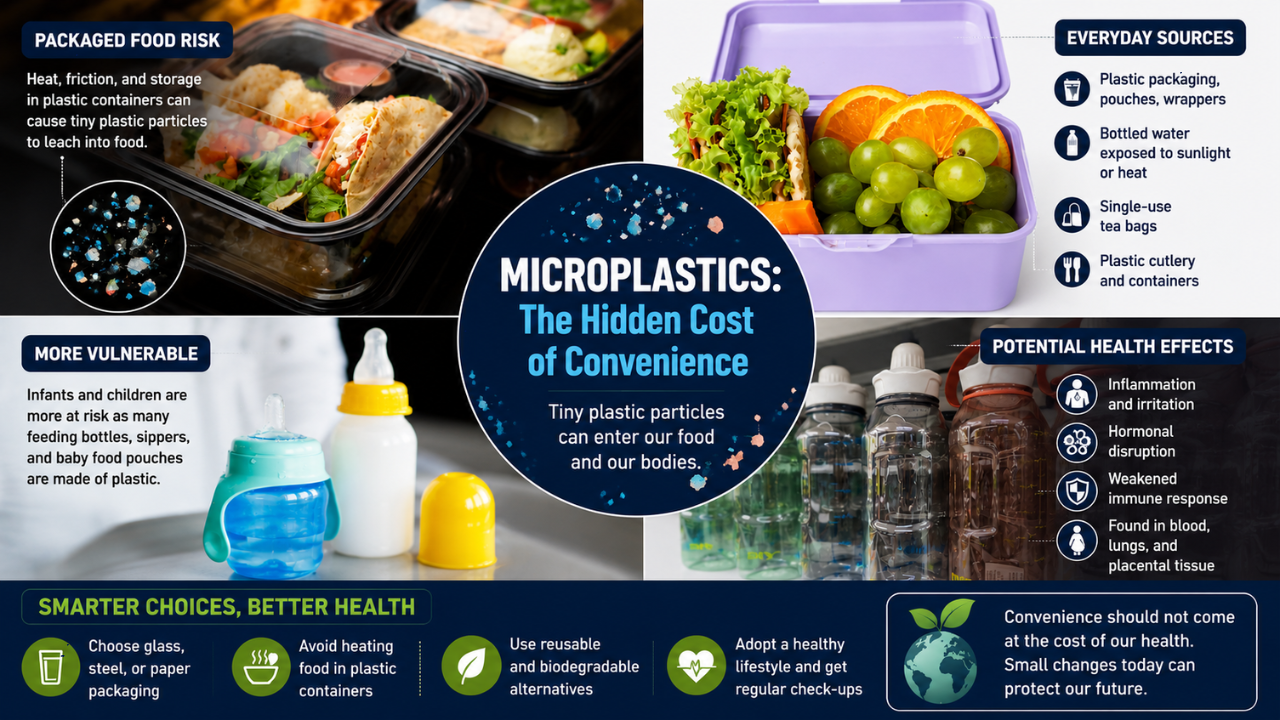
Convenience foods have become the defining feature of urbanization. From ready-to-eat breakfasts to microwavable dinners and takeaway lunches, packaged food fits into all our lives. But behind this convenience, what lies underneath are the tiny plastic particles, also referred to as microplastics, which are accentuating health concerns across the globe. Unknowingly, these microplastics are seeping through the plastic cutlery, food packaging, etc., potentially into our bodies. Plastics have been widely used for ages due to their higher affordability, durability, and extensive applications in various industries.What Are Microplastics?As per a recent literature quoted by Zhang et al. 2025, only about 20% of the plastic waste produced is recycled, whereas the rest is either abandoned in landfills or dispersed into the environment. Microplastics are the new emerging pollutant category in the modern era, raising prominent concerns in both health & environmental contexts. As per scientific literature, microplastics are plastic fragments with a diameter of less than 5mm. Food Packaging Contributes to Microplastic ExposurePlastic food packaging dominates the global food system, since it can be designed in any form (container, wrapper, pouch, etc) while keeping food fresh for longer periods. Microplastics are released from food packaging(s), especially when they are exposed to prolonged heat, abrasive forces, and undue environmental stresses. Heating and/or reheating food in plastic containers or choosing to decant packaged food commodities in plastic containers and maintaining them under unfavorable circumstances can all increase the likelihood of microplastic release. Bottled Water and Everyday Sources of MicroplasticsBottled water has also proven to release thousands of microplastic particles into the water they contain when exposed to sunlight/ heat. We never give a thought to such bottles being sold by the roadside vendors, wherein these plastic bottles are hung for indefinite days on that kiosk. Those bottles are in constant light exposure all day without even pondering about the ill effects it may cause to the consumers. Similarly, single-use tea bags have also been shown to release billions of microplastics when steeped in hot water. These findings highlight a troubling paradox that products marketed for convenience and safety may be introducing new risks that consumers never thought about.What Does Research Say About Health Risks?The health implications of ingesting microplastics remain an active area of research, but early findings are enough to raise concerns. Studies have demonstrated microplastics in human blood, lungs, and even placental tissue. This suggests that upon ingestion, these particles may not simply pass through the body. Instead, they would accumulate in tissues or interact with biological systems in ways that are not yet fully explored. One of the major health implications pertaining to microplastic ingestion is inflammation. These particles can trigger irritation in tissues, eventually impacting the immune responses. Plastics often contain additives in the form of plasticizers, etc., which may disrupt hormone function and impair the normal cellular function.Infants and children are more often vulnerable as their food is also packed in plastic packaging or containers (like plastic sippers, feeding bottles, baby food pouches, etc.), raising long-term exposure risk during critical stages of growth.Steps to Reduce Microplastic ExposureThe issues relating to plastic usage also reflect a broader tension in the modern era, where convenience seems to intersect with health! For people or families juggling work and financial burdens, avoiding packaged foods mostly sounds unrealistic. Still, some small and consistent actions can help us reduce the exposure to microplastics, like opting for glass or paper packaging wherever possible. Avoiding heating food in plastic containers or opting for biodegradable packaging options could prove to be beneficial in the future. Though microplastics are invisible to our naked eyes, what we do next to curb them would help us shape a healthy future.