
- Health Conditions A-Z
- Health & Wellness
- Nutrition
- Fitness
- Health News
- Ayurveda
- Videos
- Medicine A-Z
- Parenting
This Seemingly Common Flu Symptom Can Be A Sign Of 139 Diseases!

When we catch a cold or flu, common symptoms like cough, fever, and loss of smell are often dismissed as ordinary. However, a recent study reveals that loss of smell—a symptom brought into sharp focus during the COVID-19 pandemic—could be an indicator of over 139 medical conditions, some far more serious than the flu.
A groundbreaking study by scientists from the UC Irvine Charlie Dunlop School of Biological Sciences in California has highlighted the link between persistent olfactory loss and inflammation, which is associated with numerous health conditions. Published in the journal Frontiers in Molecular Neuroscience, the study emphasizes that olfactory dysfunction could be an early warning sign for diseases ranging from COVID-19 to neurological and psychological disorders.
The Science Behind Olfactory Loss
Olfactory loss, or the inability to smell, is not just an inconvenience. According to the study, the phenomenon stems from inflammation that can signal various underlying health issues. Researchers found that olfactory dysfunction often precedes other symptoms in conditions like Parkinson’s disease, Alzheimer’s disease, depression, and even schizophrenia.
For example, Walker et al. (2021) noted that olfactory loss appears well before motor symptoms in Parkinson’s disease. Similarly, studies as far back as 1991 (Serby et al.) indicated that the first area of the brain to deteriorate in Alzheimer’s patients is the olfactory pathway. This early warning capability extends to other conditions such as major cardiac events, multiple sclerosis, and schizophrenia, where olfactory loss often precedes the onset of more recognizable symptoms.
Loss of smell - A predictor of mortality and cognitive decline
Perhaps even more concerning is the link between olfactory loss and overall health outcomes. The study connects persistent loss of smell to memory decline, cognitive impairment, and even all-cause mortality. For instance, a study from the University of Chicago found that a rapid decline in the sense of smell could serve as an early indicator of dementia.
Potential of scents
There’s hope, however. A 2023 study exploring “olfactory enrichment” found that exposing older adults to pleasant scents via an odorant diffuser significantly improved memory—by as much as 226%. Researchers believe that these scents may reduce inflammation, offering a potential mechanism for improving brain health.
“We now know that pleasant scents can decrease inflammation, potentially pointing to the mechanism by which such scents can improve brain health,” the researchers stated. This finding opens up exciting possibilities for using scent-based therapies to address a range of conditions linked to olfactory loss.
The implications of these findings are clear: persistent loss of smell should not be ignored. While it may stem from something as simple as a common cold or seasonal allergies, it could also be an early warning sign of a more serious condition. If you or someone you know experiences prolonged olfactory dysfunction, consulting a healthcare professional is crucial.
These studies pave the way for future research into scent-based therapies that could revolutionize how we treat neurological, psychological, and inflammatory conditions. Loss of smell is no longer just a minor inconvenience; it’s a potential gateway to understanding—and perhaps mitigating—a wide range of medical challenges.
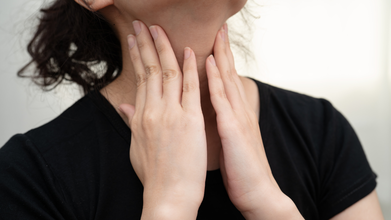
Can Your Voice Predict Future Chronic Disease Risk?
Credit: Canva
Changes in your voice, whether in tone, volume, speed or overall quality, can act as early warning signs for a wide range of medical conditions, experts say.
Your voice is produced by the coordinated effort of your respiratory system, vocal cords (also called vocal folds), and the resonating chambers of your throat, mouth, and nose. Even subtle shifts in hormone levels, hydration status or tissue health can noticeably affect how you sound.
Recent research shows that subtle changes in speech, for example, slurring or vocal cord tremors, may be signs of disease or illness like Parkinson’s disease, depression, cardiac and mental health problems, as speech requires coordination with the brain, muscles and respiratory system.
Which Conditions Can You Identify By A Change In Voice?
- Diabetes: High-pitched, raspy voices or vocal strain can be linked to diabetes, with AI studies showing up to 75% accuracy in prediction.
- Cardiovascular Disease: Voice analysis can detect high, fluttering voices associated with coronary artery disease, caused by stress or fluid changes in the vocal cords.
- Hypothyroidism: A deeper, softer, or huskier voice can indicate thyroid dysfunction.
- Respiratory Illnesses: Conditions like COVID-19 or COPD are often associated with a breathy voice, coughing, and short, interrupted sentences.
- Throat Cancer: Persistent hoarseness and raspy voice, especially lasting more than 2-3 weeks, can indicate laryngeal cancer.
- Parkinson’s Disease: Identified by a monotone voice, reduced volume, increased breathiness, and vocal cord tremors.
- Alzheimer’s Disease/Dementia: Characterized by slower speech rates, hesitation, frequent pauses, and simplified vocabulary/sentence structure.
- Stroke or Brain Injury: Indicated by slurred speech or difficulty finding words (global aphasia).
- Cerebellar Disorders (caused by damage to the nerves in the brain's cerebellum): Manifest as loud, staccato speech (bursts of broken sounds).
- Depression: Linked to a flatter, softer, and more monotone voice with a reduced pitch range.
- Anxiety/Stress: Often presents as a higher-pitched, faster, and more tremulous voice.
- Schizophrenia: Indicated by monotone, disorganized speech.
What Else Can Affect Your Voice?
Apart from serious medical conditions, voice changes may also be linked to aging and lifestyle factors. Fluctuations in testosterone, estrogen, progesterone, and thyroid hormone levels may also influence the structure and function of the vocal cords.
Dehydration is one of the most common causes of voice problems, as cords need adequate moisture to vibrate efficiently. Aim for at least 64 ounces of water daily, and more if you use your voice professionally or live in a dry climate.
Smoking irritates and inflames the vocal cords, causing chronic hoarseness and increasing the risk of vocal cord cancer. Even secondhand smoke and vaping can affect voice quality.
Diet also plays a role in vocal health. Caffeine and alcohol are diuretics that can dehydrate your vocal cords. Spicy foods and acidic beverages may trigger reflux, irritating the throat.
Dairy products can increase mucus production in some people, affecting voice clarity. Voice overuse or misuse, common in teachers, singers, and public speakers, can lead to vocal fatigue and damage. The following table compares how different lifestyle factors impact your voice.
How Can You Take Care Of Your Voice?
Whether the cause is hormonal changes, medical conditions, aging, or lifestyle factors, most voice problems can be improved with proper diagnosis and treatment. Here are some things you can do to take care:
- Stay hydrated by drinking water throughout the day and using a humidifier in dry environments
- Warm up your voice before extended speaking or singing with gentle humming or lip trills
- Avoid shouting or whispering, both of which strain the vocal cords
- Take voice breaks during prolonged speaking to prevent fatigue
- Manage stress through relaxation techniques, as tension affects voice quality
- Treat allergies and sinus problems promptly to reduce postnasal drip
- Maintain good posture to support optimal breathing and voice production
Feeling Lonely Or Judged Raises Risk of Dementia, Study Suggests

Credit: Canva
Living under constant psychosocial stress can significantly raise the risk of developing dementia and a stroke, a JAMA Network study suggests.
Psychosocial stress is a type of stress related to our relationships with others, usually arising from feeling judged, excluded, or not enough in others' eyes. It can also put a person in fight-or-flight mode, causing both mental and physical symptoms.
According to Chinese researchers, people who experience this form of stress in childhood as well as adulthood face more than a threefold higher risk of developing dementia compared with those in other groups.
Similarly, young people experiencing stressful situations in their adulthood had a significantly higher risk of stroke incidence that their counterparts.
Based on these results, the study highlights that early identification of psychosocial stressors, combined with effective mental health support and depression prevention, may reduce the long-term burden of neurodegenerative and cerebrovascular disease.
What Did The Study Find?
In this population-based cohort study of more than 11,600 middle-aged and older adults, nearly four in five participants reported at least one adverse childhood experience, while over one-third experienced adversity during adulthood.The scientists defined adverse childhood experiences (ACEs) as traumatic exposures occurring during childhood, typically grouped into 3 categories: household dysfunction, social dysfunction and family death or disability.
On the other hand, traumatic exposures occurring during adulthood were defined as adverse adult experiences (AAEs), which include events such as the death of a child, lifetime discrimination, ever being confined to bed, ever being hospitalized for a month or longer and ever leaving a job due to health conditions.
While analyzing the data they collected from the participants, the researchers also found that depression partly explained the links in all major relationships as it accounted for more than one-third of the connection between childhood adversity and dementia, and about one-fifth of the link between adulthood adversity and both dementia and stroke.
READ MORE: Avoid Doing These 3 Things Prevent Dementia, According To Neurologist
These findings suggest that long-term psychological stress may lead to brain and blood vessel diseases by causing ongoing emotional distress, unhealthy behaviours, and biological changes like inflammation and abnormal stress responses.
Psychosocial Stress: An Unseen Form Of Stress
Psychosocial stress can trigger physiological responses like increased heart rate, cortisol secretion, and inflammation, significantly increasing risks for hypertension, cardiovascular disease and mental health disorders.
This kind of stress can affect men, women, and people of all genders differently, but many of the symptoms are still the same. Common symptoms include:
- Sweating
- An increase in blood pressure
- Rapid heartbeat
- Dizziness
- Nausea and digestive problems
- Strong emotional reactions such as sadness or irritability
- Drug or alcohol abuse
These symptoms can be acute or chronic, meaning for some people they go away, and for others, they persist over a long period of time. Meeting with a therapist is often recommended for those living with chronic stress.
Experts typically suggest developing coping mechanisms include building support networks, utilizing relaxation techniques, and, in cases of severe mental impact, seeking professional support to help deal with psychosocial stress.
Why Are US Women Dressed In Red?

Credits: WBBJTV. News
Cardiovascular disease remains the leading cause of death among women, claiming more lives each year than all cancers combined. Yet, it continues to be misunderstood, underdiagnosed, and often dismissed as a “male” health problem. In Ohio and across the US, women are now using a striking visual message to confront this reality head-on, by quite literally dressing for the cause.
February, observed as American Heart Month, marks a renewed push to educate communities about heart disease, especially among women. Health advocates stress that while the spotlight is brightest this month, the risks and responsibilities extend far beyond the calendar.
“It’s our Super Bowl,” said Lauren Thomas, development director for the American Heart Association of North Central West Virginia and Ohio Valley. “It’s about awareness. Heart health is not a one-month conversation. It has to be a year-round priority where people actively put their hearts first.”
Why Red Has Become a Warning Sign
Across Ohio, women are wearing red, a color long associated with love but also with danger. The message is deliberate. Red symbolizes the urgency of cardiovascular disease, a condition responsible for one in every three deaths among women.
“When we wear red, we start conversations that many people avoid,” said Melissa Pratt, a heart disease survivor, reported WBBJ News. “One in three women die from cardiovascular disease. Wearing red encourages women to get checked, understand their risks, and take their health seriously.”
From landmarks lit in red to workplaces, neighborhoods, and social media feeds filled with crimson outfits, the visual campaign is meant to disrupt complacency. It asks a confronting question. If heart disease is killing women at this scale, why is it still not treated like a crisis?
Ohio Valley And Downtown Jackson Women Taking the Lead
Coinciding with American Heart Month, the Ohio Valley Women of Impact campaign launches this Friday. Six local women, Crissy Clutter, Jan Pattishall-Krupinski, Lacy Ferguson, Shelbie Smith, Jennifer Hall-Fawson, and Laurie Conway, are leading fundraising and awareness efforts aimed at improving women’s heart health.
Their work focuses on education, early detection, and supporting research that better understands how heart disease presents differently in women. Symptoms in women can be subtle, ranging from fatigue and nausea to jaw or back pain, which often delays diagnosis and treatment.
Turning Awareness Into Action
To mark the start of the month, the American Heart Association hosted a National Wear Red Day breakfast on Friday morning at the LIFT Wellness Center in Jackson Walk Plaza. The event brought together survivors, advocates, and health professionals to reinforce a simple but powerful message. Awareness must lead to action.
Health experts continue to urge women to prioritize regular checkups, manage blood pressure, cholesterol, and stress, and recognize early warning signs. Lifestyle changes, timely screenings, and informed conversations can significantly reduce risk.
Dressed In Death, Fighting For Life
The women of Ohio are not wearing red for fashion. They are wearing it as a warning, a remembrance, and a call to action. In dressing themselves in the color of urgency, they are confronting a disease that has taken too many lives quietly. This February, their message is clear. Heart disease is not inevitable, but ignoring it can be deadly.
- Follow Us :


© 2024 Bennett, Coleman & Company Limited