
- Health Conditions A-Z
- Health & Wellness
- Nutrition
- Fitness
- Health News
- Ayurveda
- Videos
- Medicine A-Z
- Parenting
Times Network India Health Summit 2025: From Testing Challenges To Long-Term Risks, Experts Decode Battling Dengue

Today at Times Network India Health Summit and Awards 2025, a special panel discussion focused on “Battling Dengue in India: Crisis, Control & the Promise of a Vaccination”. The panel brought together three experts: Dr. Sanjeev Bagai, Chairman of Nephron Clinic, Senior Consultant Paediatrician & Nephrologist, Padma Shri awardee, Dr. K. Madan Gopal, Advisor and Head of Public Health Administration, National Health Systems Resource Centre and Dr Atul Kakar, Chairperson of the department of Internal medicine, Sir Ganga Ram Hospital. Together, they shared insights on how India can fight the growing dengue crisis.
Dengue Testing And Underreporting
Dr. Sanjeev Bagai began by explaining the challenges of testing. He noted that the NS1 antigen test, one of the most common diagnostic tools, does not turn positive until the end of the first day of infection. This often leads to false negatives if testing is done too early, adding to underreporting. He further talked about how many rural cases are never tested or are simply classified as “viral fever,” further skewing national numbers.
From a Seasonal Illness To A Perennial Problem
Dr. Madan Gopal stressed that dengue can no longer be considered a post-monsoon illness alone. “Over the decades, it has evolved from being a seasonal problem to becoming a perennial health threat,” he said, highlighting factors like rapid urbanisation, water stagnation, waste management failures, and climate change. “We need civic, community, and government surveillance working hand in hand to prevent mosquito breeding and control outbreaks,” he added.
Recognising The Dengue Symptoms
Dr Atul Kakar agreed that public awareness of warning symptoms is critical. Severe headaches, pain behind the eyes, back pain, and high-grade fevers should alert both patients and healthcare providers. Dr. Bagai explained that the infection passes through four phases, acute febrile, critical, plateau, and recovery. Importantly, he warned that a fall in fever does not signal recovery. Dr Bagai told us, “Instead, this is often when platelet counts dip, and complications can arise.”
Managing the Patient Burden
On hospital preparedness, Dr. Madan Gopal underlined that 70–80% of dengue cases can be managed at home with proper hydration and monitoring. He emphasised building capacity in both public and private healthcare sectors to identify warning signs early and prevent unnecessary hospital admissions that overwhelm facilities.
Dangers of Self-Medication During Dengue
Dr. Bagai strongly cautioned against relying on home remedies or inappropriate drugs. “Yoga, papaya leaf juice, or herbal concoctions do not cure dengue,” he said. He also warned against taking aspirin, ibuprofen, or antibiotics, as these can worsen bleeding risks and damage the liver or kidneys. The only safe medicine for managing fever, he stressed, is paracetamol along with adequate fluids.
Long Dengue
A critical takeaway from Dr. Bagai was that dengue does not end with the fever. He pointed to new research showing long-term complications, including higher risks of cardiac issues, autoimmune conditions, kidney damage, and neurological problems—sometimes lasting for months after infection. This “long dengue syndrome,” he said, is an emerging challenge that must be factored into health planning.
Dengue Vaccine
When asked about the future of a dengue vaccine, Dr Bagai was cautious. He explained that while early vaccine trials have taken place, the long-term efficacy is poor, with protection falling sharply after four to five years. “Some vaccines work only in the early stages of infection and fail against later serotypes. Others carry the risk of worsening the disease due to the body’s unpredictable immune response,” he said.
Dr Bagai added that dengue’s overlap with other viral exposures, including influenza, COVID-19, and Zika, complicates vaccine development. “The worst thing you can do is give a vaccine that ends up triggering a more severe infection. Some global studies have shown exactly that an increase in hospitalisations among vaccinated individuals,” he warned.
Instead of banking on a vaccine anytime soon, Dr. Bagai stressed that prevention must remain the priority. “The safest and most effective protection is to keep mosquitoes out of your homes, manage water storage, and prevent breeding grounds. Vaccines for dengue are still a far, far distance away,” he said.
Dr. K. Madan Gopal agreed that while research continues, community action, civic surveillance, and strong preventive measures remain India’s best defence in the near term.
The panel concluded that India’s fight against dengue requires:
- Early testing and accurate diagnosis to reduce underreporting.
- Mass public awareness campaigns on prevention and warning signs.
- Stronger civic action to control mosquito breeding.
- Responsible treatment with hydration, paracetamol, and medical supervision.
- Focus on vaccination research, given the presence of four dengue serotypes and risks of repeat infections.
Dr. Bagai summed it up: “Dengue is not just a seasonal fever anymore. It is a national health crisis that demands prevention, awareness, and scientific management, not myths or shortcuts.”
The partners of the Times Network India Health Summit are:
Powered by- INTAS
Co-powered by- Novartis and All out
knowledge partner- MGR University
Supporting partner- FIT INDIA
Strategic alliance partner- OneXtel
Wealth Partner- Nuvama
Outdoor partner- Heights
Abdominal Obesity Greater Risk Factor For Indians, says Dr. Jitendra Singh

Credit: PIB
Abdominal, also known as central obesity, poses a greater health risk than overall obesity, especially in Indians, said Dr. Jitendra Singh, the Union Minister of State (Independent Charge) for Science and Technology.
Speaking at the release of a cardiology textbook titled “Advances in Obesity and Lipid Management in CVD,” by eminent cardiologist Dr. H.K. Chopra, Singh said that even lean and thin-looking individuals often carry significant visceral fat.
Amid a rapidly growing number of chronic conditions, such as diabetes, hypertension, and cardiovascular diseases, the Minister shared that abdominal obesity is the driving factor.
"There is sufficient evidence to show that Central obesity, even in apparently non-obese individuals, predisposes to a wide spectrum of metabolic disorders including diabetes, hypertension, cardiovascular diseases, fatty liver, dyslipidemia, etc.,” Singh, who is also a diabetologist, said.
“In other words, Abdominal or Central obesity is a greater risk factor compared to overall obesity, particularly in the Indian context where even lean and thin-looking individuals often carry significant visceral fat,” he added.
The Minister reiterated the importance of balanced health practices and emphasized the need for following a “sustained lifestyle discipline, adequate sleep, and scientifically guided preventive care”.
What Is Abdominal Obesity?
Abdominal obesity refers to an excessive accumulation of visceral fat around the stomach and internal organs, such as the liver, heart, kidneys, and the mesentery of the intestine.
Unlike subcutaneous fat, which lies beneath the skin, visceral fat is metabolically active and poses greater health risks.
It can increase your risk of heart disease, type 2 diabetes, high blood pressure, stroke, and some types of cancer.

It is because visceral fat produces hormones and other substances that can cause inflammation and insulin resistance, which can lead to these health problems.
A 2024 study from the Washington University School of Medicine in St. Louis, Missouri, showed that a higher level of visceral fat was related to increased amyloid -- accounting for 77 per cent of the effect of high BMI on amyloid accumulation.
Who Is More At Risk Of Abdominal Obesity
The Minister said that while overall obesity is rising among both men and women, the prevalence of abdominal obesity remains disproportionately high and acts as an independent determinant of cardiometabolic risk. The presence of visceral fat around the abdomen, even without generalized obesity, has significant clinical implications and requires early detection and targeted intervention.
A waist circumference of more than 40 inches for men or 35 inches for women may indicate a higher risk of visceral fat accumulation.
While people with a larger waistline or pot belly are at known risk of having visceral fat, thin people too can have fat accumulation in their internal organs.
According to health experts, even people with a healthy weight can have high levels of visceral fat.
This is because visceral fat is not always visible on the outside of the body, and it can accumulate even if a person appears to be thin or in good shape.
Also read: Checking BMI For Body Weight? It Can Wrongly Mark You As Overweight or Obese, Says Study
Strategies for Successful Weight Management
To tackle obesity, one needs a holistic strategy beyond mere weight reduction. Healthy and sustainable weight reduction and improvement of health are more about body composition than mere weight. Major strategies are:
A balanced diet composed of whole foods, lean meats, and good fats in addition to physical exercise encourages sustainable weight reduction.
Resistance training helps in preserving muscle mass along with fat reduction, which improves metabolic well-being.
Prescription weight-loss medication can help manage obesity alongside lifestyle changes.
For people with severe obesity, surgeries such as gastric bypass or sleeve gastrectomy may provide significant long-term advantages.
Prioritize your metabolic health through healthy eating, portion control, and mindful eating for long-term success.
Bipolar Disorder: How Early Detection Can Help Prevent Serious Complications
Credit: iStock/Canva
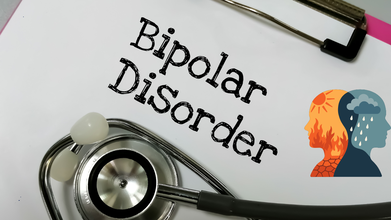
Bipolar disorder is commonly misunderstood as mere mood fluctuations; however, it is a serious and complex mental health condition.
The condition presents extreme mood fluctuations — hyperactivity and impulsiveness — and depressive lows — lethargy and hopelessness.
Bipolar disorder affects over 40 million people worldwide. Yet diagnosis remains challenging, as many people remain undiagnosed or misdiagnosed for long periods. Some are treated for other mental health conditions, such as depression or ADHD, causing delays in effective treatment.
Speaking to HealthandMe, Dr. Kriti Anand, Consultant, Psychiatrist, Paras Health, Panchkula, said: “Early identification of bipolar disorder is essential for the improvement of the condition of patients. It aids in recognizing patterns early on, which helps to stabilize moods and minimize the occurrence of severe and recurring episodes”.
“With the correct identification of the condition and intervention, people can effectively maintain relationships and stay productive,” Dr. Anand added.
Importance Of Early Detection
Recognizing bipolar disorder early is critical for better outcomes. People who do not get a timely diagnosis are likely to experience more frequent and intense mood episodes, which can become harder to manage over time.
Early evaluation allows healthcare professionals to identify patterns and introduce treatments that help stabilize mood and reduce the severity of symptoms.
Notably, the experts stated that treating bipolar disorder simply as depression means that antidepressants are prescribed, which could cause a manic episode to occur.
With early diagnosis, the chances of harmful behaviors are reduced and prevent suicidal tendencies that are often a result of untreated cases of bipolar disorder.
It also enhances the quality of life, enabling patients to maintain healthy relationships, work productively, and attend to their daily responsibilities.
Early symptoms includes
- Extreme irritability, intense happiness, or sudden, uncharacteristic anger
- A sudden, unexplainable rise or decline in energy levels
- Reduced need for sleep without feeling tired or difficulty falling asleep
- Engaging in risky activities
- Racing thoughts or difficulty concentrating
It’s important to conduct a thorough evaluation to ensure an accurate diagnosis. This involves looking at the patient’s medical history and mental health history.
The symptoms are also evaluated using a structured approach. In some cases, a physical examination may also be conducted. As bipolar disorder involves long-term patterns, it’s possible to observe the patient over a long period of time.
Once diagnosed, early intervention can begin. Treatment for bipolar disorder may involve
- drugs to control mood,
- therapy to improve coping abilities,
- lifestyle habits such as sleeping and exercising regularly.
“A thorough and timely evaluation is essential for accurately diagnosing bipolar mood disorder, especially in cases where symptoms overlap with other conditions. Early intervention by mental health experts, in the form of appropriate treatment, therapy, and lifestyle adjustments, can significantly reduce complications," Surg Commodore (Dr.) Sunil Goyal (Retd), Senior Consultant - Psychiatry, Sarvodaya Hospital, Faridabad, told HealthandMe.
"This will help individuals achieve long-term stability of mood along with improved quality of life in all socio-occupational spheres," he added.
Left untreated, bipolar disorder can lead to serious problems that affect every area of your life, including:
- Problems related to drug and alcohol misuse
- Suicide or suicide attempts
- Legal or financial problems
- Trouble getting along with others
- Poor work or school performance
The experts noted that early detection of bipolar disorder is not just about diagnosis; it is about improving lives.
Identifying the condition early helps in reducing the chance of developing serious complications, decreasing the possibility of being misdiagnosed, and also allows for treatment to be delivered in a timely and appropriate manner.
Olivia Munn Opens Up About Detecting No-Symptom Breast Cancer With Lifetime Risk Assessment Test
Credit: Instagram
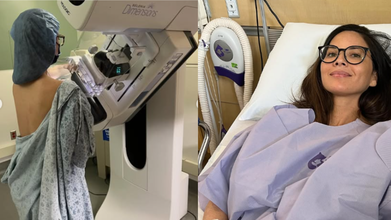
American actress Olivia Munn has opened up about her journey with deadly breast cancer, which came with no typical symptoms.
In her latest interview on CBS News Sunday Morning, the 45-year-old actress recalled being “faced with the possibility of death” in April 2023, when she was diagnosed with Stage 1 breast cancer.
Importantly, the actress had no symptoms, and even tests like a mammogram and ultrasound gave her a clean chit.
"No symptoms. And I had a clear mammogram and a clear ultrasound," Olivia was quoted as saying.
However, the condition was detected after taking the Lifetime Risk Assessment test -- a free online Q&A that gave her a high score estimating the risk of developing breast cancer in a lifetime. The test marked any score above 20 percent as a high risk. Munn's risk score was 37.3 percent.
The online test — Tyrer-Cuzick Risk Model — is publicly accessible and widely recommended by experts, and it calculates a woman’s five-year and lifetime risk of developing breast cancer using a combination of factors like age, family history, genetics, reproductive history, and more.
Post the assessment, she took "an MRI, which led to an ultrasound, which then led to a biopsy," she explained.
The biopsy showed that she had what she described as "an aggressive, fast-moving cancer" in both of her breasts.
Once she learned the diagnosis, she fought back with everything she had. She got a double mastectomy, an ovariectomy, and a partial hysterectomy. Now her risk score is zero.
Instead of recovering quietly, Olivia made it her mission to raise awareness about the condition — posting about her cancer on social media and telling the world about the risk assessment test.
In the years since Munn started sharing her story, the number of women taking the test has increased by 4,000 percent, the report said.
"Knowing that it's really changed so many people's lives. It's been the most amazing thing. There's no way I could have ever predicted it," she said.
In 2025, Olivia’s mother, Kim, was also diagnosed with breast cancer after taking the same risk assessment test.
In an Instagram post, Munn said her mother was diagnosed with Stage 1 HER2-positive breast cancer, a fast-growing but often treatable type of the disease. Her diagnosis came after Munn encouraged her mom and sister to take a free online breast cancer risk assessment.

Also read: Amanda Peet Opens Up About Breast Cancer Battle, Shares Toughest Moment
What Is A Lifetime Risk Assessment Test?
The MagView Tyrer-Cuzick Risk Assessment Calculator is an online tool that helps one calculate their lifetime risk of developing breast cancer.
The tool urges people to reach out to their healthcare professional in case they have any questions about their risk of developing breast cancer and what the best options are for breast cancer screenings or genetic counseling they may have.
Olivia stressed that any woman over 30 should take the test, and if their risk is above 20 percent, they should ask their doctor for a breast MRI.
Also read: Christy Carlson Romano’s Cancer Test Result Shows Why Regular Screening Is Important
Who Should Get Breast Cancer Screening Done?
According to the American Cancer Society, you are considered to be at average risk if you do not have a personal history of breast cancer, a strong family history of it, or a known genetic mutation (like in the BRCA gene) that increases your risk.
This also applies if you have not had chest radiation before the age of 30. These are the breast cancer screening recommendations for women who are at average risk.
Ages 40-44: You have the choice to start getting a mammogram every year.
Ages 45-54: You should get a mammogram every year.
Ages 55 and older: You can switch to getting a mammogram every other year, or you can choose to continue getting one every year.
You should continue to get screened as long as you are in good health and are expected to live at least 10 more years.
- Follow Us :


© 2024 Bennett, Coleman & Company Limited