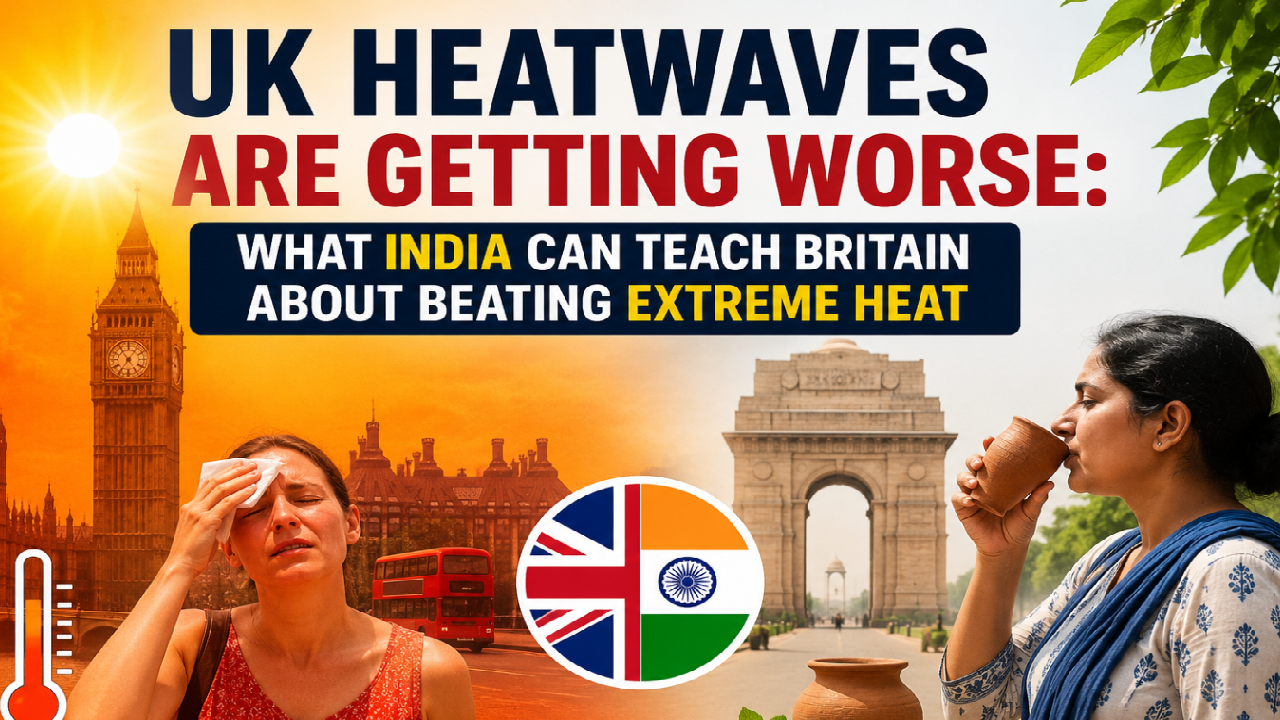
The United Kingdom is facing constant heatwaves. So far, the nation has witnessed two heatwaves, while the natural temperature increases usually during late July and August, thus creating fear and the possibility of more and more temperature rises. As the country has been going through a weather roller-coaster since May, there was a huge area of high pressure, commonly explained as a 'heat dome'. This resulted in dry, very warm, and sunny weather in the island nation. Notably, the temperature soared up to 35.1 °C in London during the month of May. The temperature in the UK has been on a rising trend over the past few years, and the first time it touches 40C in July 2022. And according to the experts at the Met Office, if global warming continues at its current pace, temperatures in the mid-forties could be a serious possibility for the UK by 2050.The World Health Organization advises people to drink plenty of water, avoid going outdoors during the hottest hours of the day, wear loose and light-coloured clothing, and keep homes as cool as possible as temperatures continue to spike across many parts of the world.Indians are used to living with intense summer heat, and over the years, people have developed simple yet effective ways to cope with it. Many prefer to finish outdoor work during the cooler hours of the morning or after sunset. Drinking plenty of water and traditional cooling beverages, seeking shade whenever possible, and keeping a close eye on elderly family members, young children, and people with existing health problems are all common practices during extended spells of extreme heat.Also Read: Why Thousands Of Black Men In The UK Are Now Being Invited For Prostate Cancer Screening? Hospitals Under Pressure Throughout Western Europe And Strict RestrictionsThe worsening conditions have disrupted healthcare services, with media reports saying hospitals have had to postpone critical imaging scans after sensitive equipment overheated. Cities have also opened emergency cooling centers to protect vulnerable residents. In Paris, authorities have announced temporary bans on public alcohol consumption and takeaway alcohol sales to ease pressure on hospitals. Public drinking will be prohibited from noon to 7 a.m. over the weekend, while takeaway alcohol sales will be banned between 6 p.m. and 7 a.m.The extreme temperatures have also reached the sporting world. Formula 1's governing body, the FIA, has declared another "heat hazard" ahead of the Austrian Grand Prix weekend at Spielberg's Red Bull Ring, triggering additional measures to protect drivers, teams, and spectators.The June 2026 heatwave has triggered red alerts across France, Spain, Italy, and the United Kingdom, and killed dozens of people.How Does Heat Impact Health?Health experts warn that prolonged exposure to extreme heat can have serious and sometimes fatal consequences, particularly for older adults and people with underlying medical conditions.According to the WHO, extreme heat can overwhelm the body's ability to regulate temperature, increasing the risk of heat exhaustion and heatstroke. As the body works harder to cool itself, it places added strain on the heart and kidneys, potentially worsening chronic conditions such as cardiovascular, respiratory, mental health, and diabetes-related illnesses, and increasing the risk of acute kidney injury.