
- Health Conditions A-Z
- Health & Wellness
- Nutrition
- Fitness
- Health News
- Ayurveda
- Videos
- Medicine A-Z
- Parenting
US Cardiologist Explains Why 2026 AHA Cholesterol Guidelines Recommend Starting Young
Credit: iStock
Early monitoring among younger populations has been the primary focus of the recently released American Heart Association (AHA) 2026 cholesterol guidelines.
The deliberate shift is reportedly based on new evidence about how heart disease develops over time.
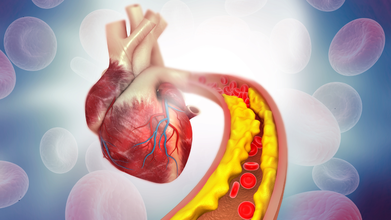
Speaking exclusively to HealthandMe, Dr. Nils P Johnson, Professor of Cardiology, University of Texas, Houston, US, shared that atherosclerosis, or the buildup of plaque in arteries, doesn’t suddenly appear in middle age; it begins silently in youth.
That is why the AHA guidelines highlighted the importance of early screening.
“Cholesterol risk is really about long-term exposure. Just like years of breathing polluted air can damage your lungs, cholesterol builds up in the body over time. It’s not just about how high your levels are at one moment—it’s about how long you’ve lived with them. For example, one person might have very high cholesterol for 30–40 years, while another has moderately elevated levels for 60 years. Over time, their total exposure can be similar—and so can their risk," Dr. Johnson said.
What this means in practice is that treating cholesterol is about reducing total lifetime exposure.
The cardiologist explained that there are two ways to do that: lower cholesterol levels or start treatment earlier.
"Both approaches achieve the same goal—shrinking the overall ‘cholesterol burden’ by reducing how much cholesterol is in the body and how long a person is exposed to it,” the expert said.
The AHA 2026 Cholesterol Guidelines
As per the Global Burden of Disease Study 2021, the burden of heart failure in adolescents and young adults aged 10–24 years is increasing globally.
The guidelines call for early intervention through early screening and healthy lifestyle changes, starting from childhood.
It recommends:
- Children (9-11 years): Cholesterol screening if never done before.
- Adults (30-79 years): Evaluate 10- and 30-year ASCVD risk to determine the need for early intervention
- Considering lipid-lowering therapy for young adults with -- persistent LDL of at least 160 mg/dL, strong family history of ASCVD, and/or at least 10 percent 30-year risk for ASCVD
"They encourage us to think beyond the usual 5- or 10-year risk window and consider the long-term picture—what might happen 20 or 30 years down the road for someone in their 40s or 50s,” Dr. Johnson told HealthandMe.
Also read: ACC/AHA Cholesterol Guidelines 2026 Explained: Start Screening For Cardiovascular Diseases Early
Heart Disease: A Long-term Treatment
The heart expert also stated that chronic conditions like heart disease require long-term management—sometimes for decades—unlike an infection, where a two-week antibiotic course resolves the problem.
“One of the biggest challenges I see in clinics is that patients often come in after a dramatic event—chest pain, a heart attack, or a procedure. Alongside immediate treatment, I prescribe medications and recommend lifestyle changes. And then patients ask, ‘How long do I have to do this? This reflects a very different mindset”.
Dr. Johnson urged cardiologists and other healthcare workers to help patients understand, accept, and sustain these changes over the long term.
“Adjusting to the reality that life will be different for years or even a lifetime is not easy, but it’s essential,” he said.
Bacterial Meningitis May Cause Long-term Fatigue, Vision Problems, Raise Suicide Risk: Study
Credit: Canva
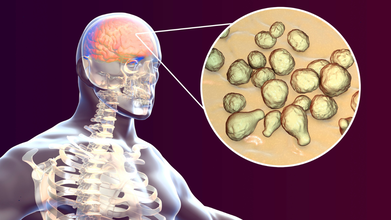
From physical problems like fatigue and vision problems, people who survive the deadly bacterial meningitis are likely to live with long-term fatigue and vision problems, as well as be at high risk of suicide, according to a new study.
The study comes as the UK is experiencing an outbreak of meningitis in Kent, that began among students who visited Club Chemistry in Canterbury between March 5 and 7.
Although bacterial meningitis is treatable, it requires prompt, often immediate treatment for better recovery. Yet patients are likely to face the risk of fatal or long-term complications -- from physical, psychological, and social impacts, said researchers from the University of Otago, The Conversation reported.
The new findings, based on 16 cases from New Zealand, who reportedly suffered the fatal disease, showed that multiple chronic after-effects is permanent in some, while in others, it dragged on for years. The effects include:
- fatigue,
- difficulties with concentration,
- memory and emotional regulation,
- persistent headaches,
- issues with mobility, vision, and hearing.
- anxiety,
- depression
- suicidality.
"Our findings demonstrate that bacterial meningitis is much more than a life-threatening infection. It is an acute disease with serious, chronic after-effects which are poorly understood and often go unrecognised," the researchers said.
Kent Meningitis Outbreak
According to the latest update from the UK Health Security Agency (HSA), 20 laboratory cases of meningitis are confirmed, and 9 notifications remain under investigation, bringing the total to 29 in the country.The bug that causes the infection has been identified as the known strain of meningitis B, and MenB vaccines will be offered to 5,000 students living in the University of Kent halls of residence in Canterbury.
Meanwhile, the UKHSA chief executive, Susan Hopkins, said the outbreak "looks like a super-spreader" event with "ongoing spread" through universities' halls of residence.
"There will have been some parties, particularly around this, so there will have been lots of social mixing. I can't yet say where the initial infection came from, how it's got into this cohort, and why it's created such an explosive amount of infections," she added.
As per Trish Mannes, UKHSA Regional Deputy Director for the South East, even after two doses, the MenB vaccine “does not protect against all strains of meningococcal disease, nor against all infections that can cause meningitis. It also does not prevent the bacteria from being carried and spread in the community”.
The UKHSA thus warned people to be aware of the signs and symptoms of invasive meningococcal disease, and to seek immediate medical attention if they or anyone they know develops these signs and symptoms.
Common symptoms include:
- rash
- sudden onset of high fever
- severe and worsening headache
- vomiting and diarrhea
- joint and muscle pain
- seizures.
Study claims being tall can make you more prone to heart disease, endometriosis

Credit: iStock
Being tall can have its advantages, but a new genetic study linked height with significant health problems, such as a higher risk of developing heart disease and endometriosis throughout one's lifetime.
While genetics and environmental factors together influence a person’s height, the stature can also prove to be a risk factor for determining the risk of atrial fibrillation, which occurs when the heart quivers rapidly and erratically instead of beating regularly, said the researchers from the China Medical University Hospital in Taiwan.
“By integrating genetic data across multiple East Asian biobanks, we show that the genetics of stature is linked not only to growth-related traits but also to clinically relevant outcomes—most notably atrial fibrillation and endometriosis," said the team in the paper.
"These results suggest that stature-related polygenic scores could help improve early risk stratification in East Asian populations,” they added.
Also read: Woman Left Medically Infertile After Seven Surgeries For Endometriosis That She Did Not Have
Key Findings
The team led by Fuu-Jen Tsai conducted a large-scale genetic analysis on people of East Asian origin. They analyzed 120,000 Han Taiwanese individuals and compared them with 27,966 controls with familial short stature (FSS) -- a harmless condition where people are short due to inherited genetics -- to find genetic factors.
The study also linked a person’s height to overall body size and lung function, as well as cardiovascular traits and reproductive traits, including the age when menstruation starts.
Their findings, published in the journal PLOS Genetics, identified 293 genetic variants linked to height and five linked to familial short stature.
The genetic variants responsible for tall stature increased the risks of both atrial fibrillation and endometriosis. In comparison, the genetic factors for short statures offered a slight protection against endometriosis.
The results proved that taller stature increased the risk of atrial fibrillation independently. But the risk of endometriosis was determined through menarche/weight in taller people.
The Role Of Estrogen
A 2020 study from Denmark shares a possible explanation for the link between height and increased risk of atrial fibrillation: the rising estrogen levels.
Estrogen is a hormone known to promote the growth of the lining of the womb and is also believed to play a role in growth spurts during puberty.
The study, published in the Annals of Human Biology, showed that taller and slim girls in childhood had a high risk of developing endometriosis. The study also marked a lower body mass index as an increased risk of endometriosis.
However, further research is needed to validate these associations and inform clinical applications.
Tuberculosis in 2026: Why It Still Remains India’s Silent Epidemic
Credit: iStock
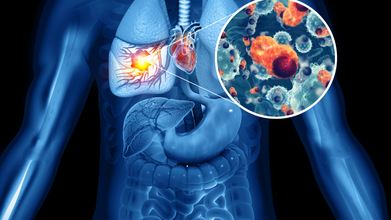
Step into a busy OPD, and you will see it: people coughing but not paying much attention. Tuberculosis is still around, just quietly spreading. By 2024, one out of every four global TB infections was recorded in India.
More than a number, each case hints at missed chances, tiny failures in spotting or stopping the disease that swell into widespread strain.
In earlier times, TB was common and very hard to recover from. Crowded homes, lack of fresh air, and low income open doors for germs to move fast. When hunger weakens people too, their bodies fail to hold back hidden sickness. But that is only part of what happens now. Conditions like smoking, drinking, high blood sugar, or HIV have slipped into view, tying daily habits closely to how often TB strikes.
After that, finding the right treatment can feel like a struggle. Some people start by visiting private clinics, shifting between different doctors until they finally learn what is wrong. Every wait means more time lost, moments when illness keeps growing without check.
Tuberculosis: What Takes The Biggest Toll?
Adults in their prime work phase feel it most. Males, particularly over the age of fifteen, carry heavier loads - a pattern the World Health Organization keeps pointing out. Yet biology alone doesn’t explain it.
Who shows up for treatment, who waits too long, who gets missed entirely, it's all written into the pattern. Older people, men, and anyone struggling with poor nutrition, using tobacco, or living with diabetes, show up more often in India’s national health data. The numbers tell a consistent story.
Tuberculosis: Late Symptoms
Here’s what happens. Tuberculosis usually shows up too late. Close to 60 percent of those feeling sick skip early help. Ongoing cough, body heat, weight loss, and night sweats are early signs. Some self-treat. For many, money becomes a barrier. Then comes the expected outcome - severe illness, tougher treatments, more time healing.
Still, false beliefs hang on. Air carries TB, not hands. Passing a meal does not pass the disease, yet shame can hold someone back from care. Cough that won’t quit, rising heat in the body, pounds slipping away, sweat at night - these hints show up early but get ignored till chances shrink.
Fighting TB in India isn’t only about medicine; it lives in habits, choices, and how people see illness. If getting help fast stays rare instead of routine, the disease keeps moving quietly through packed houses, buzzing health rooms.
Dr. Harish Bhatia is Senior Consultant in Pulmonary Medicine at Yatharth Hospital, New Delhi.
- Follow Us :


© 2024 Bennett, Coleman & Company Limited