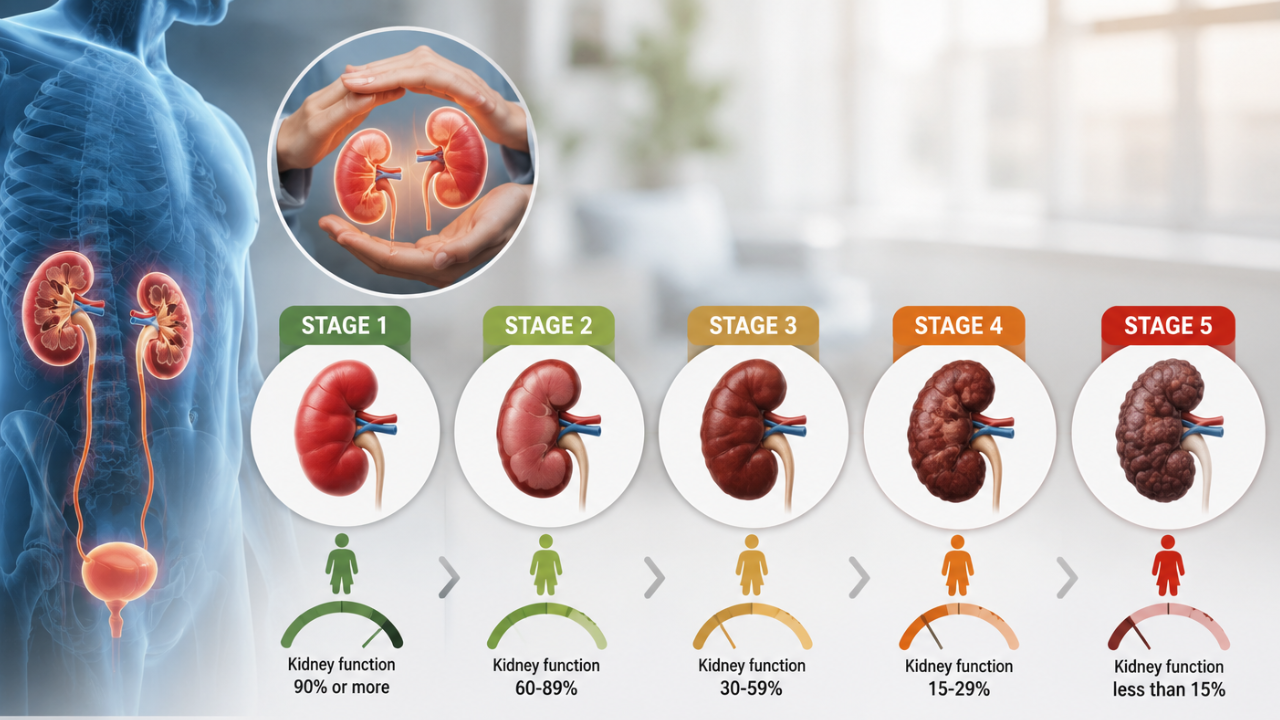
Chronic kidney disease is a disease whereby the patient's kidneys progressively lose their capacity to filter wastes and excessive fluids from the blood stream. Since kidney damage develops slowly, many individuals might not experience any signs in the early stages of the disease. It is therefore critical for individuals to know about the stages of CKD in order to appreciate the significance of kidney monitoring and timely medical intervention. Stage 1: Mild Kidney Damage At stage 1, patients' kidney functions will be relatively normal (eGFR level of 90 or more). However, there will be some indication of kidney damage for example presence of protein in urine. Individuals usually show no symptoms. Controlling diseases like diabetes and high blood pressure can delay progression of CKD. Stage 2: Mild Loss of Function This CKD stage is indicated by an eGFR level of 60 – 89 as well as kidney damage. There will probably be no symptoms or very mild symptoms at this stage.Also read: US CDC Says COVID ‘Growing’ In Nearly Every State: What You Should Know Stage 3: Moderate Loss of Kidney Function This stage reflects the moderate loss of kidney function and features an eGFR ranging from 30-59. It normally involves two sub-stages that can be either 3a or 3b. Some of the symptoms of kidney failure can be fatigue, swelling of legs or ankles, changes in urination, or hypertension. Stage 4: Loss of Kidney Function Is Severe The fourth stage means that there is a severe loss of kidney functionality, which can be measured by eGFR of 15-29. It normally entails such symptoms as vomiting, swelling, tiredness, or changes in appetite. Health specialists discuss the possibilities of treatment of end-stage kidney disease with their clients and prepare them for getting a new kidney. Also read: US Woman Paralyzed After Potassium Mistakenly Given During Knee Replacement Surgery Stage 5: Kidney Failure Stage 5 is indicated by eGFR being below 15 or the inability of kidneys to perform their functions properly. Waste products and extra fluids can accumulate in the blood and cause life-threatening conditions. Depending on the condition of a patient, the treatments may include dialysis, kidney transplantation, or supportive therapy. Maintaining Good Kidney Function The progression of CKD may not always be swift and early detection can make all the difference. The management of blood pressure and sugar, heeding medical advice, living a healthy lifestyle and regular medical check-ups can help preserve kidney functions. If anyone experiences consistent swelling, alteration in urinary habits or feels unusually tired among other symptoms, they should visit a Nephrologist.