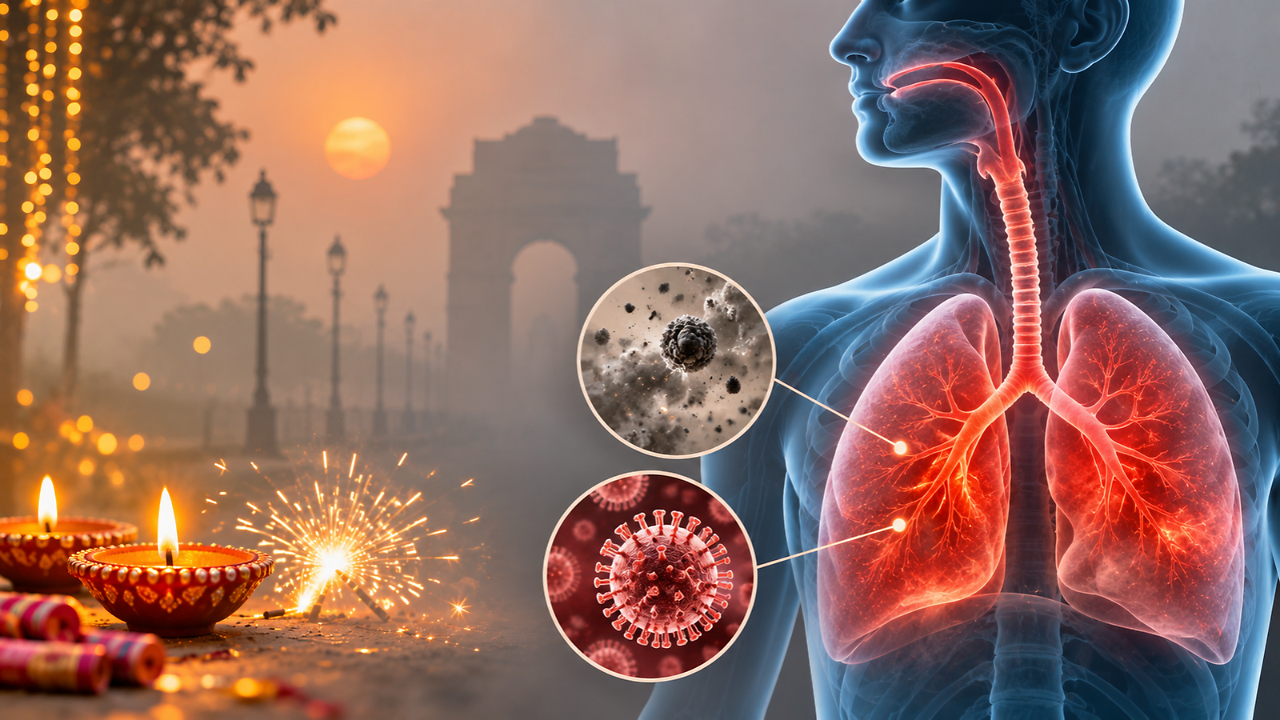
Delhi's air quality remained in the Very Poor category on Thursday, with an AQI of 369 as pollution levels continued to rise across the Capital. With Diwali celebrations with firecracker fuel smoke to an already polluted city, concerns about respiratory health are mounting. The timing is alarming as it also coincides with the flu season, when respiratory infections are also circulating.While air pollution and influenza both affect the respiratory system, it can put additional stress on the lungs. Pollutants can irritate the airways, trigger inflammation and weaken the lungs' natural defence mechanisms, while the influenza virus infects the respiratory tract. Together, they can aggravate respiratory symptoms and make breathing more difficult, especially in people with pre-existing lung conditions.According to Dr. Arup Halder, Consultant Pulmonologist at CK Birla Hospitals, CMRI Kolkata, prolonged exposure to air pollution can weaken the respiratory system's immunity.“Exposure to air pollution, especially for long durations, can weaken the respiratory system's immunity. Fine particulates can become lodged in airways and damage the mechanisms the body has to protect itself. This makes respiratory infections much more likely, especially if viral in nature,” he told HealthandMe.Dr. Suresh Sagadevan, Senior Interventional Pulmonologist at Gleneagles Hospital, Chennai, told HealthandMe that pollution can also interfere with the lungs' natural cleaning mechanisms.He said that the respiratory tract contains tiny hair-like structures called cilia, which help remove dust and germs. Polluted air can affect their functioning, making it easier for respiratory viruses to infect the airways. However, pollution does not directly cause influenza nut it can compromise the respiratory system's ability to defend itself against such infections.What Happens When Particulate Matter And Flu Affect The Lungs Together?Also read: Delhi Air Pollution: Feeling Anxious As AQI Rises? Experts Explain The Mental Health Toll Of Breathing Toxic AirParticulate matter and influenza together can intensify inflammation in the respiratory system.Fine particulate matter, like PM2.5, can penetrate deep into the lungs. It can cause inflammation and oxidative stress. At the same time, influenza viruses infect the cells lining the respiratory tract."When both exposures occur together, the existing inflammation can become more intense, potentially worsening coughing, breathing difficulty and airway irritation. In simple terms, the lungs are dealing with two different stresses at the same time," said Dr. Sagadevan.Dr. Halder added that PM2.5 can also interfere with the body's ability to ward off irritants from the respiratory tract, while influenza can make breathing challenging.Facing both together can be challenging for people whose respiratory or immune systems are already compromised.Can Diwali Pollution Make Flu Symptoms Worse?Also read: Air Pollution In Delhi: Experts Warn Of Red Eyes, Itching, Watering In ChildrenFirecracker smoke can aggravate an already infected and overwhelmed respiratory system. People with flu may experience excessive coughing, wheezing, chest tightness and breathlessness when they get exposed to high levels of pollution."Increased Diwali-related pollution will definitely worsen respiratory symptoms for individuals with the flu, especially during this period. The gases and particulate matter from firecracker smoke can lead to chest congestion and difficulty in breathing. In some cases, the pollution can worsen existing asthma and other lung-related conditions and trigger respiratory issues," said Dr. Halder.Dr. Sagadevan said that people with asthma, chronic obstructive pulmonary disease (COPD) and other pre-existing respiratory conditions need to be particularly careful by limiting exposure.Who Is Most Vulnerable When Flu Season Coincides With High Pollution?Certain groups of people may face a greater risk when respiratory infections coincide with elevated pollution levels. These include:Children: Their lungs are still developing, making them more vulnerable to air pollution.Older adults: Age-related changes can reduce respiratory capacity and make it harder to cope with added stress on the lungs.Pregnant women: They need to take extra precautions against respiratory infections and environmental pollutants.People with asthma or COPD: Pollution can trigger flare-ups, worsen airway inflammation and aggravate breathing difficulties.Immunocompromised individuals: A weak immune system can make it harder to fight infections and increase the risk of severe illness.Dr. Halder explains that older adults and people with weak immunity may be more susceptible to more serious flu symptoms. Meanwhile, those with existing lung conditions may experience worsening respiratory symptoms even with short periods of pollution exposure.Pollution Effects Vs Flu: SymptomsAlso read: Supreme Court Allows Green Crackers In Delhi-NCR Ahead Of Diwali: Are They Really Safe For Your Health?Pollution-related respiratory irritation and influenza can lead to similar symptoms, making it difficult to distinguish between the two. However, their onset and symptoms can differ.Pollution-related irritation develops shortly after exposure to polluted air. Common symptoms include:Throat irritation or discomfortBurning or watering eyesDry coughSneezingWheezingChest discomfortFlu, on the other hand, is a viral infection that mostly causes a sudden onset of symptoms, including:FeverBody aches and muscle painHeadacheFatigueCoughGeneral weakness"However, both can occur together, and symptoms may overlap. Persistent fever, worsening breathlessness or significant weakness should prompt medical evaluation," says Dr. Sagadevan.Dr. Halder also recommends consulting a medical professional when symptoms make it difficult to determine whether the problem is pollution-related irritation or an infection.How To Protect Your Lungs During Diwali And Flu Season Reducing exposure to polluted air and taking precautions against respiratory infections can help protect lung health during the festive season.Both doctors recommend the following measures:1. Limit outdoor exposure: Avoid spending long periods outdoors, especially after firecracker bursting and during periods of heavy smoke.2. Wear a well-fitting N95 mask: If you need to step outside when pollution levels are high, use a properly fitted N95 mask to reduce exposure to fine particulate matter.3. Keep windows closed: Close doors and windows during periods of heavy smoke to limit the entry of outdoor pollutants. Ventilate indoor spaces when outdoor air quality improves.4. Avoid outdoor exercise: Vigorous physical activity increases the amount of air you breathe in, increasing exposure. Avoid exercising outdoors when air quality is poor.5. Avoid firecrackers and second-hand smoke: Staying away from firecracker smoke can reduce exposure to harmful pollutants.6. Get vaccinated against influenza: Stay up to date with flu vaccinations to reduce the risk of influenza and its complications.7. Maintain hand hygiene: Wash your hands regularly for infection prevention.8. Seek medical attention: Do not ignore worsening fever, cough, wheezing or breathing difficulties, especially if you have an existing respiratory condition.Dr. Sagadevan concludes, "Air pollution and influenza can independently affect respiratory health, but their coexistence can place additional stress on the lungs. During the festive season, protecting our lungs through pollution avoidance, vaccination and timely medical care should be a priority."