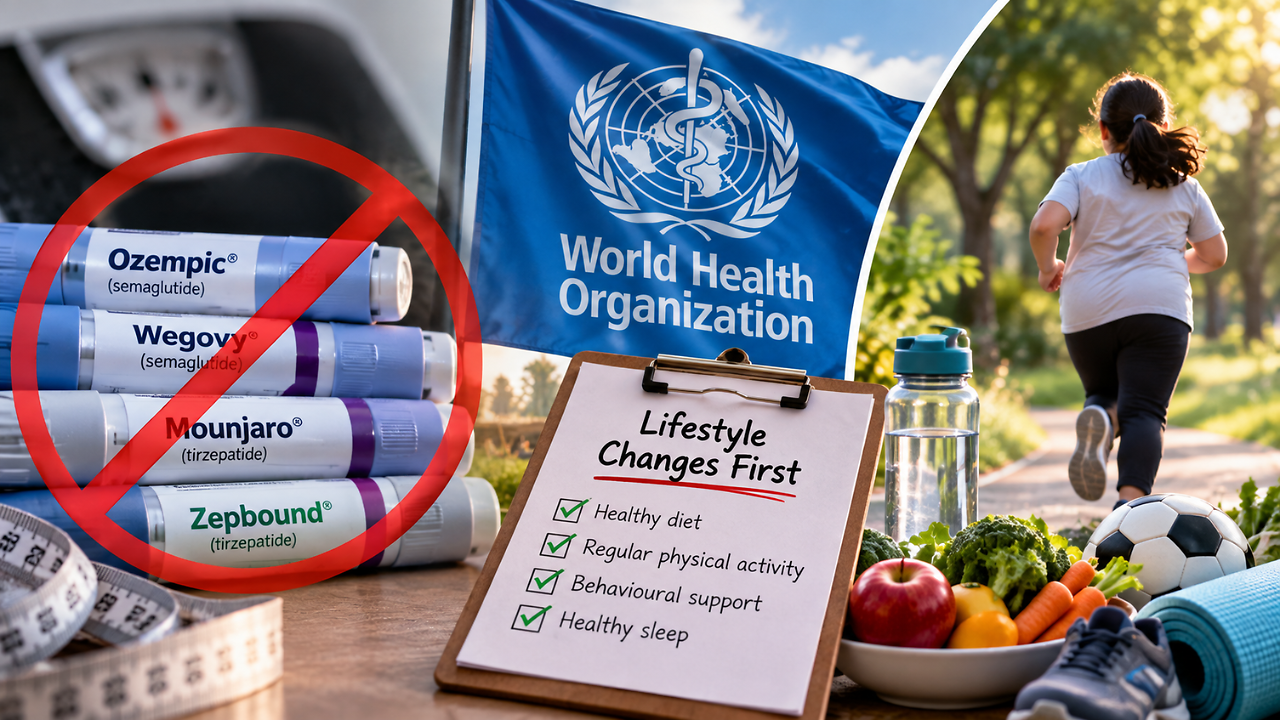
The World Health Organization has issued its first global guidelines for tackling obesity in children and adolescents. Prioritising lifestyle changes, it has placed diet, physical activity and behavioural support ahead of clinical weight-loss treatments like GLP-1 drugs. The guidelines come as obesity poses a greater threat to children and adolescents. In 2024, around 400 million children and adolescents aged 5 to 19 were overweight, including 170 million living with obesity. The rate of obesity in this age group has quadrupled since 1990, jumping from 2% to 8%. The WHO's recommendations come amid growing use of GLP-1 drugs like Wegovy and Saxenda among younger patients in some countries.The use of GLP-1 medications weight-loss medications among children under 12 in the US has risen in recent years. According to a recent research data, in 2019, only about 0.03% of children had been prescribed a GLP-1 drug like Wegovy and Saxenda, made by Novo Nordisk, and Eli Lilly's Zepbound. By June 2026, that figure had risen to 9.3%. WHO Does Not Recommend GLP-1s For Children Under 10 Also read: Are GLP-1 Drugs Safe for Children? Study Finds Nutritional Deficiency in Nearly 17% Within a YearWHO does not recommend weight-loss medicines, bariatric surgery or weight-management devices for treating obesity for children aged 0 to 9 years. Instead, it recommends lifestyle interventions, including dietary changes, physical activity and behavioural programmes for children and their caregivers. WHO's guidelines are linked to the limited evidence available on the long-term safety and effectiveness of obesity medicines in younger children. The guidance is more nuanced for adolescents aged 10 to 19, the. Approved obesity medicines, including GLP-1 therapies, may be considered when a supervised, structured lifestyle programme fails to achieve the desired results. This means the WHO is not ruling out medication for teenagers but does not place it ahead of lifestyle changes. “The foundation of obesity care for children and adolescents is not medicine or surgery, but access to comprehensive support that enables healthy eating, physical activity and sustainable behaviour change,” said Luz María De Regil, director of WHO's Department of Nutrition and Food Safety. Why Is WHO Cautious About GLP-1 Drugs For Children? Also read: Wegovy & Zepbound Are Not Approved By US FDA For Children Under 12: So Why Are Prescriptions Rising?GLP-1 medicines like Ozempic, Mounjaro and Wegovy have transformed obesity treatment in adults, but the evidence base in children and adolescents is limited. De Regil said there is currently insufficient evidence on GLP-1 drugs in younger populations. The WHO director also said that research is in progress to study their effectiveness and safety, which could revise the health body's position.Questions around long-term safety, how treatment affects growth and development, how long medication needs to be continued and what happens after stopping treatment remain important areas of research. It's crucial as children may have to be on GLP-1 treatment for a long time. Some GLP-1 drugs are already approved for certain younger patients. In the US and European Union, Wegovy and Saxenda can be used for weight management in some adolescents aged 12 and older, while the EU also permits Saxenda for certain children aged 6 to 11.Even though evidence is limited about side-effects of GLP-1 drugs in children, a new study found that nearly 1 in 6 children, or 17%, treated with GLP-1 medications developed a diagnosed nutritional deficiency within one year.The research, conducted by scientists at Northwestern University and Ann & Robert H. Lurie Children’s Hospital of Chicago, found that vitamin D deficiency was the most common nutritional deficiency, identified in 12.4% of children within one year of starting GLP-1 treatment. WHO Wants Obesity Treatment To Go Extend Weight Loss The new guidelines also emphasise that treating childhood obesity should not be reduced to the weighing scale. WHO recommends addressing diet, physical activity, sedentary behaviour, sleep and behavioural factors, while tailoring interventions to the child and family. Mental health also forms part of the guidance as anxiety, depression, low self-esteem and social withdrawal can both contribute to unhealthy behaviours and be consequences of living with obesity. Children with obesity can also face stigma and bullying, making psychological and social support an crucial part of obesity care. “Our priority must be to ensure that every child and adolescent can access quality care and supportive environments from an early age, helping them achieve and maintain a healthy weight and laying the foundation for lifelong health and well-being,” De Regil said.