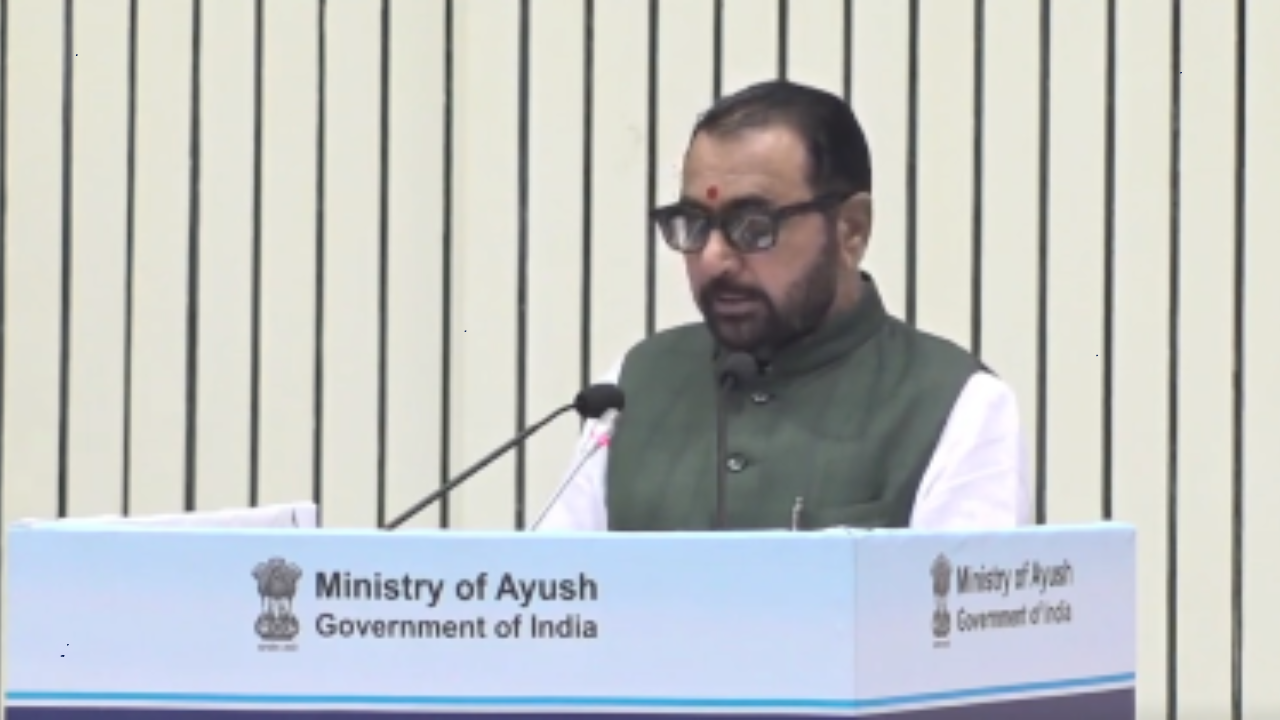
Homeopathy is a powerful medium for global health, said Union Minister of State (Independent Charge) Prataprao Jadhav while reaffirming the government's commitment towards holistic well-being and natural healing, on the occasion of World Homeopathy Day 2026 today.World Homeopathy Day is observed every year on April 10 to commemorate the birth anniversary of Dr. Hahnemann, the founder of Homeopathy. The theme this year is “Homoeopathy for Sustainable Health”.Also Read: Encephalitis Alert In Rajasthan As Mystery Disease Claims 2 More Young Lives “World Homeopathy Day is not just a celebration of a system of medicine, but a golden opportunity to reflect on our journey so far and look towards the future with a purposeful vision,” Jadhav said.The Minister described "homeopathy as a powerful medium for global health. Let us all together take steps towards a healthy and sustainable future". “Today, on #WorldHomeopathyDay, we reaffirm our commitment to holistic well-being and natural healing,” he added. World Homeopathy Day: Origin and Significance Homeopathy, derived from the Greek words Homois (similar) and Pathos (suffering), is a system of medicine that treats diseases using remedies which produce effects similar to the symptoms experienced by the patient. This approach was formalized in 1796 by Samuel Hahnemann, the founder of Homeopathy. Hahnemann was a German physician who founded homoeopathy in the late 18th century. His seminal work, Organon of Medicine, continues to guide Homoeopathy practice worldwide, and his birth anniversary on April 10 is observed as World Homoeopathy Day. He established its foundational theories, the first one being “like cures like”, which holds that substances capable of producing symptoms in a healthy individual can, in carefully prepared forms, treat similar symptoms in a sick individual. The second theory, known as the “law of minimum dose,” emphasizes the use of highly diluted remedies to stimulate the body’s self-healing mechanisms while minimizing side effects. Also read: India Launches New Yoga Protocols To Fight Diabetes, High BP, AsthmaHomoeopathy In India Homoeopathy was introduced in India in the early 19th century, marking the beginning of its gradual expansion. Around 1810, John Martin Honigberger, a disciple of Samuel Hahnemann, began practicing in India. “Though the roots of homeopathy may lie in Germany, its heart and future reside in India,” said Dr. Tarakeshwar Jain, Chairperson of the National Commission for Homoeopathy. He explained that homeopathy in India is reaching new heights for 'sustainable health.' According to the government data, India accounts for one of the largest homoeopathic workforces in the world.Here's a look at the homoeopathy landscape in India:3,45,404Homoeopathy Beds in Ayush Wellness Hospitals8697Homoeopathy Dispensaries8593Teaching Faculty7092Pharmacopoeial Monographs on Homeopathy drugs published1117Pharmaceutical Industries384Homoeopathy Colleges277Research Centres3428Homeopathy For Epidemic PreparednessAlso read: New Indian Study To Explore Ayurveda As Adjunct Therapy For TuberculosisHomeopathic medicines are prepared from natural sources such as plants, minerals, and animal substances through dilution and succussion, and are administered in forms like tablets, globules, and liquids. A key feature is its individualized approach, where treatment is based on a patient’s overall physical and mental condition rather than just the disease.“Homeopathy is a system rooted in individuality, compassion, and the body’s natural healing ability,” said Dr. Preetha Kizhakkutil, Advisor (H.), Ministry of Ayush.She also noted its importance in public health, chronic disease management, and preventive care, stressing the need to improve accessibility, awareness, quality education, ethical practice, and research, while encouraging collaboration to strengthen Homoeopathy as a people-centric and sustainable healthcare system.As per the government, homoeopathy has also emerged as a complementary tool in epidemic preparedness, using preventive, promotive, and adjuvant strategies. The Central Council for Research in Homoeopathy (CCRH) has been conducting epidemic-related research and medical relief through its 33 institutes/units across India. “When thousands of patients seek hope in homeopathy institutions every day, it proves the unwavering faith the people of India have in this system to solve their health problems,” Jadhav said. He called for “balancing tradition, science and innovation” to enhance the “relevance and strength of homeopathy on the global health landscape”.