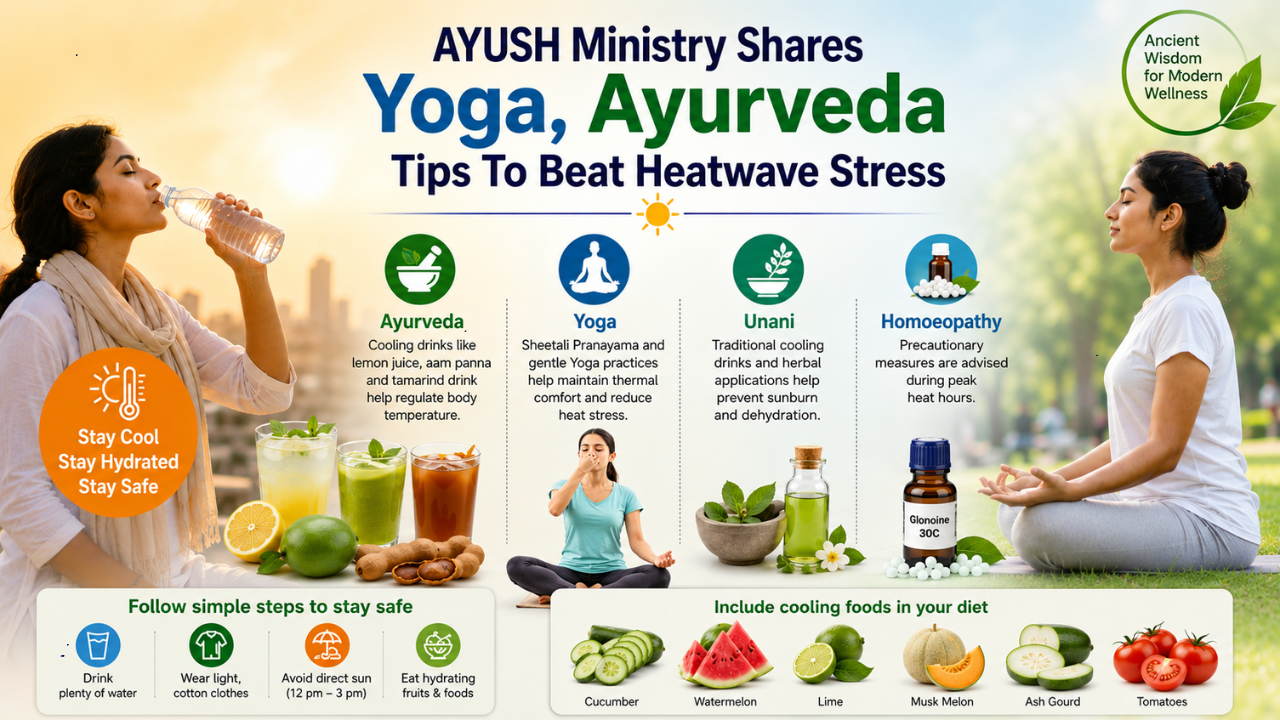
The intense heatwave conditions in Delhi-NCR are likely to continue till May 27, with the India Meteorological Department issuing an “orange alert” for the national capital and adjoining areas.Amid the scorching daytime temperatures as well as unusually hot nights, the Ministry of AYUSH has issued a public health advisory recommending Yoga, Ayurveda, and other traditional practices to help people manage heatwave conditions and reduce the risk of heat-related illnesses.The advisory mentions traditional wellness and Ayurveda-based cooling dietary practices, such as:Intake of hydrating beverages such as buttermilk, coconut water, and lemon-based drinksUse of traditional preparations, including lemon juice, aam panna, and tamarind-based drinks, to help regulate body temperature during extreme heatThe Siddha and Yoga sections advise the adoption of cooling refreshments and breathing techniques such as:Sheetali PranayamaGentle Yoga practices for maintaining thermal comfort and reducing heat stressThe Unani system recommends:Traditional cooling drinksHerbal applications to prevent sunburn and dehydrationThe Homoeopathy section suggests precautionary measures during peak heat hours.The advisory further encourages the public to daily include hydrating and cooling traditional food items such as:CucumberWatermelonLimeMusk melonAsh gourdTomatoesHeatstroke Is A Medical EmergencyThe advisory by the Directorate General of Health Services, Ministry of Health & Family Welfare, in coordination with the Ministry of AYUSH, identifies heatstroke as a medical emergency requiring immediate medical attention. "When heat exposure continues, the body’s cooling mechanisms begin to fail, and the condition can progress to heat stroke, which is a medical emergency. In heat stroke, body temperature often rises above 104°F," Dr. Vaibhav Mishra, Senior Director & Head, CTVS, Max Super Speciality Hospital, told HealthandMe."What may initially appear as confusion, disorientation, or irrelevant talking can rapidly worsen into altered consciousness, seizures, coma, and death," the doctor added.The advisory cautions citizens to remain alert for danger signs of heat-related illnesses, such as dizziness, headache, nausea, altered mental status, high body temperature, dehydration, seizures fainting.It also provides detailed guidance for the general public, vulnerable groups, employers, workers, and participants in mass gatherings and sports events to safeguard themselves against heat stress and heat-related illnesses.It emphasizes:Adequate hydrationAvoiding direct exposure to sunlight during peak hoursUse of light cotton clothingConsumption of seasonal fruits and fluids rich in electrolytesThe advisory also highlights that infants, children, pregnant women, elderly persons, outdoor workers, and individuals suffering from chronic illnesses such as heart disease and hypertension are particularly vulnerable during heatwave conditions and require special care and monitoring.Special precautions have been advised for workplaces, public gatherings, and outdoor activities, including the provision of shaded rest areas, regular hydration breaks, acclimatization measures for workers, and awareness generation regarding symptoms of heat stress.The advisory recommends promptly calling emergency helplines 108/102 in severe cases.