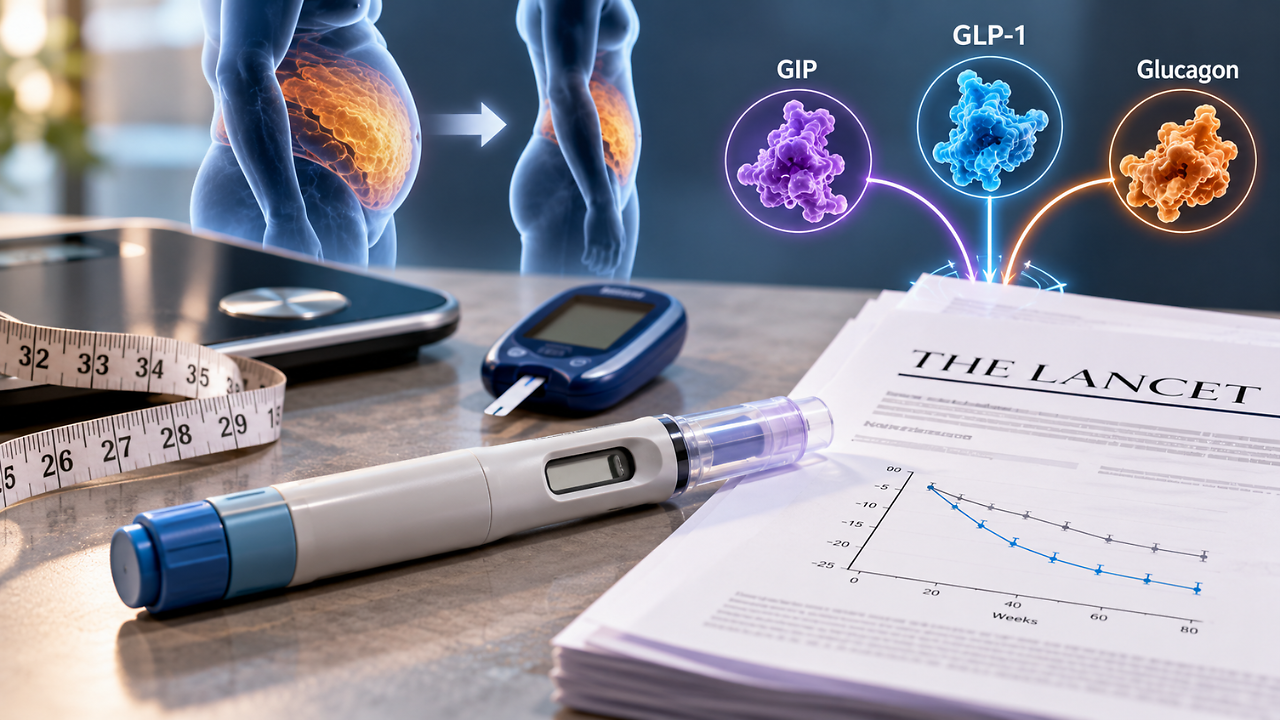
Eli Lilly’s highly anticipated GLP-1 weight-loss drug retatrutide has delivered nearly 21% average weight loss in people with type 2 diabetes and obesity, according to results from a large Phase 3 trial published in The Lancet. In an ever-expanding weight loss medication market, retatrutide is already showing significant promise in obesity and diabetes management. The drug, retatrutide, is being developed by Eli Lilly and is not approved by the FDA yet. In the TRIUMPH-2 trial, people receiving the highest 12 mg dose lost an average of 20.8% of their body weight over 80 weeks, equivalent to about 49.6 pounds or 22.5 kg. The findings about retatrutide's trial were presented at the European Association for the Study of Diabetes (EASD) annual meeting in Milan and published simultaneously in The Lancet. How Is Retatrutide Different From Other GLP-1 Drugs? Retatrutide is a triple agonist because it activates three hormone receptors:GIPGLP-1GlucagonGLP-1-based medicines are already widely used for diabetes and obesity. Retatrutide activates GIP and glucagon pathways as well, creating a three-way approach to manage appetite, blood sugar and metabolism. The drug is given once weekly by injection and remains experimental and investigational.Also read: World Heart Day: You Feel Healthy. But Plaque May Already Be Building In Your Arteries In Your 20sRetatrutide Weight Loss Results TRIUMPH-2 included adults with obesity or overweight and type 2 diabetes. Participants receiving retatrutide were assigned to 4 mg, 9 mg or 12 mg doses and followed for 80 weeks. The average weight loss was:4 mg: 12.7%9 mg: 19.1%12 mg: 20.8%Placebo: 4.0% The response was even greater among participants who started the study with a BMI of at least 35. Those receiving 12 mg lost an average of 23.4% of their body weight, or about 60.8 pounds.By week 80, 59.5% of people taking 12 mg no longer met the BMI criteria for obesity.Also read: 100% Blockage At 18, 25% Patients Under 40: On World Heart Day, Cardiologists Reveal An Alarming Heart Attack Pattern Retatrutide Blood Sugar ResultsRetatrutide not only led to one of the biggest weight losses ever seen, it also improved HbA1c, a measure of average blood glucose over the previous two to three months. At 80 weeks, HbA1c fell by:1.4 percentage points with 4 mg1.6 percentage points with 9 mg1.5 percentage points with 12 mgUp to 40% of participants receiving retatrutide achieved an HbA1c below 5.7%, which is within the normal range. The Next Big Weight-Loss Drug? The results are certainly seem promising, particularly as people with type 2 diabetes can sometimes lose less weight with obesity medicines than people without diabetes. Retatrutide's combination of substantial weight loss and improved blood sugar control makes it an important drug to watch in a competitive GLP-1 market.Since it's not approved yet, more evidence will be needed on its long-term safety, cardiovascular effects and how its benefits compare with existing treatments. It is also worth remembering that the 20.8% figure represents an average, not the amount every participant lost.Retatrutide's development is a sign that obesity and diabetes treatment is extending beyond just managing blood sugar. The next generation of drugs is all about targeting weight, glucose and metabolism together.