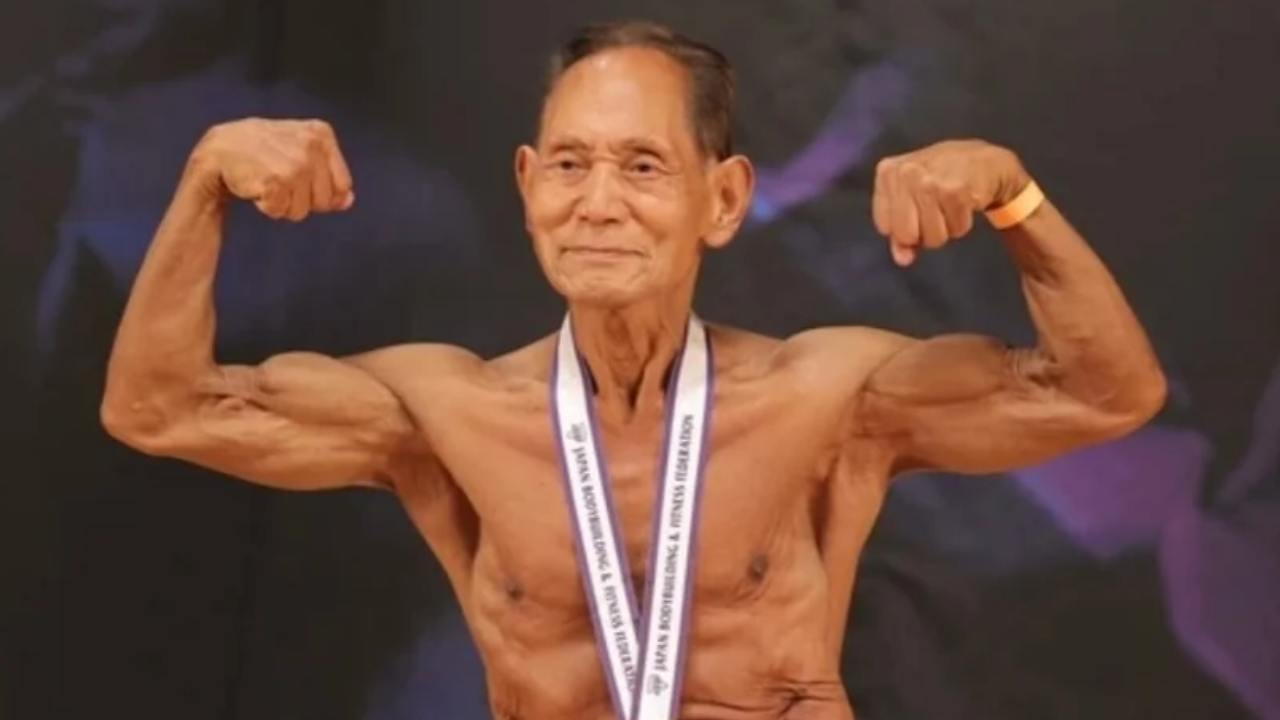
At 90, Japanese bodybuilder Toshisuke Kanazawa has built an age-defying physique that is a testament to his rigorous training of two hours a day for six days a week. Kanazawa is still able to compete against athletes decades younger than him.The 19-time national champion recently appeared at the International Fitness and Bodybuilding Federation (IFBB) World Fitness and Bodybuilding Championships in Santa Susanna, Spain, on October 30, 2026.Although he did not finish on the podium, Kanazawa remains committed to bodybuilding and hopes to compete once more at 93.“I like to try doing things that nobody else has done, and more than anything I want to pursue bodybuilding for the rest of my life,” he told Reuters.In interviews with Reuters and The Guardian, Kanazawa has described how he has modified his exercise routine, diet and prioritised recovery to maintain muscle strength as he grows older.Toshisuke Kanazawa Still Strength Trains For Two Hours A DayAlso read: Whey Protein For Muscle Gain: Do You Really Need 1.6 Grams Of Protein Per Kg?Kanazawa trains for approximately two hours a day, six days a week, at his gym in Hiroshima, Japan. However, his routine has changed with age. He no longer performs heavy exercises, including squats and bench presses, and prefers using weight-training machines instead of free weights.He said machines allow him to control movements and adjust resistance according to his physical capabilities. “I do what’s best for me and my body at this age,” he told The Guardian.His approach speaks about the importance of recovery when it comes to strength training in older adults. It also reinforces that exercise needs to be adapted to changing strength, mobility and recovery capacity rather than maintaining the same intensity throughout life.Kanazawa Prioritises Muscle RecoveryKanazawa says recovery takes longer than it did when he was younger. “It takes longer to recover from weights sessions than it used to, so I make sure I rest properly between sets and get around seven hours’ sleep a night,” he told The Guardian.Adequate recovery is important because resistance exercise creates stress on muscles, which need time to repair and adapt. Older adults may also experience age related stress when it comes to muscle recovery and the ability to build muscle.Also read: Why Is Excess Belly Fat A Health Concern, Even In People Who Appear To Have A Normal Body Weight?Kanazawa's Diet For Muscle Building Kanazawa attributes his physical conditioning to a traditional Japanese diet that he has followed since turning 50. His regular meals include:Brown rice: A source of carbohydrates and dietary fibre.Natto: Fermented soybeans that provide plant-based protein.Miso soup: A traditional fermented soybean-based soup.Raw eggs: He has also described adding a couple of raw eggs to his miso soup.“This is something I’ve been researching and want to learn more about. But ever since I turned 50, I’ve been building muscle by eating a purely Japanese diet which includes brown rice, natto, and miso soup,” he said.He also revealed that he has reduced his protein shake intake with age. “I used to have six protein shakes a day but now I have three. As I get older, it’s harder to stomach that much liquid,” he said.Kanazawa has also given up meat and fish and says he has never smoked or consumed alcohol.Also read: Leading Gastroenterologist Padma Bhushan Dr S K Sarin Shares Dos & Don’ts For Healthy Liver At Times Health Summit 2026He Adjusted His Training Instead Of StoppingKanazawa’s return to competitive bodybuilding at 50 came after he had retired from the sport in his mid-30s. He said he wanted to encourage his wife, who had a chronic illness, and realised that he had lost some of his own strength after retiring.He eventually returned to competition and went on to win several masters championships. He believes older people should not automatically give up activities they enjoyed when they were younger.“I worry that too many of them give up on the things they did when they were younger,” he said. He added, “I want to be a bodybuilder until the day I die.” Strength Training Tips For Older Adults Muscle mass and strength naturally decline with age due to a process called sarcopenia. This can affect mobility, balance and the ability to perform everyday activities.The World Health Organization recommends that adults aged 65 and older undertake muscle strengthening exercises involving major muscle groups at least twice a week. Older adults should also include varied physical activity that emphasises functional balance and strength on three or more days a week. Exercise intensity and type should be adjusted to individual health, fitness and mobility.