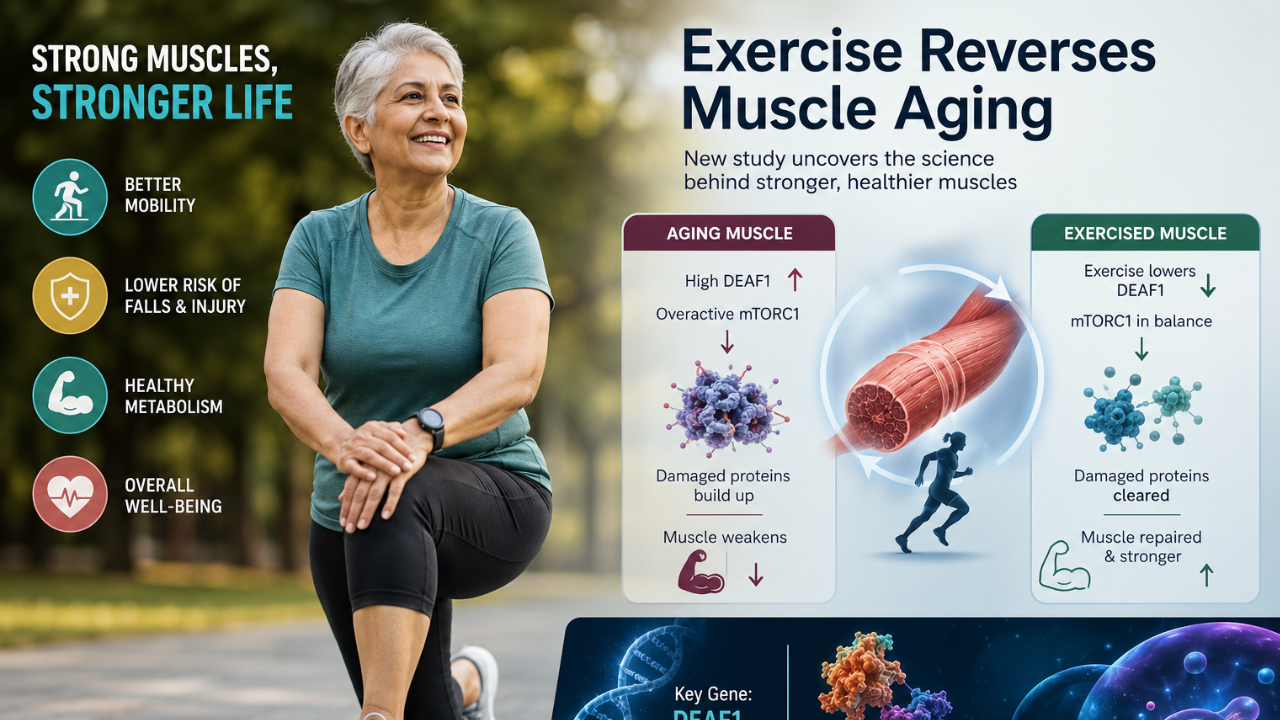
A new study has uncovered how physical activity can help aging muscles repair themselves, explaining why regular exercise remains one of the most powerful tools for healthy aging physiologically. Exercise Can Help Reverse Muscle Aging: Study Researchers from Duke-NUS Medical School, working with collaborators from Singapore General Hospital and Cardiff University, found that exercise retains and restores a natural cellular repair system that usually weakens with age. Their findings, published in the Proceedings of the National Academy of Sciences (PNAS), identify a gene called DEAF1 as a muscle aging element, suggesting it could become useful in therapies for preventing age-related muscle loss. About The Study Muscles are essential for regulating metabolism, blood sugar levels, and supporting overall health. However, muscle strength begins to decline as you age, increasing the risk of falls, fractures, and slower recovery from illness or injury. A cellular growth pathway called mTORC1 plays an important role in maintaining healthy muscles by regulating protein production. But in aging muscles, this pathway becomes overworked. According to the study, DEAF1 levels increase as muscles age, driving excessive mTORC1 activity and disrupting the balance between building new proteins and clearing away damaged ones. This accelerates muscle deterioration. Under normal conditions, DEAF1 is kept under control by proteins known as FOXO. However, FOXO activity naturally declines with age, allowing DEAF1 levels to rise unchecked and reduce the muscle's ability to repair itself.Read more: Bryan Johnson's Autoimmune Gastritis Sheds Light On Iron Deficiency In Americans Exercise Restores Muscle Health Exercise can reverse this imbalance significantly if the muscles are still optimal and responsive. Assistant Professor Tang Hong-Wen, lead author of the study from Duke-NUS Medical School said, “Exercise can reverse this process, correcting the imbalance. Physical activity activates certain proteins which lower DEAF1 levels, bringing the growth pathway back into balance. This allows aging muscles to clear out damaged proteins, rebuild themselves properly, and help them stay stronger and more resilient.” The researchers believe the results extend beyond normal aging. DEAF1 also affects muscle stem cells, which are responsible for repairing damaged tissue but naturally become less effective with age. Targeting the gene could potentially improve muscle recovery after surgery, illness, or conditions such as cancer, particularly in people who are unable to exercise. “Exercise tells muscles to 'clean up and reset.' Lowering DEAF1 helps older muscles regain strength and balance, almost like hitting the rewind button. With millions of older adults at risk of muscle decline, understanding DEAF1 could lead to new ways to protect muscles and improve quality of life,” said Priscillia Choy Sze Mun, first author of the study. Healthy muscles are essential for far more than movement. They help maintain balance, support metabolism, regulate blood sugar, and enable people to stay independent as they age. The study also confirms that regular exercise not only strengthens muscles but also helps retain their ability to repair themselves at the cellular level. In short, staying physically active remains one of the most effective ways to protect muscle health and promote healthy aging.